Tuesday, January 14, 2020

January 14, 2020


Hi Gardeners

2020 perennial of the year Aralia 'Sun King' in my garden
I am always talking about the weather it seems, weather is important to gardeners. We escaped last weekends predicted nasty ice storm with just some crusty light snow.  Now we have to wait and see what tomorrow and this weekend will bring in winter weather.

This year’s winter weather has been weird to say the least, with its rounds of warm and cold weather.  I am walking around garden beds looking for bulbs and plants that have been heaved from the ground by alternating frosts and thaws. They can be saved if promptly replanted. The weather forecasters are predicting a change in weather patterns next week, with a return to more normal winter weather.  We shall see, I guess.  It’s 40 degrees here today.

Inside I do have things blooming.  My red amaryllis is blooming, and the gerbera daisy has rebounded well from it’s seeming demise and now has a big red flower too. Hibiscus are in bloom and holiday cacti.  A large coleus I brought inside this fall is blooming like crazy, although it’s blooms aren’t that showy.

I have been watching birds at the feeder this week. When we moved to the farm 25 years ago or so there were lots of English sparrows around.  Now you rarely see them.  What seems to have taken their place is the House finch, a sparrow sized bird with raspberry colored heads and streaked breasts. Huge flocks of them monopolize the feeders. Goldfinches also seem to be less abundant than last year, maybe chased off by the house finches.  Are you seeing more house finches at your house?

I’ve continued to look at catalogs for interesting plants and I’m sharing some things below and I am also adding new listings to my garden catalog list on my blog. I’m also writing about the plants chosen as “plants of the year” for 2020 this week. 

The internet has allowed plant sellers to reach wide audiences and new companies pop up all the time.  People seeking plants have never had an easier time finding them.  I encourage you to explore on- line sites and read the catalogs.  Look for places you have never heard of before.  It’s fascinating and helps beat the winter blues.

Garden catalog list link 


Focus on the Gas Plant Dictamnus albus var.purpureus

Gas plant
Photo Select Seed
My grandmother grew this pretty plant.  She told me that on a summer evening you could light the gas that the plant gave off.  That prompted several secretive attempts by my brother and me to light that gas with matches or a lighter, all to no avail.  While this plant, with the common name of gas plant, can in some situations produce a volatile gas, the conditions must be just right to actually light it. 

The methane gas is given off by older dying flowers and the star shaped seed pods on still hot evenings. Some people have been successful in lighting it for a brief burst of harmless flame. Because it is native to Biblical regions it is thought this may be the burning bush of bible stories, which gives it another common name, burning bush. Other common names are dittany and fraxinella.  It is also native to southern Europe and northern Africa.

The gas plant is more than just a novelty though and it deserves more use in American gardens. It has long been considered an old-fashioned cottage garden perennial, but it would also be an excellent plant for butterfly gardens and “natural” landscapes.  It would be a good plant to mix with grasses for contrast and color. No, it’s not a native plant but lends itself well to low maintenance, “wild” landscapes.  It’s not invasive.

The gas plant is a long lived, semi-woody perennial plant. It forms a clump of long strong stems 3’-4’ x 3’ when mature. The leaves are glossy, odd pinnate and light green. They give off a lemony scent when brushed.  Gas plants are attractive even when not in bloom. The plant is slow growing, generally taking three years from seed to bloom. Gas plants have large tap roots.

In summer clusters of pretty and fragrant 5 petaled, star shaped flowers form on the ends of the stems. In Dictamnus albus the flowers are white, in the variety purpureus the flowers are a pale mauve pink with darker purple lines.  It’s the variety most often sold today. The flowers are attractive to butterflies and bees. The flowers can be used as cut flowers.

Gas plant flowers turn into attractive star shaped seed pods, which can be left in the garden for interest or used in dried arrangements.  As mentioned, the flowers and seed pods do give off a gas which under the right circumstances, can be lit for a brief flame.  However, the plants are not a fire hazard.

The sap from plant parts can provoke allergic reactions in some people and may cause a rash if the sap gets on the skin and then is exposed to light.  Wash the skin after exposure to gas plant sap. Plants and flowers are mildly toxic if ingested, but the taste is very bad, and most people and animals would not eat enough to harm themselves. This makes the gas plant unattractive to deer and rabbits, a plus in the garden.

Cultural directions

The gas plant is hardy in planting zones 3-8.  It actually likes cold winters. In the south it will tolerate light shade, but in the north, it should be in full sun. It’s not fussy about soil types, except the planting site must be well drained. It needs regular watering until well established, after which it can tolerate drought well.

Gardeners should start with small plants if they can find them because seed starting can be difficult and germination can take 6 months.  Plant the gas plant where it will not be disturbed again as the plants do not transplant well. They are slow to establish, and it may be a year or more before new plants produce blooms. Because they have a strong tap root gas plants cannot be divided, and care should be taken not to disturb the plants roots.  Mature plants get large so site them carefully when they are first planted as moves are rarely successful.

Gas plants are slow to leaf out in the spring so don’t prune off stems until you are sure they are dead. The only pruning needed is to remove any dead stems in early summer. The plants rarely have disease or insect problems.  Fertilize lightly if at all.  Plants are not invasive in the garden, only rarely appearing from dropped seed and they do not spread by rhizomes.

The gas plant is a low maintenance, long lived perennial plant that deserves much more use in gardens. It has attractive foliage, pretty flowers that bees and butterflies like and deer don’t like it.  What more can you ask of a plant?

Here’s a place you can buy gas plants


2020 Award winning plants

AAS Winners -Every year the All American Selections are awarded by a committee of members who vote on plants with desirable characteristics that have been proven to be great plants by being grown in trial gardens across the country. Some of these plants have been around a few years and others are fairly new. I’m going to list the ones chosen for excellence across the country.  AAS also picks regional winners.

AAS winners will be available in a variety of places including local nurseries.

Echinacea Sombrero® Baja Burgundy 2020 AAS Herbaceous Perennial Winner- this echinacea has bold violet burgundy flowers.  The judges say it has a strong branching habit, abundant blooms and is reliably hardy.  I have a yellow Sombrero variety that I love so I may add this one too.

Nasturtium Tip Top Rose 2020 AAS Flower Winner- this nasturtium has a nice mounded habit and beautiful, unusual rosy pink flowers.  It attracts bees and butterflies and you can eat the flowers too! Annual plant.
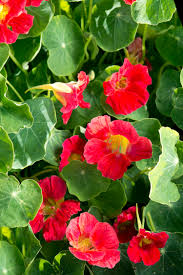
 
Nasturtium 'Tip Top Rose'

Rudbeckia x American Gold Rush 2020 AAS Herbaceous Perennial Winner- this is a black-eyed Susan for those with smaller gardens.  The compact rounded plants are loaded with sunny yellow flowers. It’s a hardy perennial and has good resistance to Septoria leaf spot.

Cucumber Green Light F1 2020 AAS Edible – Vegetable Winner- this is a mini cuke, full of small, smooth, sweet cukes. Because it’s an all-female strain production is very good and fruits are seedless.

Pumpkin Blue Prince F1 2020 AAS Edible – Vegetable Winner- this plant produces 7-9 pound flattened pumpkins with a pretty pastel blue color. Besides being ornamental the pumpkins also taste good, with sweet orange flesh and are great for baking and other culinary uses.  It’s an early and abundant producer.


Watermelon Mambo F1 2020 AAS Edible – Vegetable Winner- here’s an early watermelon that will grow even in cool cloudy conditions. The fruits are round, about 11 pounds with a deep green rind and deep red, sweet flesh.  They hold well on the vine too, for a great home garden watermelon.

Tomato Apple Yellow F1 2020 AAS Edible – Vegetable Winner- this plant produces abundant yellow, uniquely apple shaped fruits.  The fruits are small but larger than cherry tomatoes. They are non- splitting and judges said they had a balanced sweet and acidic flavor with a hint of citrus.


Tomato Buffalosun F1 2020 AAS Edible – Vegetable Winner- this is a hybrid of two heirloom tomatoes with better disease resistance and vigor than the parents. It is a medium sized orange-red tomato with flame like markings. The flesh is marbled and sweet yet firm, with old fashioned tomato flavor.

Tomato Celano F1 2020 AAS Edible – Vegetable Winner- this tomato is a bush type but some support is needed.  It has red, oblong grape tomato size fruit in clusters.  Very abundant producer of delicious fruit.

Tomato Chef’s Choice Bicolor F1 2020 AAS Edible-Vegetable Winner- this tomato is a flattened beefsteak type with large fruits.  The fruits are streaked with pink and yellow, as is the flesh inside. Sweet and flavorful as any heirloom, but more disease resistant.

Tomato Crokini F1 2020 AAS Edible – Vegetable Winner- you are supposed to pronounce the name as “Rockini”.  It’s a cherry type tomato that’s a very sweet, low acid variety. The plants are compact, yield is good and plants are disease resistant.

Tomato Early Resilience F1 2020 AAS Edible-Vegetable Winner- this one is a variety good for canning and cooking, with deep red, meaty Roma type fruits. It’s resistant to blossom end rot and other tomato diseases and an abundant producer on stocky plants.  It’s a determinant variety, producing most of its fruit at one time.

Tomato Galahad F1 2020 AAS Edible – Vegetable Winner- a highly disease resistant tomato that also resists cracking. It has large red, meaty tomatoes and is very productive.


Perennial Plant Association 2020 Winner

This year the perennial plant association has chosen 2020 Aralia cordata 'Sun King' as the perennial of the year.  If you have ever needed a larger dose of foliage color in a shady spot, then Aralia may be for you. This particular variety has a very good golden shade.  I have this aralia in my garden and love it.  It’s also known as Japanese Spikenard.

‘Sun King’ begins spring with bright golden foliage on reddish stems.  Mature plants are about 4 feet x 3 feet.  If the plant gets dappled sun or a few hours of sun it will remain golden all summer, otherwise it becomes chartreuse but still attractive.  It really doesn’t appreciate full sun, however. Its hardy in zones 3-9 but dies to the ground in zone 3-5, coming back quickly in spring.  They do have spikes of white flowers in late summer, but they aren’t grown for the flowers.

See a picture of Sun King in my garden at the top of the blog.

You can buy ‘Sun King’ in many places including Bluestone Perennials


Rose of the year 2020

The floribunda rose ‘Sweet Honey’ otherwise known as 'Kormecaso' was named as the 2020 Rose of the Year.  It has clusters of tea rose shaped blooms in a golden apricot color. It repeat blooms throughout the summer.  There is a light fruity scent to the blooms. Plants have deep green glossy foliage and become about 3 feet x 3 feet in size.

‘Sweet Honey’ is grown on its own roots.  Its hardy and vigorous with good disease resistance. I have noticed this rose is a bit hard to find here in the US and sells out early.

Right now it’s for sale at Heirloom Roses and possibly other places.


Photo Heirloom Roses


Hosta of the year 2020

The American Hosta Growers Association gets together every year to nominate a hosta of the year for the next year.  They want the hosta they choose to be easily grown in most areas of the country, widely available and relatively inexpensive with some outstanding decorative features.

This years chosen hosta is 'Dancing Queen'.  It’s a hosta with golden spring foliage that fades to pale green in deeper shade as summer progresses but maintains good color in light shade or sun. This hosta does pretty well in sunnier locations, especially after the first 2 years.  It’s a large hosta 18 inches by 36 inches.

The leaf edges of Dancing Queen are ruffled and there is heavy veining and some corrugation to the leaves.  Flowers are produced in late summer and are lavender. It is hardy in zones 3-8.

Buy this plant at many locations, including local nurseries and you can find it at :


'Dancing Queen' hosta
Photo Bluestone Perennials

Herb of the year 2020

It’s the International Herb Association that picks the herb of the year and they have chosen a plant family, Rubus spp. this year.  This family includes blackberries and raspberries. These plants are edible as fruits of course but this family also has lots of herbal uses.

You can find many varieties of blackberries and raspberries in nursery catalogs. 


Cruising through the catalogs part 2

Edibles

Parsley Pea- do you like early peas and salad greens?  Then you’ll appreciate this pea. The short vines produce abundant tendrils that look like parsley leaves. These can be clipped off and tossed into salads, where they will taste like new peas instead of parsley. You can let the pods mature on the plant as you harvest the tendrils and get peas too!


Parsley Pea
Photo Swallowtail seeds


Patio Baby Eggplant- here’s a cute compact eggplant that’s excellent for container growing.  It has lots of small, 2-3-inch round purple fruits that are ornamental as well as delicious. Its stems are thorn less and the fruit is mild and non-bitter.  It thrives in all areas of the country too.

Sold by Swallowtail seeds


'Patio Baby' eggplant
Photo by Swallowtail Seeds


Flowers

Everlasting Pea 'Red Pearl'- Lathyrus latifolius – let this rosy red flowered sweet pea relative scramble through grasses or wildflower patches for a pop of color, or train it to climb a fence or trellis.  It’s a perennial in zones 5-9 and blooms all summer.  All parts are poisonous.

Buy it from Select seed


Everlasting Pea


Buddleia ‘Wisteria Lane’

Here’s a new buddleia with deep purple blooms that droop in long clusters and look very much like wisteria blooms. Its compact too, at about 24 inches high, and would look very interesting in a container. It’s a seedless variety for those of you who fear buddleias invasiveness. Hardy in zones 5-9.

You can buy it at Roots and Rhizomes


Buddleai 'Wisteria Lane'
Photo Roots and Rhizomes


Petunia ‘Midnight Gold’- is a stunning petunia you may want to search for this spring or start from seed. It is a double flowered petunia of deep burgundy purple with a gold edge. Vigorous with good branching habit. Great for baskets or containers.

Buy this from Burpees


Petunia 'Midnight Gold'
Photo by Burpee


Houseplants and container tropicals

Banana ‘Truly Tiny’ (Musa hybrid)
If you like banana plants but think they get too tall and wide, you may want to try this one.  It has typical banana leaves, splashed with red markings but the leaves are smaller than most bananas and plants only get 2-4 feet tall.  It’s a plant for the house or outside container in the summer.  In the south where it can be left longer outside it may produce tiny edible bananas. Not hardy except zone 11 and above.


Banana 'Truly Tiny'
Logees


Dancing Bones Cactus (Rhipsalis salicornioides)

Succulents are all the rage, and this is a succulent.  It has odd jointed upright stems that remind one of the way bones look at the joints.  If treated like the holiday cacti and given a cool winter rest with natural day lengths it will bloom.  The blooms are deep yellow and produced at the ends of the stems in early spring.  It’s not hardy, but makes an excellent and unusual houseplant.

Buy this from Logee’s


'Dancing Bones'
Wikipedia


"When the ice of winter holds the house in its rigid grip, when curtains are drawn against that vast frozen waste of landscape, almost like a hibernating hedgehog I relish the security of being withdrawn from all that summer ferment that is long since past.  Then is the time for reappraisal: to spread out, limp and receptive, and let garden thoughts rise to the surface.  They emerge from some deep source of stillness which the very fact of winter has released."
-  Mirabel Osler


Kim Willis
All parts of this blog are copyrighted and may not be used without permission.

And So On….

Find Michigan garden events/classes here:
(This is the Lapeer County Gardeners facebook page)

Newsletter/blog information

If you have a comment or opinion you’d like to share, send it to me or you can comment directly on the blog. Please state that you want to have the item published in my weekly blog if you email me. You must give your full name and what you say must be polite and not attack any individual. I am very open to ideas and opinions that don’t match mine, but I do reserve the right to publish what I want. Contact me at KimWillis151@gmail.com


Tuesday, January 7, 2020

January 7, 2020 January thaw


Hello Gardeners
Star of Bethlehem

What odd weather we had over the holidays here in Michigan.  On Christmas day it was sunny, and 52 degrees and I sat outside on the deck for a good while. Most of December was mild and snowless.  On New Years Eve we had 2 inches of snow, but it melted in just a few days.  We had some spit snow and flurries Sunday that gave us a dusting of snow, but today is sunny and in the 40’s and it’s gone. 

We have one cold day coming tomorrow and then the temperature climbs again.  Every mild day is one less day of awful winter weather and I’ll take it. Last year the temps were mild in the first week of January too but by the third week we were below zero as a low for a few days.

I would like to think we are morphing into a higher planting zone, but I am really wary about making that assumption. The problem with climate warming/change is that it isn’t even.  One month we could be having zone 7 weather and the next zone 4. An earlier spring and less snow would be appreciated though.

People are asking me about trees budding and bulbs sprouting. There is really nothing we can do. The bulbs will probably be fine. If trees break dormancy early and buds are killed it’s not great, but they will probably be able to produce new buds. Flower buds on things like magnolias and fruit trees may be lost, but it depends on what’s ahead weather wise still. I am only noticing bud swelling on a few tree species here, willows and poplars, so far. Chickweed and other weeds are growing though, and the grass remains green.

Cruising through the catalogs

I don’t know about you, but I have been getting lots of garden catalogs in the mail.  It’s nice to look at all the beautiful pictures and plan for spring.  My spring orders haven’t been made yet, but I usually do it before the end of January, so the selection is still good.  This month in my blog I will be commenting on things I’ve noticed, new plants, plants new to me, plants I love, good deals and so on. 

I have also been adding new listings to my garden catalog page.  If you don’t have enough catalogs or want to see some different catalogs take a look at the page.  There are links you can click on to go right to a catalog.   I haven’t tested all the links this year yet, although I will be working on that too, but if you find a link that doesn’t work or the company is gone let me know kimwillis151@gmail.com  and I’ll get it removed. You can find the page here;


Special offers

Totally tomatoes is offering two free sample seed packets of tomatoes with any $5 or more order.  With a $50 order you’ll get a tomato growers test kit.  Orders must be placed by March 15, 2020.

Seeds and Such is offering free packages of new basil and tomato seed with orders received by March 31st, 2020.

Gurneys almost always has $25 off your $50 purchase and $50 off your $100 purchase. You can pretty much take half off the cost of each item if you get close to those purchase amounts.

Burpee’s has 20% off orders of $60 dollars or more if you enter code BSC20 before June 30, 2020.

Prairie and wildflower gardens

If you are into the prairie garden style, with lots of grasses, why not add some complementary flowers to the look?  These plants look well with grasses and bring some color to the prairie.

Golden Lace Patrinia scabiosifolia

This plant has strong stems up to 6 feet high that are covered with clusters of bright yellow flowers from mid to late summer. They attract butterflies and bees and are deer resistant.  They are a short-lived perennial that will also self-seed.  Golden Lace is suitable for sunny areas in zones 5-8.


Golden Lace
Select seeds photo
                                                  

Carthusian Pink Dianthus carthusianorum

This plant has been grown in European gardens for a long time but isn’t common here.  It could bring a pop of pink to your prairie or wildflower patch.  It has 2 feet tall, wiry stems with airy flower heads of rose to magenta pink at the top.  It blooms for a long period in summer and is a perennial.  It’s suitable for zones 4-8.  It needs full sun and prefers neutral to slightly alkaline soil that is well drained. 


Carthusian Pink
Photo Select Seed
Berkheya 'Zulu Warrior' Berkheya purpurea

This unusual plant from South Africa is an excellent plant to mix with lower grasses or at the front of the prairie patch. It has sturdy, prickly winged stems with dark green rosettes of pointed leaves covered with white webbing. Plants get about 2 ½ feet high and wide.  The plants are an architectural statement on their own. But add clusters of pretty daisy-like lavender flowers with a deep purple center and you have it all. It’s drought tolerant and attracts butterflies. Makes a good cut flower or dried flower and seed pods are attractive too. Full sun. While it is a perennial plant it is not winter hardy below zone 6.  Grows easily from seed and may reseed.


Zulu Warrior
Photo by Select Seeds


Want a rose to liven up your wildflower or cottage garden?  Try TOTTERING-BY-GENTLY, a new David Austin Rose.  This shrub rose has lovely pale yellow, single, wild-looking flowers that would look wonderful among blue flowers.  The shrub grows to 4 feet high by wide. It’s a repeat bloomer so you’ll get roses several times a season. It has a soft musky scent too. Its hardy in zones 5-11 and has good disease resistance.


Tottering by Gently rose
Photo by David Austin Roses


Other flowers

How about an interesting foliage plant?  We all know foliage texture and color are important in a well-planned garden.

Feverfew 'Golden Moss' Tanacetum parthenium aureum

This is another heirloom that deserves a look.  It has golden fernlike foliage in a compact form about a foot high. It’s excellent for color spots among other perennials, in containers or as an edging to beds.  Its perennial, easy to grow, deer resistant, and will grow in partial shade. Feverfew has a spicy, earthy scent when brushed. It has small white daisy like flowers in summer.   Hardy in zones 4-8.

Buy at Select Seeds


Golden Moss
Photo by Select Seeds


Chilean Glory Flower 'Tresco Mix' Eccremocarpus scaber

Want a different vine this summer, one that attracts hummingbirds? Try Chilean Glory flower.  This vine has finely textured foliage and clusters of tubular flowers in shades of red, orange and yellow from mid-summer to frost.  It can grow up to 12 feet long in a warm, long season.  Full sun preferred.  Flowers can be cut and used in arrangements.
Chilean Glory flower is a tender perennial.  It’s not hardy below zone 10 but it can be overwintered if potted and brought in before frost.

Buy at Select seeds

Chilean Glory Flower
Photo by Select Seeds


‘Amazing Grey’ Shirley Poppy Papaver rhoeas

I love the colors of this new poppy; they are shades of gray, silver, and smoky purple.  Some have gold or white edges or rosy throats. Two- three inch semi-double or single blooms with crinkly petals appear on 2-3 feet tall plants in mid-summer.
This is an annual poppy, usually grown from seed. It can be sown outside a few weeks before the last frost and will begin blooming in late spring. It would look beautiful mixed with either deep reds or pastel pinks and blues. The seed pods look good in dried arrangements.
You can buy it here


Amazing Grays Poppy
Photo by Swallowtail Garden Seeds


Now for some edibles of note. 

Bodacious hybrid’ is a new tomato being offered by Burpee’s.  This tomato has large 10-12 oz deep red fruits.  Its crack and disease resistant fruits grow on compact vines. 80-85 days.

Potato Huckleberry Gold

A new potato on the scene this year is Huckleberry Gold.  One of it’s claims to fame is that it is a low glycemic index potato, (lower sugar), making it better for diabetics to eat than regular potatoes. Its also tasty, good for mashing like Yukon Gold, and pretty.  The skin is deep purple and the flesh golden yellow. It was developed by Michigan State University.  It is not a GMO variety.

Huckleberry Gold has medium sized round tubers. It’s not quite as productive as Yukon Gold but is more resistant to scab, cracks and hollow heart.  I see that many catalogs are carrying Huckleberry Gold but supplies are somewhat limited I understand, so if you want it, order early.  Some places carrying it are R. H Shumways, Carter Seed Potato Farm, Renee’s Garden, Irish Eyes Potato Farm, plus more.


Huckleberry Gold
Photo Renees garden


Perpetual potatoes 

If you want to try some different potatoes and are interested in perennial food plants, you may want to try these potatoes.  These are heirloom potatoes and they come in a variety of colors, red, pink, purple, white, blue.  They are small and odd shaped, somewhat like fingerling potatoes, but have a great potato flavor.

If you want them to be perennial you will have to leave some in the ground through the winter of course.  They will increase over time.  Or you could save tubers for replanting in the spring like regular potatoes.  If you are in an area where potatoes are a commercial crop you may not want to try keeping these as a perennial.  They could be a reservoir for over wintering late blight spores if left in the ground.  Late blight is deadly for potatoes.

Find these at Oikos Tree crops  www.oikostreecrops.com/ 

Perpetual Potato
Picture by Oikos Tree Crops


A tuber of another sort Ullucus tuberosus

If you like really unusual edible plants and are willing to do a little experimenting ulluco may interest you.  Ulluco, also known as ulluma, chungua or ruba is an impotant crop in the Peruvian Andes and roadside markets are heaped with colorful piles of them.  They have waxy skinned tubers that look like potatoes in colorful shades of red, purple and yellow.  The taste is said to be like potato with a touch of beet and they are starchy.  The tubers are eaten like potatoes, boiled, baked and fried and are also dried.

Ulluco has thick leaves like spinach or beets, and the leaves are also edible, unlike those of potatoes.  The leaves are high in vitamins and minerals and are boiled or eaten fresh.  The plants form a sprawling vine about a foot high.

Ulluco can be a bit difficult to grow in North America.  It likes a cool, (temperatures below 80 F), but long growing period, although it is somewhat frost tolerant. It needs 10-13 hours of daylight to form tubers.   It will grow in poorer soils and will survive moderate drought but does best in loamy soil with consistent moisture.  Ulluco must have full sun.

There are several domestic varieties of ulluco being cultivated that withstand North American conditions better than those varieties growing in the Andes region. If you like experimenting and breeding plants developing ulluco for temperate climates could be a project.  It can be grown from seed, stem cuttings or dividing tubers like seed potatoes.

Buy ulluco at


Ulluco
Photo Cultivariable


I’ll have more catalog finds next week.

What is OSSI seed?

You may see this term mentioned in seed catalogs this season- OSSI seed.  In May of 2012 the Open Source Seed Initiative was formed.  People who belong to the organization are plant breeders, researchers and others who are either breeding new varieties of plants or preserving heirloom plants. They have pledged to keep their seed patent free, allowing anyone to grow them, and save seed from them and sell the seeds without paying a fee to the original breeder or restricting who can grow them.

Many seeds and plants today are patented and the original breeders force people who want to sell the seeds to pay a patent fee.  People are prohibited from saving seeds to grow the next year without paying a fee.  And if they want to produce the seed for sale, they must ask permission from the patent holder and pay a fee. This used to be primarily done with crop seed like wheat and soy, but the practice had begun to seep into garden vegetables and flowers.  OSSI members want to curb this practice.

That does not mean OSSI seeds are free.  People can and mostly do, charge for the seeds. After all it takes money to develop a new variety and grow a crop of seeds to sell.  But if you save the seeds from this new variety to grow next year, and even grow more of the seeds to sell, you do not need to pay a fee to the original breeder.  And if you sell the OSSI seeds yourself, you cannot restrict the people who buy them from you from saving the seed or growing it to sell themselves.

OSSI seeds can be open pollinated or hybrids.  They cannot include cannabis seeds yet, except for some hemp varieties. No GMO seeds are included.  The organization mostly operates in the US and Australia because the European Union has other standards seed sellers must follow.

A seed that is OSSI certified is not necessarily organic.  The label has nothing to do with the quality of the seed, some OSSI seeds may be better or worse than seeds that are not OSSI varieties. It means that you are free to grow the seeds any way you want, save seeds for next year, use them to make new varieties of the plant, or grow them to sell.

More information:


Does Elderberry syrup work to prevent flu?

The flu season is hard upon us now and the big news spreading across social media is the false idea that by drinking lots of elderberry syrup you can avoid getting the flu. I was pretty sure I knew the right answer to the question posed above, but I did some research anyway.  Here’s what I found.

Short answer; there is no evidence that elderberry extract can prevent flu.  If you get the flu, there is some evidence that certain elderberry extracts may help ease your symptoms and make you feel better faster. There is also some evidence that elderberry syrups and extracts produced by home methods do not work well, and that for there to be substantial benefits, the elderberry extract needs to be a highly refined and filtered, lab produced product.

Now for the deeper explanation. First there is some evidence that taking elderberry extract, not a homemade sugar filled syrup, may help ease the symptoms of flu. There have only been two small studies that involve actual humans with the flu taking a commercial elderberry product, but both found that taking elderberry shortened the time that people suffered flu symptoms compared to a control group. These studies were very small and in both cases the researchers said that more and larger studies were needed to confirm the results. There were also studies using home made elderberry products and in these no benefits were found.

In a few research studies elderberry extracts, (commercial brands with stringent, highly refined production methods), could inhibit the growth of the flu virus in cells in lab cultures. As people trained to interpret science studies will tell you this does not mean the results will transfer to living animals or people. What kills or inhibits cells in the lab very often does not work in living subjects, especially with viruses.

And so far, no studies have been done on giving people elderberry extract and then exposing them to the flu virus vs a control group not given extract and exposed. Since the flu can be deadly, this type of study is probably not going to be done. Studies could be done on people who refuse the flu vaccine and take daily elderberry extract and then go about their daily lives vs a control group who did not take the extract or a vaccine or who just got a flu vaccine and also were just allowed to go about their daily lives.

Since flu viruses that become prevalent each year vary, people who were previously exposed to a virus type circulating in the present will have immunity. Also, people’s immune systems vary and something as small as how often people wash their hands could alter any studies done. However very large well controlled studies could give us some indication of whether elderberry extracts would prevent the flu. Those studies have not been done.

Given what we know about viruses, researchers doubt that elderberry extract will actually prove to be an effective preventative for flu. There’s always hope of course, but for now we do know that vaccines are pretty effective (effectiveness does vary by the viruses circulating) and that everyone should get them before flu season begins. And we know for certain that vaccines do not cause autism.

If you get the flu, there is evidence that some elderberry products may help you feel better faster. This is probably because the antioxidants in the elderberry products boost your immune system. Other concentrated plant-based products with high antioxidant levels could also help boost the immune system. But even people with highly functioning immune systems can get viral diseases, including the flu.

Homemade elderberry concoctions might help a little if you get the flu and if prepared in a safe manner, they won’t hurt you. But most researchers say a refined, concentrated elderberry extract from a reputable lab is your best bet to achieving any symptomatic relief. They recommend 600-900 milligrams per day of a product like ‘Sambucol’®. It should be started immediately when you start feeling symptoms.  You can take it all the time; it won’t hurt you but remember it probably won’t prevent the flu.

And on another note: those people who knock the flu treatment ‘Tami Flu’ and say elderberry is better should know that Tami Flu is made with a large amount of another plant product, star anise.  It’s probably as “natural” as many commercial elderberry products.
Flu can be deadly, it’s not something to take chances with. Even if you have a flu shot or take elderberry extract or do both, you could still get the flu.  If you do and you don’t improve in a few days, please contact a medical professional, don’t rely on herbal remedies. And please get that flu shot.  It really is your best bet to stay healthy.

If you would like to do your own reading; there are some science-based links below. Be wary of natural remedy sites and general news sites that state elderberry prevents or cures flu (easing symptoms is not a cure) even if they give some references. That’s because they don’t expect you to read or understand the studies. Often, they don’t really understand the very articles they reference. When it comes to health topics everyone should learn what is scientific information and how to interpret it.


January Almanac

January’s full moon, which happens on the 10th is called the Wolf Moon or Old Moon. On that day a penumbral eclipse of the moon occurs, but it will be barely visible in the US. 

Moon perigee is the 20th. Moon apogee was the 1st and will occur again on the 29th.  I track the perigee and apogee of the moon because my weather keeping records for the last few years tell me the chances of precipitation around the perigee are high for me. For other areas this might not prove to be true. Try tracking the moon perigee and apogee events with your weather and see what you discover.

The perigee is when the moon is closest to earth in a monthly orbit cycle.  There is a slight increase in the moons gravitational pull at this time.  Apogee is the farthest point the moon is in its orbit from the earth.  Research has proven that there can be slight influences on earth’s weather near these moon events.  When either a new moon or a full moon occurs near perigee the chances for seismic activity, (earthquakes or volcano eruptions), increase.  Eclipses or other planetary alignments occurring near this time increase the chances of earthquakes and volcanoes even more. The full moon also looks slightly larger when it occurs close to perigee. 

The January birth flower is the carnation.  In the language of flowers, the carnation is supposed to portray love, fascination and distinction. If you send a striped carnation to someone it means your regret that the love isn’t shared. A white carnation means pure love, a red carnation “carnal” love.  A pink carnation means friendship and a yellow one means rejection. An alternative birth flower is the snowdrop.  It has a lot less colors to worry about. The birthstone is the garnet.

January is National Blood Donor month, National Hot Tea month, National Oatmeal Month, and National Soup Month to name a few.  The 10th is Houseplant Appreciation day, the 13th is International Skeptics day, the 15th is National Hat day, as well as Penguin Awareness day and National Buttercrunch Day, the 18th is Winnie the Pooh Day, the 19th is National Popcorn day, the 21st is Martin Luther King Day, the 22nd is National Blond Brownie day and the 23rd is National Pie day. Chinese New Year is the 25th. The 27th is National Chocolate Cake Day and the 28th is Fun at Work Day. The 31st is Backward day and Inspire Your Heart with Art day. 


"There are two seasonal diversions that can ease the bite of any winter.  One is the January thaw.  The other is the seed catalogues."
-  Hal Borland

Kim Willis
All parts of this blog are copyrighted and may not be used without permission.

And So On….

Find Michigan garden events/classes here:
(This is the Lapeer County Gardeners facebook page)

Newsletter/blog information

If you have a comment or opinion you’d like to share, send it to me or you can comment directly on the blog. Please state that you want to have the item published in my weekly blog if you email me. You must give your full name and what you say must be polite and not attack any individual. I am very open to ideas and opinions that don’t match mine, but I do reserve the right to publish what I want. Contact me at KimWillis151@gmail.com