Saturday, October 23, 2021

October 23, 2021 the coming and going time


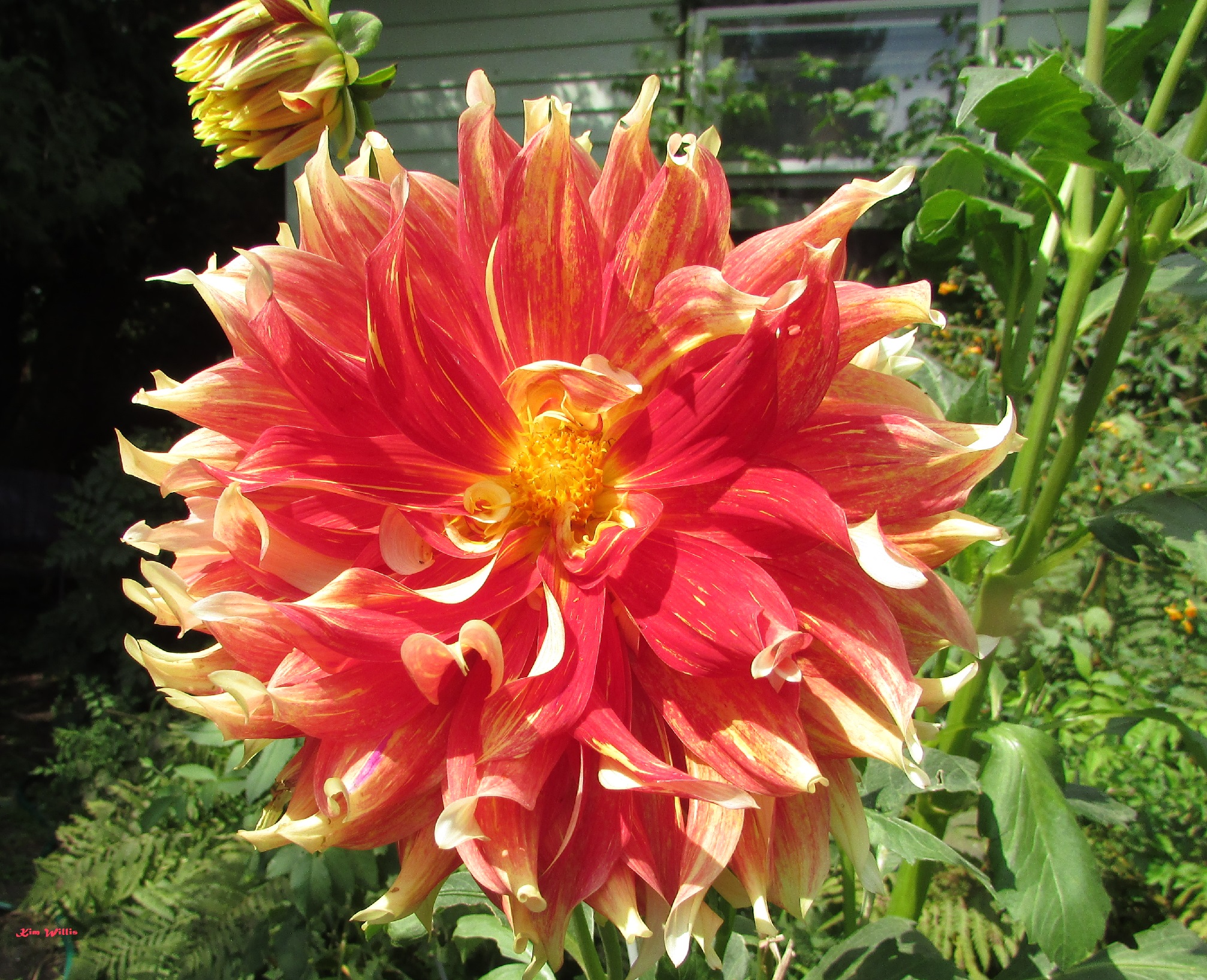
Dahlia
It’s a cold, drizzly gray day here, a preview of November. I gave in and let my poor shivering husband turn on the furnace. I spent yesterday bringing in the last of the potted stuff, as it may freeze tonight. I dug up several huge taro plants and repotted them and the last of the geraniums in one container on the deck.  I remembered this morning that there is a purple eucomis out there that needs to be dug but it will have to wait a day or two.  It will be fine if the foliage is killed.

I do expect a freeze tonight if this rain clears out. That should end things in the garden. There are still things in bloom, the salvia ‘Love and Wishes’ is blooming, morning glories are blooming, roses, mums, black eyed Susans, even some zinnias and cosmos are still blooming.  The tuberous and bedding begonias, one million bells plant and alyssum in my containers are all still blooming, although the petunias have given up.

I started to dig up the tuberous begonias yesterday but made myself quit. The house is packed with plants, and they are easy to acquire in the spring. I keep reminding myself not to save everything.  I did save the special, daffodil flowered one and I brought in one pot of fibrous begonias that was especially pretty.

Yesterday I picked all the dahlia blooms because they will be killed by a freeze and I will dig those dahlia tubers this coming week too, as well as some potatoes.  And I have bulbs to plant, quite a few, so I hope we get some sunny weather next week. It doesn’t have to be that warm, just not raining. The article below is about just that- digging and planting bulbs.

I am still fussing with lights inside the house, trying to get timers right and making sure everything gets light.  Our electric bill should be climbing now.  The thing I hate most about Michigan in winter is the lack of sunlight, we get so many cloudy gray days here.

There are still big flocks of robins feasting on autumn olive berries here.  I am still hearing red winged blackbirds and killdeer and seeing turkey vultures soaring around. But my feeders are still not as full of birds as they were in other years.

I have seen an all brown and an all black wooly bear caterpillar as well as some with both colors. That folk myth of the wooly bears color deciding what kind of winter we will have is plainly not true. Actually, wooly bear caterpillar color is random and more likely due to genetics than weather.  Of course, the human weather forecasters are kind of confused this year too, it seems.

Bulbs-digging and planting

It’s that time of year when gardeners are either planting bulbs or digging them up. If you want flowers in the spring like tulips and crocus, you plant them now. If you had some nice bulb and tuber plants such as cannas, dahlias and calla lilies in the garden this summer you may want to dig them up and store them over the winter. Start them early in spring indoors or just plant them in the garden after danger of frost has passed in the spring.

Here’s a list of summer blooming bulbs and tubers that can be dug and stored dormant over winter. Canna, calla, dahlias, glads, crocosmia, peacock orchids, tuberous begonias, eucomis (pineapple lilies), taro, and elephant’s ears.  Remember you don’t have to dig these bulbs, you can treat them like annuals, but in planting zones lower than 7 they will die over the winter, and you will need to buy new ones in spring.

Here’s a list of spring blooming bulbs and tubers that need to be planted in fall, in the ground or in large outside containers, for spring bloom. Tulips, daffodils, narcissus, crocus, hyacinths, fritillaria, snowdrops, corydalis, windflowers, trilliums, alliums, blood root, trout lilies, and there are many more spring blooming bulbs/tubers. Try something new every year if you can.

Lilies can be planted in spring or fall. They do not need to be dug and stored inside for winter. A few types of lilies are not winter hardy in all zones so check the zone hardiness before planting.

Peonies and a few other perennials are also planted in the fall and do not need to be dug up each year and stored if they are hardy in your planting zone.

Digging up bulbs and tubers for storage

I like to remove the summer blooming bulbs and tubers before I plant the spring blooming bulbs because it allows me to find places to pop the spring blooming bulbs in without lots of foliage in the way. So, after the first frost has killed or damaged the foliage of summer bulbs and tubers, I dig them. First, I cut back most of the foliage, leaving just enough to be able to handle the clumps easily.

I try to dig the summer bulbs and tubers on a warm sunny day if possible. I take a small shovel and loosen the soil all around the foliage clump. Most of these summer bulbs have grown larger than when you planted them and may have produced new bulbs and tubers.  So, I loosen a large circle around them, putting the shovel blade all the way into the soil all around the clump.

Next my preference is to get down there with my hands and try to lift the clump out of the ground.  I sometimes need to dig a little deeper to get under the clump.  I do this gently so as not to break off tubers or cut through bulbs or tubers.  Sometimes you can grasp remaining foliage and just lift up the clump. Check the site thoroughly for additional bulbs or tubers as many have multiplied.

Once the clump of bulbs or tubers is lifted out of the ground I shake or brush as much soil off the clump as possible. I like to let them dry in the sun for a few hours after digging. Then I brush more soil off if needed. If you cut through a bulb or tuber, you should discard it. Tubers or bulbs that break off a main stem or clump can be saved.  Many of them will grow in the spring.

I put my bulbs and tubers in net bags I save from year to year so I can keep varieties separate. I save net bags from spring planted bulbs or things like onions and oranges.  Sometimes I have so many tubers from some things that I use a separate bucket for that variety.  (You can use paper bags for storing bulbs and tubers but don’t use plastic bags.)

Mark the bulbs with the variety name or plant color by attaching a tag to the bag you put them in. You don’t need to do this if that information isn’t important to you, but I like to know the name or color because it helps me decide where to plant them in the garden in the spring. If your dahlia tubers are clean enough you can use a marker and write the name of the variety right on the tuber. It won’t hurt them.

Once bagged I put the bulbs and tubers in buckets or boxes filled with wood shavings. I lightly moisten the shavings by dumping some in a large tub and adding a small amount of water – I want the shavings to feel barely damp, so I add water a little at a time.

I put some damp shavings on the bottom of a container, add some bulbs and tubers, then more shavings, then more bulbs, in layers. The top should be completely covered with shavings.  If you don’t have shavings, you can use dry leaves, sawdust, peat moss, chopped straw, vermiculite, or even shredded paper. I have found that pine shavings are the best medium for storing bulbs in but others like different substances.  

After the bulbs and tubers have been packed in something the containers should be set in a dark, cool area.  The temperature should not go below freezing but should not go above 45 degrees F for best storage.  This should be an area that does not get rain or snow, you need to control the moisture.

By the way if you have an old refrigerator and don’t have tons of bulbs and tubers to store you could store them there.  Set the frig to stay between 40-45 degrees F.

As an alternative way to store bulbs and tubers you can cut back the foliage of potted plants and bring the whole pot inside to a cool, dark place.  I often do this with calla lilies and begonias that were growing in pots over the summer. I have done this with things like rain lilies and eucomis (pineapple lilies) also. I usually cut the foliage back on these or let it die back naturally in a cool, dark place.

I have even brought in huge potted cannas with their foliage intact, in this case I took them into a cool, bright area and let them continue to grow and even bloom for a while. You keep these watered. They do need a rest period though, even if it’s short. So, after a few weeks inside let the pots dry out, cut back the foliage and move the pots to a dark cool place.

Check your bulbs/tubers for mold about 2 weeks after you store them.  This is the most dangerous period as it is when the bulbs/tubers are often still damp. If the tuber/bulb still feels firm, you can wipe off mold and let the bulb/tuber air dry for a day or two before putting in back in storage. If any bulbs/tubers feel soft or mushy, they should be discarded.

Check your stored bulbs and tubers once a month. Discard soft, molded ones and replace the packing material, or spread it out somewhere and let it dry, if it feels too moist.

If tubers or bulbs feel and look shriveled, they may be too dry. Add just a little moisture to the packing material. Lower the temperature of the storage area if you can. If its close to spring, say late March, you can pot up the bulbs and tubers in damp growing medium, put them in a brightly lit place above 50 degrees but below 70 degrees and let them get a head start on spring.


Asiatic lilies- plant in fall or spring

Planting bulbs and tubers

Planting bulbs and some tubers for spring bloom is a pretty easy job. You can do it anytime until the ground freezes but planting them a month before that is ideal. If you are in planting zones 8 and higher you need to buy pre-chilled bulbs.  Or you can store bulbs in your refrigerator for about 8 weeks before planting. These bulbs need a cold dormant period to bloom.

Finding a spot where you don’t hit dormant bulbs and tubers from last year can be a problem, at least in my garden. Hopefully you have pictures of your garden in the spring so you can look at them and get an idea where things were planted last year. If you do dig up bulbs and tubers and they aren’t too damaged, just replant them.

The rule of thumb is to plant bulbs about 3 times as deep as their height. A tulip bulb that’s 2 inches high should be planted 6 inches deep. But for tubers and some bulbs there are often other considerations. So, make sure to check the label directions or look up those plants before you get started.

You can make individual holes or dig up a larger area, space the bulbs and then cover them. Spacing of bulbs depends on the species, so look at the directions. But I find most people spread the bulbs out too far, bulbs look better when closely planted. It can seem like a lot when you look at planting 100 bulbs, but really that 100 bulbs doesn’t look like much in the spring if they are widely spaced.

Also, unless you have a specific design in mind don’t plant bulbs in single, long rows as this doesn’t look natural. Plant them staggered, in groups of least 3-5 bulbs or in several rows back to back.

While it may look bare when you are planting the bulbs/tubers in the fall, consider what might be growing there in the spring. Bulbs that bloom early can get tucked close to hosta and other large perennials because they will bloom and be done before the plants get large. But later blooming bulbs may have their blooms smothered by fast developing perennial plants.

Similarly, bulbs and tubers that need sun can often be planted under deciduous trees and they will bloom and mature their foliage before the tree casts much shade. But if a later blooming bulb that needs sun is planted under that same tree it may not do well.

If you want spring blooming bulbs to return each year their foliage needs to yellow and die down naturally. Consider this when you plant them. I like to plant bulbs in the perennial garden where the yellowing foliage will be hidden by growing perennials. That’s why planting things like crocus and bluebells in the lawn needs to be considered carefully. Are you willing to let the grass grow long until the bulb foliage has matured?

Some tulip bulbs do not return reliably the second year. Read the variety description and look for tulips described as perennial. Still, you will probably lose some bulbs every year. For this reason, I plant some kind of new tulip variety every fall.

Critter problems

One of the most common problems people have with bulb planting is having animals dig up and eat the bulbs. When you plant try to leave the area looking like the soil is undisturbed, freshly dug earth is attractive to squirrels in particular. And cats don’t eat bulbs but like to “use” freshly dug areas and may dig bulbs out of the ground. So after planting cover the area with a mulch of leaves, or maybe the debris from your perennial plants. You can add a layer of chicken wire or fencing but it must be removed in early spring.

DO NOT USE BONEMEAL WHEN PLANTING BULBS. This is the number one reason many bulbs get dug up and eaten. Many species of animals are attracted to the smell of bonemeal, and they can smell it underground. Also, you do not need to use fertilizer when you plant bulbs, but if you want to use it, use a fertilizer that does not have bonemeal or bloodmeal and that’s meant for bulbs. Scatter it on top of the area you planted, don’t put it in bulb holes.  

Daffodil, narcissus, fritillaria and allium bulbs are not bothered by animals as much as other bulbs. They are rarely eaten but can still be dug out of the ground.

Here is another thing to be aware of, some bulbs such as daffodils are poisonous to dogs. Dogs will eat things other animals won’t unfortunately. I almost lost a small dog after it ate part of a daffodil bulb. Keep your dogs away from areas where you are planting bulbs. Your little helper may grab a bulb without you knowing it.

Make sure to mark or make a map as to where you planted what bulbs or tubers. No, you won’t always remember. And it helps in the spring when you want to plant some dormant perennials early in spring, in case the bulbs or tubers have not emerged yet, or you aren’t certain what is growing where you want to plant.

Whether you are planting bulbs and tubers or digging them up this fall remember that bulbs and tubers are a valuable edition to any garden. Spring blooming bulbs provide some of the first food sources for pollinators plus their blooms are very welcome for human observers too. And summer blooming bulbs like dahlias are often some of the last flowers in the garden and provide both food for pollinators and color for the landscape. Bulbs and tubers are a gardener’s friend.


“I hope I can be the autumn leaf, who looked at the sky and lived. And when it was time to leave, gracefully it knew life was a gift.”
— Dodinsky


Kim Willis

All parts of this blog are copyrighted and cannot be used without permission.

Contact me at williskim151@gmail.com


Thursday, October 14, 2021

October 14, 2021 Gathering seeds

 Hi Gardeners

Heavenly Blue morning glory
What a beautiful October day we had yesterday.  October in Michigan this year has been very unusual. We got more rain than already this month than we got all summer, but we also have had some warm, pleasant days. And the garden likes it.

Some things of course, are done regardless of weather. The ferns have browned and dried up. My petunias have straggled themselves out and the million bells have only a few paltry blooms. The hostas are ragged and yellowing. But the landscape type roses are going strong and blooming like crazy, the dahlias are looking great, toad lilies are still blooming and some of the mums. Sedum is blooming. Alyssum and both tuberous and bedding begonias are blooming just fine.

The tall marigolds, nasturtium, zinnias, tithonia, cosmos and that odd little anoda plant are all blooming. In fact, some of the seeds must have lain dormant through the hot spell in spring and I have some younger annual plants just starting to bloom. 

The long mild fall has also allowed some perennials that seeded themselves earlier in the year to start blooming, when normally they would not have bloomed until next year.  I have young black eyed Susans and bellflowers blooming.  If we escape frost for another week or two, I may have a new batch of woodland nicotiana come into bloom. And a clematis I planted this spring has managed to squeak out a single bloom, it had a rough start, and I did not expect it to bloom this year.

One of the plants I did not think would mature in time managed to burst into prolific bloom this week.  I planted what was supposed to be 2 ‘Heavenly Blue’ morning glories on the front ramp rails. They grew like crazy but took forever to start blooming.  One of the plants turned out to be the white flowered ‘Pearly Gates’ though.  I already had some moonflowers blooming on those rails but now I have white flowers day and night. Because it’s late in the season the morning glories are staying open most of the day.

Inside things are blooming well too.  The Dipladenia is blooming far better under the grow lights than it did outside. Streptocarpus and gerbera daisies are also blooming nicely.  My pink doubled flowered hibiscus has 5 blooms today. I have a tiny flowered fuchsia called ‘Heron’ and African violets in bloom too.

All my geraniums and many other plants I over winter are potted now but they are still outside on the deck. I do still have to pot one canna and the taro. I leave my canna in pots and let them bloom on the porch until about December, when they begin to go dormant. Then I just leave the tubers in the pots until spring.

How are the bird at your house? I have noticed fewer and fewer birds this fall. There are flocks of robins feasting on Autumn olive berries in our old pasture as they migrate through, but our feeders are not seeing the traffic we usually see this time of year.  Last month I thought the birds absence was probably because there was abundant natural food available. Now I am beginning to wonder.  I used to fill feeders every 2-3 days.  Now they are going 10-14 days before emptying. There are still plenty of squirrels though.


 Collecting and storing seeds

As the gardener strolls through the garden in late summer and fall he or she may notice a lot of seed pods hanging on various garden plants, maybe on some plants you never dreamed you could start from seeds.  Wilderness hikers and people touring public gardens may also notice various seeds that they would like to collect. Many parks prohibit removing any plant material, and you should ask permission from someone in charge of a public or private garden before collecting seeds. 

Please be considerate when collecting from public/natural areas, don’t take all the seeds. No one needs more than one milkweed pod, for example, since there are many seeds packed inside. If everyone collects as many pods as they see, there won’t be seeds left to replenish milkweed stands in natural areas. And seeds are winter food for many birds and other animals.


Milkweed pod

But collecting the seeds won’t help you grow new plants if you don’t know when to collect the seeds and how to store them correctly.  Every plant species has different requirements for optimizing the germination of its seeds, so it pays to know what species you are collecting seeds from.

Seeds are plant embryos and the plant kingdom has devised many ways to protect the baby plant inside until the time is right for it to start growing. Some plants use a hard seed coat, some use chemicals and some program their seeds to require periods of cold, alternating heat and cold periods or periods of alternating moist and dry conditions before the seed germinates.  

Some seeds are ready to germinate the minute they hit moist soil, others require months or years of dormancy before they awaken.  Some plants even have seeds with a variable dormancy, some sprout quickly; other seeds from the same plant delay their sprouting for various periods of time.  This is to ensure that if conditions are poor when the first batch of a plant’s seeds sprout, later sprouters may have better conditions.

Make sure they are ready

In most cases you want to collect the seed when the seed pod or fruit surrounding the seeds is fully ripe.  Since we eat some fruits before they are fully ripe, like cucumbers, you must know what a ripe fruit looks like for that plant and wait to harvest the seeds.  Corn should turn dry and hard on the stalk before saving seeds.  Melons should be mushy ripe and the seeds black or dark brown for watermelon before harvest. Peppers must be fully ripe- and they can be many colors when ripe- and soft. Cucumbers are big and yellow or brown when ripe.

Most seed pods or seed heads turn brown and dry when the seeds are ready to harvest. The opening of pods means the seeds are ripe. The trick in collecting seed pods and seedheads to get the seeds is to not let them split or otherwise disperse the seeds before you collect them, but still be mature. On a warm day a closed pod in the morning may have shot off the seeds or dropped them on the ground by evening.

If seed pods and seedheads are almost dry and nearly ready to harvest you can cut them and put them in paper bags in a warm dry place to finish drying. Separate the varieties and species because they may drop the seeds.  Or you can surround seed heads or pods with paper bags and tie them right on the living plant.

These cleome pods are ripe and splitting

Collect seeds on a warm, sunny dry day if at all possible.  It’s best to collect most types of seed before a heavy frost or freeze but collection after that can still work for many seeds. I know some of you will collect seeds on the spur of the moment and stick them in your pocket, but it’s really better to make seed collecting an organized activity. Carry bags or envelopes to separate species or cultivars and something to label the bags. You may want tape to seal bags or envelopes.

Label your bags!  This is the biggest mistake amateurs make, they think they will remember what plants they saved seed from. And when they get ready to plant them they will be on line posting pictures and asking other gardeners to help them remember.  If you don’t know the name of the plant you collected seeds from at least write a description of the leaves and flowers or what the fruit or pod looked like and keep that with the seeds.  

Sometimes gardeners have a hard time distinguishing the actual seeds from the seed pods, or remnants of flowers and fruit. Put the ripe seed heads or pods in paper bags then close and shake them.  You may see loose seeds in the bottom. If you can’t decide what is a seed and what is the pod or husk, save it all.

Some plants make seed pods or even fruit and yet there are no seeds inside. Lilies often do this. Some hostas make pods that don’t have seeds too. When gathering pods take a look inside some of them. If they don’t have seeds it’s probably a sterile plant and useless to collect.

In most cases a ripe pod or seed head will split or otherwise open or drop its seeds, but in some cases even ripe pods must be opened.  Some flowers like Echinacea, rudbeckia, zinnia and others with daisy like flowers will have a bit of dried petal attached to the seed. Even when dry some of these flower heads must be pulled apart to separate the seeds. 

One note of caution here.  Do not try to dry seeds you want to germinate in the microwave, oven or food dehydrator. That’s ok for seeds you are going to eat but it will kill the embryo’s in seeds you want to use for planting.

Sometimes fruit needs to rot

In some cases, for seeds to be properly stored and then sprout, the fruit must first rot or ferment.  Rotting fruit keeps seeds moist for a while.  And chemicals caused by the decomposition process may be necessary in some cases to soften the seed coat.  The most common garden plant that really needs fermentation is the tomato. While you can cut open a very ripe tomato and extract the seeds for storage, it’s better to let the tomato turn to a rotting, fermenting mush before separating out the seeds, drying them and saving them. Germination rates will be higher. 

Many seeds are prepared for germination in nature by passing through some animal’s digestion system. You can ferment or rot fruits in a nicer way though.  Simply place a ripe fruit in an open container and let it sit for a while. You can cut the fruit in pieces if needed.  Label the containers if you have several varieties of something to ferment.  You’ll want to put the containers somewhere where you don’t smell them and the flies they attract won’t bother you.  Make sure animals can’t eat them. 

Let the fruit rot until it’s a watery, smelly unrecognizable mass.  Then put the contents in a fine wire mesh strainer and gently rinse with clean water until clean seeds are left in the strainer. Spread the seeds on a piece of screen and let them dry in a warm, dark place until they look and feel thoroughly dry before storing. If you spread the seeds on newspaper or paper towels they often stick to the paper as they dry and can be hard to remove.

Storing seeds

When you do have the seeds separated from pods and fruit let them dry for a few more days in a warm dark location.  Almost all garden seeds need to be thoroughly dry before storing them, so they don’t mold or rot. Clean out pieces of stem, pod and other debris before storing. 

It’s best to place seeds in paper packages, cheap envelopes work, even a twist of tissue or fold of newspaper, before placing them in larger sealed glass or plastic containers. This helps absorb moisture. You can add a bit of powdered milk wrapped in tissue to each container to absorb moisture too.  Once again- label containers, (or the packets inside), there’s nothing worse than forgetting what kinds of seeds you carefully saved.

Ligularia seed head

After your seeds are packaged store the seeds of most common garden plants in the refrigerator crisper drawer or another cool, dry dark spot.  Most plants grown in temperate climates, both natives and nonnatives, annuals and perennials need a period of cold dormancy before they germinate. Even if they don’t, they will store better in a cool location.

Common garden annuals, perennials and bi-annuals like zinnias, marigolds, cleome, calendula, nasturtium, annual sunflowers, petunias, poppies, hollyhocks, coleus, begonias, dill, borage, basil, sage, thyme, carrots, lettuce, beets, radishes, spinach, cabbage, Brussels sprouts, cauliflower, broccoli, peas, beans, tomatoes, peppers, eggplant, melons, squash, pumpkins, and cucumbers can simply be stored dry in a cool place.

Many common garden perennials need stratification to germinate properly. These include; Aconitum, Alchemilla, Asclepias (Milkweed), Baptisia, Bloodroot, Buddleia, Candytuft, Caryopteris, Chelone, Cimicifuga, Clematis, Chinese Lantern, Delphinium, Eremurus, Evening Primrose, Filipendula, Fuchsia, Gentians, true Geranium species (Cranesbill Geranium), Helianthemum, Helianthus, Heliopsis, Helleborus, Heuchera, Hardy Hibiscus, Hypericum, Incarvillea (Hardy Gloxinia), Knautia, Lavender, Marsh Marigold, Mazus, Nepeta (Catmint), Penstemon, Persicaria, Phlox (all types), Platycodon, Primrose, (all types), Ranunculus, Rudbeckia (Black-eyed Susan, most types), Saponaria (Soapwort), Saxifrage, Scabiosa, Sedums, Sempervivums (Hen-and-Chicks), Sidalcea, St. John’s-Wort, Stokesia, Thalictrum, Tiarella, Tricyrtis (Toad-lily), Veronica, Violas, Violets, Virginia Bluebells.

Gardeners can achieve stratification by simply planting the seeds of the above plants in the fall in the ground where you want them to grow and marking the spot.  Or you can plant the seeds in pots, (label those pots!), of potting mix, well moistened and sink them in the ground and cover with mulch.  Remove the mulch when the ground thaws.

I do not recommend winter sowing in milk jugs and other things. The jugs often get plants growing too early, then they are killed by a hard freeze.  Or the plants get too hot in sunny weather and cook. Often they don’t drain well and seeds rot. Or conversely, they don’t allow enough water to get inside. If you want to winter sow don’t enclose the pots, plant in open pots or in the ground.

A compromise is to place the seeds in moist vermiculite in containers in the crisper of the refrigerator, which will be cold enough for most seeds.  They won’t freeze and thaw like outside, but 12 weeks of this cold treatment will get most of them to germinate. After 12 weeks bring them to a warm sunny spot to start growing.

Akebia fruit with seeds

Seeds that should not be stored very long

These seeds should be planted soon after you collect them.  If they are cold hardy, you can plant them outside. Otherwise plant them in pots inside.  The sooner they are planted the better germination will be. These seeds are; Anthurium, Asparagus species, Clivia, perennial Delphinium, Geranium (Pelargonium), Gerbera, Ginkgo, Impatiens, Kochia, Philodendron, Magnolia, onions, Passiflora, Potentilla, Salvia splendens, Tanecetum coccinium (or Pyrethrum).

Some of these seeds can be stored for a short time, but germination drops with age. Store them in a cool, dry, dark spot.

Some tropical plant seeds may do better in warmer storage and some seeds may actually need freezing temperatures to properly prepare them for germination. The person collecting the seeds should look up what storage and germination requirements for each species are.  If it’s a cultivated species this information is readily available. If it’s a native variety that’s fairly common that information is also available. But for some native plant species you’ll need to be a bit of a detective to find out what its seed storage and germination needs are.

Remember not all seeds produce plants that look just like the parent. If you collect seeds from hybrid plants the offspring grown from seed may be a different color, size or shape. And sometimes seeds from certain species are very difficult to germinate.

Seed collecting is a fun and thrifty way of getting new plants. So this fall take a walk around your garden and save some seeds to experiment with in spring.


"The trees are in their autumn beauty,
The woodland paths are dry,
Under the October twilight the water
Mirrors a still sky."

-William Butler Yeats-


Kim Willis

All parts of this blog are copyrighted and may not be used without permission.

Contact author at kimwillis151@gmail.com


Sunday, October 3, 2021

October3, 2021 Fall garden clean up- should you do it?

 Here in Michigan a stretch of beautiful fall weather is just ending, it’s raining today.  It’s the second busiest time of the year for me- moving plants back inside. I have been busy arranging and rearranging, repotting and hooking up grow lights. The tropicals/houseplants are all inside, I still have to bring in things like geraniums and bulbs in pots.  I’ll be hustling to get that done this week.

I’m going to bring in a water plant called Umbrella palm, Cyperus alternifolius.  I bought it in a 4-inch pot, which I placed in my little decorative pond on top of a 10-inch pot to raise it up to the top of the water level. I filled that pot to weigh it down. It made perfect conditions for the Umbrella palm, I guess. 

When I went to pull the now 6 feet tall palm out of the water it took all my strength and several heaves.  It had filled the larger pot with roots and then covered the sides of the pot with roots. I have it in a large bucket so I can keep the bottom in water, but I haven’t moved it in yet. I’m going to need help moving it.  I told my husband we could put a little pond inside, but so far, he is against that -lol.

It’s amazing how much a plant can grow outside in just a few months. My lemon tree is a foot higher and 2 feet wider. The variegated ginger is probably 3 feet wider- it is huge. And everything else grew too.  It then becomes a matter of where to put them when you bring them inside. I have plenty of space – well enough space- for the “shelf” size plants, it’s the “floor” size plants that are the problem. My husband wants to be able to see the TV for some reason.

In the outside garden things are starting to look a bit tattered and old. I’m itching to cut some of it down, but I’m forcing myself to wait just a bit longer, until after the first frost. Last year we had a frost in late September and a good freeze by October 16.  It doesn’t look like frost this year for at least another week, but things can change quickly this time of year.

So, what’s the right time to clean up the garden, fall or spring?

There is always a debate among gardeners whether to clean up the garden in the fall or spring. Frankly it boils down to being a personal decision for the flower beds anyway, but there are some things to consider before making the decision.

Flower bed cleanup in fall can be done if you like a neat look going into winter. Many gardeners do fall clean up. But leaving the cleanup- or at least most of it until spring does have some advantages. Birds and beneficial insects can use the seeds and plant parts left behind over winter. Seed heads, stalks and stems, and grass clumps can provide winter interest in a bland environment.


Time for clean up?

But the most compelling reason to leave cleanup until spring is that it is the way nature does it. The dying foliage protects the crowns and roots of plants and traps snow, which also protects plant parts. The decomposing foliage returns nutrients to the soil. One plant to certainly leave alone until spring is the chrysanthemum. Removing stems in fall often removes buds for next year’s foliage at their base. You can carefully cut dead stems back to about 6 inches but don’t remove stems to the ground.

But if you do like a neat, orderly look or dread spring cleanup, don’t let others guilt trip you about insects and small animals needing debris to winter in. Just take the stems and leaves to a compost pile and they can overwinter there. Or make a few piles in the back of the garden that will be easy to move in spring.

It’s best to wait until a hard freeze has killed the herbaceous plants before cleaning in the fall. Until then the leaves are still making energy for the plant, even if they look ratty. These are the plants that die to the ground and come back from the base in spring. Of course, dead, crunchy stems and leaves can be removed at any time.

If you remove all the dead stems and foliage of certain plants you may want to mark the spot, especially for things like hardy hibiscus, which come up quite late in the spring, so you don’t damage the plants planting bulbs or spring flowers.

Do not trim tree peonies and Itoh peonies in fall. Other peonies can be pruned to the ground after a hard freeze. Some plants like coneflowers and daisies begin growing new foliage at the base of old stems in fall. You can cut off the old stems but leave the new growth alone.

Don’t do too much pruning of woody plants and roses in the fall. Winter kill starts at the tip of a branch/cane and works down. The dead areas can protect areas further down the branch.  If you cut branches back to 6 inches in fall, they may die back to 3 inches or less or die completely.  If you leave them longer, they will probably die back a few inches, leaving many more buds below the dead area.

Pruning in the fall may remove flower buds from spring blooming woody plants. As a general rule, don’t prune woody plants in the fall that bloom in spring. Most of these already have buds formed for next year.  Plants like hydrangeas and clematis have many bloom times and different species require different pruning times. That’s why it’s important to remember what species you plant.

Fall blooming clematis such as Sweet Autumn clematis should be pruned later in winter, when they are completely dormant. But in zones 6 and lower I suggest leaving the pruning of most clematis until spring, winter damage will probably prune them for you. You can trim off dead areas in spring.

Hydrangea paniculate cultivars (cone shaped flowers) can be pruned in fall to a fat bud about 3 feet above ground. But it’s probably better to wait until late winter to do this. The mophead types- round balls- should not be pruned in fall or you won’t have many blooms next year.  You can clip off dead flower heads of any hydrangeas in fall, but many people like to leave them for winter interest.

If you want to collect seeds of various plants get it done soon. Some seeds of various flowers can be sown in fall for spring germination. To read more about seed storage and fall sowing you can go to this page; http://gardeninggrannysgardenpages.blogspot.com/p/seeds-germination.html

Before a freeze you need to dig up summer bulbs such as glads, dahlias, canna, and so on if you want them for next year. Pick a stretch of sunny days so that after you dig them you can let them cure in the sun for a day or two. Make sure they won’t freeze outside at night; you may have to bring them in at night.

Shake off the soil after it dries but don’t wash the bulbs/tubers.  After a day or two of curing you can cut off any foliage and pack the bulbs/tubers in slightly dampened wood shavings and store them in a cool, (above freezing) dry, dark spot. 


Fall asters

Vegetable gardens

You can leave the flower beds until spring, but vegetable gardens should be cleaned up after a hard freeze has stopped production or when you decide it’s time to quit for the year. This helps prevent the build-up of disease and insects. It’s especially important in years like this one, when diseases were prevalent.

But before you do the cleanup, take the time to jot down where each crop was planted, so you know where to rotate crops in the spring.  You could take a picture to help jog your memory also.  You may also want to make notes about what vegetable varieties you liked or that were very productive so you can look for those varieties in the spring. You think you will remember these things, but time has a way of fooling us all.

Remove all plant matter, including discarded fruits and compost it far from the garden. Disease organisms may survive on old stems, leaves and fruit so make sure all debris is cleaned from the garden.

Some of you may have been ambitious and planted a fall crop of lettuce or kale.  These crops may continue to grow for a while even after a frost or freeze so don’t worry about pulling them out.  If you use a low tunnel covered with spun row cover or plastic over these greens they may grow well into December.  Carrots, turnips, and some other root crops may lose their leaves but remain edible stored underground well into winter. 

If you are leaving carrots or other root crops in the ground to be harvested later mark them with a tall stake and cover with bales of straw before the ground freezes. These areas must be cleaned completely in the early spring.


Pick up and store trellis and cages. Remove any plastic mulch. A cover crop of rye can be planted or cover the ground with a thick layer of leaves or other organic mulch after the ground freezes. This is an excellent time to add fresh manure to vegetable gardens. 

If disease was a problem this year do not till the soil this fall.  Fungal spores and other disease organisms will be more likely to be killed by freezing weather if they are on the surface of the soil and not tilled under.  Tilling also buries weed seeds and protects them.  However, if you are going to expand the garden next year you can till and rake the proposed new areas.

If you keep chickens you can let them in the garden in the fall after you have harvested any edibles and they will gladly till and fertilize your soil for you.  You can let them in before you remove the old tomatoes and big cucumbers left over from summer.  They’ll eat those up and you’ll have less cleaning up to do.   Don’t let them in however if you planted fall greens like kale, not only could the greens be contaminated with E. coli or salmonella, they will be eaten.

It may be a bit sad to see the garden blackened after a hard frost or freeze.  That means it’s time to plant bulbs for spring blooms though. And remember there’s always next year- and that garden will be the best one yet.

 “October, baptize me with leaves! Swaddle me in corduroy and nurse me with split pea soup. October, tuck tiny candy bars in my pockets and carve my smile into a thousand pumpkins. O autumn! O teakettle! O grace!”

-Rainbow Rowell-


Kim Willis

All parts of this blog are copyrighted. 

To contact author - kimwillis151@gmail.com


Tuesday, September 21, 2021

September 21, 2021 Saving Garden Plants for growing inside

Hi gardeners 

This beautiful tropical hibiscus blooms
inside all winter

Tomorrow is fall equinox and for many of us it means time to think about moving the gardening activities inside.  A house is not a home without plants inside. I will begin working on the job tomorrow as we are in for some cool wet weather.  I am not looking forward to all the lifting and carrying to bring my jungle inside, but I am usually pleased when it's done.  Most of my houseplants go outside for summer and as it starts getting colder, vacation time for them is over.  It's always quite the task to find room for all of them as they grow bigger each year and I always add something new each year I want to save.

Many people seem to be confused as to what plants in the garden you can save and winter inside.  So I have written this article to help guide you in choosing which plants to save.

What Garden Plants Can I Save for Next Year?

If you are in zone 6 or lower you are probably thinking about bringing in the houseplants and it’s time to do so. Most gardeners in planting zones 6 and lower will experience frost before October 15, in an average year.  Your houseplants and any garden plants you want to save must be brought inside before frost or freezing temperatures.

Of course, you will bring your tropical houseplants inside but there are many other plants you can bring inside that will overwinter and you won’t have to purchase them again next year. Some tender perennials that are over-wintered inside become large, attractive plants that would be impossible to obtain with one summer’s growth outside.

True annual plants are plants that complete their life cycle in a single year. These plants won’t do well indoors and should be allowed to perish, despite how pretty they look. You may be able to cover them through a few frosts to prolong their outside life. These plants include marigolds, zinnias, cosmos, tithonia, nasturtiums, morning glories, sweet alyssum, sunflowers, dill, and basil.

Petunias and million bells (calibrachoa) are actually tender perennials (see below) but plants that have been growing outside all summer don’t do well when brought inside. You could try rooting a few cuttings to bring inside if you really want to save them.

Tender perennials are often plants we treat like annuals, allowing them to die with the first frost or at least a freeze. Many people don’t realize that some of these common garden plants are really perennials and if wintered inside will last for years.

Plants that can be overwintered inside at normal room temperatures and enjoyed all winter are below. These plants need temperatures that stay above 55 degrees, bright light and moderate watering over winter.

Abutilon,

agaves,

allamanda,

These two pots, ginger and begonias on the left and
fuchsia and begonias on the right could be brought inside
as is or  the plants could be potted separately.

aloes,

begonias (fibrous rooted and cane type),

bougainvillea,

coleus,

echeveria,

eucalyptus, 

fuchsia,

gardenias,

ginger lilies,

goldfish plant,

hibiscus (tropical),

impatiens,

Joseph’s coat (Alternathera ficoidea),

kalanchoes,

kangaroo paws,

lantana,

lemon grass,

lemon verbena,

lipstick plant,

livesaver plant (Huernia zebrina),

Setcreasea pallida
lofos

mandevilla

oxalis,

polka dot plants,

ornamental peppers,

rex begonias,

“spikes” (dracaenas),

sensitive plant,

Setcreasea pallida 'Purple Heart',

sweet bay,

sweet potato vines


Tender fruiting plants like the various citrus family members, papaya, pomegranate, and figs that aren’t hardy to your area can be wintered inside in warm conditions. Pomegranate and some figs may lose leaves and go semi-dormant in mid-winter.

Note: the category “succulents” covers many species of plants with many different needs. Some can be planted outside even in colder zones, some need winter dormancy and some do not.  Some will do nicely inside, others won’t. You need to find out the species of succulent you have to know what its winter requirements are.

Garden geraniums (pelargoniums) are a special case.  You can bring them into a warm bright room, and they will bloom all winter. Or you can let them go dormant in a cool place.

Instead of bringing whole plants inside you can sometimes take cuttings of plants and over winter small plants you start from them.  It is better to start these plants outside in late summer, and then bring in the small pots before frost. However, if frost threatens and it seems to be too much work to bring a large plant inside, take a few cuttings and try your luck.

This pretty ivy geranium can bloom inside all winter


Plants that need protected dormancy

There are other plants that you may want to overwinter inside in a cool spot. These will go dormant but will start growing again in spring when placed outside. These are plants that need some winter chill or resting period to grow well but can’t survive the cold of northern winters (zone 6 and below).

A cool spot is one above freezing, the low 40’s are ideal. The pots will need occasional watering but shouldn’t get too wet. Some plants will lose their leaves and that’s fine. Once the leaves have died on some of these, they won’t need much water at all. An unheated attached garage or unheated porch or basement may be a good place for these.  They should not be allowed to freeze.

Plants that need some dormancy or can tolerate it for winter storage include;

Argyranthemum,

I let brugmansia continue to bloom inside for a month
or so, then move them to cool, dormant  storage 
banana species,

brugmansia,

diascia,

Iochroma,

jasmine,

rosemary,

perennial reeds, sedges and grasses not hardy to your zone,

perennial salvias not hardy to your zone,

passionfruit vines.

Potted mums you used for fall decorations can be trimmed back to about 3 inches after blooming stops and overwintered in a cool place. In spring they will start growing again and can be planted in the ground outside. Many will survive the next winter in the ground.

Vegetable and herb plants

It’s true that tomatoes and peppers are perennial plants. But don’t try to overwinter the ones that grew in your garden, these will usually succumb to fungal diseases they picked up outside and are just too difficult to acclimate to indoor conditions.  Instead start new plants from seed in late summer – somewhere away from your garden plants or inside. You will need a grow light for success with these.

Don’t try bringing other vegetables inside. Under a grow light you can grow salad greens inside but start them from seed indoors. Chives can be potted and brought inside and will grow on a sunny windowsill or under grow lights, but most other herbs do not like indoor conditions. Sometimes basil can be grown from seed but often has disease problems inside. Some newly started thymes and mint may grow for a while under grow lights.

Lavender, sage, oregano, and rosemary do not like warm indoor conditions. They can overwinter in cool dormancy.

Tender bulbs and tubers

Bring these bulbs or tubers into a cool but not freezing area, with natural daylight, and leave the bulbs in pots to die back. After the foliage dies cease watering, keep above freezing, and then begin watering again in March, and place in full sun.

Caladiums,

calla lilies,

Colocasia- (elephant’s ears and taro),

Leave calla lilies in their pots to die back, then store.

Eucomis- (pineapple lilies)

peacock orchids,

rain lilies,

tuberous begonias

Other tender bulbs like cannas, glads, dahlias, crocosmia, etc. can be dug after a light frost kills the foliage and stored dry, with foliage cut off, in peat moss, sand, wood shavings or vermiculite.  They must be dug before a hard freeze.

What not to bring inside

Besides the true annuals and most vegetables listed at the beginning of the article don’t bring perennials that are hardy to colder zones (7 and below) inside for winter.  They need cold dormancy to survive. As mentioned above you can sometimes protect perennials that aren’t winter hardy to your zone but try to avoid purchasing plants that aren’t winter hardy where you live. These plants cannot be wintered in warm conditions. It can be tricky to give them enough cold but not too much cold.

Don’t bring in deciduous trees and shrubs, evergreen trees and shrubs, roses, fruit trees such as apples, pears, peaches and cherries, nut trees, raspberries, blackberries, blueberries, and grapes. Strawberries can be grown inside under grow lights but use newly started plants, don’t dig up garden plants. They won’t grow well on windowsills. Some mini roses are sold for inside growing, but don’t bring in garden roses. “Native” plants should not be brought inside for winter.

Most water plants don’t do well inside either. Like succulents each species has different requirements, and you need to know the conditions for winter these species prefer. If the water plant is hardy in your zone in a natural pond it probably won’t do well inside because it needs winter dormancy. Some tropical water plants may overwinter inside, but it’s hard to maintain the right conditions for them. I have tried to overwinter water hyacinths several times with no luck.

Preparation

If the plants you want to save are growing in the ground they should be dug up and carefully potted. If they are crammed into a container with other plants, it would be wise to separate the different plants and pot them separately.

Plants that are in containers that aren’t crowded can be brought inside in the pots they were growing in. Check the plants and the pots carefully so you don’t bring in small surprise guests like frogs and mice. Use a good, lightweight potting soil if you need to re-pot tender perennials you are bringing inside. 

Some insects can become a big problem indoors if they hitch a ride inside. It is a good idea to spray plants with an insecticide or use a systemic insecticide on them the day before you bring them inside.  If you do it outside you won’t pollute your indoor air and surfaces.  And the insecticides won’t impact pollinators inside your home. However, if you have pets that munch on leaves indoors you may want to skip the insecticide.

Don’t try to save too many tender perennials unless you have a big greenhouse. (Even I close my eyes and leave some behind.) Just save the most expensive, rarest or your personal favorites.  You can propagate cuttings from one or two plants for a new border of impatiens rather than trying to save the whole border. All plants need room and good light and the more you have, the more time you will spend caring for them. Trust me, I know.


Kim Willis

Copyright 2021 - This article is not to be reproduced without permission


Friday, September 10, 2021

September 10, 2021 Bees and Bulbs

The time is here for planting bulbs of those spring blooming plants that are so nice to see when the snow melts and soft breezes waft the aroma of sun percolated soil  to our noses. Our eyes crave flowers in spring. But there is another good reason to plant spring blooming bulbs.

Alliums of all types are bee favorites

Bees also crave flowers in the spring, in fact they are vital to bee survival.  As bees wake up and emerge from their winter homes, they go looking for flowers to feed on. There aren’t many things that bloom as early as spring blooming bulbs, and whether they are native species or not, bees will be very grateful to you for planting them.

Bees are attracted to blue, purple, white and yellow flowers in spring. Red, orange and pink flowers are not visited as much but some of the early spring flowers in those colors often have a yellow or white center that will attract bees. Luckily there are many spring blooming bulbs that will fulfill those bee desires.

Good spring flowering bulbs for bees are crocus, snowdrops, Anemone blanda (Windflowers), Corydalis solida, hyacinths, Muscari (grape hyacinths), Eranthus hyemalis (Winter Aconite), Ipheion, Chionodoxa, (Glory of the Snow), Pushkinia (Squill), Scilla, Ornithogalum (Star of Bethlehem), Erythronium, (Trout lilies, dogs tooth violets), Camassia, and alliums of all types.

Not all spring blooming bulbs are bee candy. Some common spring flowering bulbs don’t attract many bees, such as daffodils, narcissus,Fritillaria, Dutch iris and most tulips.  A few species tulips like T. bakeri and T. sylvestris are bee favorites as well as Fritillaria meleagris (Guinea Hen flower) in the Fritillaria family.

The bulbs of most bee friendly spring bloomers are small and should be planted in large drifts or groups. Most are inexpensive and buying 25-50 bulbs will cost you little. Plant them closely for the best show. Many of these beauties will multiply for you over the years into larger and more glorious shows.


Crocus

Some bulbs like crocus and snowdrops bloom very early, sometimes through the snow, and other bulbs like alliums bloom later in spring.  Planting a variety of these small bulbs helps the bees throughout spring. And it keeps the garden looking pretty too.

And the good news is that many of these early blooming bulbs are not deer favorites and will be left alone when they bloom. But the bulbs may be eaten by mice and squirrels shortly after you plant them.  And because they are planted shallowly, they are also subject to being heaved out of the ground during freezing and thawing.

To keep them from being eaten by mice and squirrels do not use bonemeal when planting. Bonemeal attracts these animals.  Also mulch bulbs lightly with chopped straw, leaves or chipped bark after planting to help disguise the disturbed soil. This also helps to prevent frost heaving.

If you plant the bulbs early you can often tuck them under perennial plants like hosta and daylilies and the pests will be less likely to find them. They will come up and bloom before your perennials get large.

Small spring blooming bulbs are excellent to plant under deciduous trees in woodland settings. They will complete their life cycles before the shade gets dense in most cases.  But they are also nice in the front of beds and close to the house so you can see them in early spring when you really need to see flowers. The bees will find them wherever you plant them.


Glory of the Snow

Most of the bulbs mentioned are hardy to zone 5 and many to zone 4 or even lower. Check the zone hardiness when purchasing. But if you live in warmer zones, zone 8 and higher, you will need to buy pre-chilled bulbs as they won’t get enough winter cold to bloom.

Now is the time (early fall) to purchase spring blooming bulbs and you can plant them until your ground freezes solid. Buying your bulbs from reputable mail order nurseries (most have websites too) usually gives you better results and better-quality bulbs than buying them in a big box store.

Some bulb companies I like are;

McClure and Zimmerman  https://www.mzbulb.com/

John Scheepers  https://www.johnscheepers.com/

Colorblends (for larger quantities), https://www.colorblends.com/


I know it can be tedious planting a 100 or so little bulbs but the more you plant, the better you’ll like the show.  (Some things like the larger alliums won’t need as large a display to make a statement.) You’ll quickly get a rhythm and method mastered as you plant your bulbs, and the job won’t seem as daunting. You’ll be surprised how many you can plant in a few hours. Many people plant bulbs as they do the fall garden clean up.

Add some more bulbs each year and try something different each year too. Bulbs are a quick and inexpensive way to brighten the garden in spring while you wait for the perennials and shrubs to begin blooming. And the bees will be happy you thought of them as well.


Winter aconite  top
Anemone Blanda -windflowers
Hyacinths - Bottom


Friday, September 3, 2021

September 3, 2021 Grading the garden

 Well, it’s September.  I dreaded it as a child because it meant summer vacation was over. I dread it as an adult because it means summer is over. Things haven’t changed much.

This month we see the autumn equinox on September 22, which is the calendar start of fall. But meteorologists use September 1, as the start of the fall season.  So get out that pumpkin spice stuff.

If you go out in the evening you know the daylight hours are becoming shorter much faster now, you can almost tell it from day to day. As the nights grow longer, they have more time to cool off so clear nights from now on are going to get chilly. I don’t mind that at all- until we get to the frost part.

Yep, that’s coming soon. Everyone in zones 6 and lower needs to keep an eye on the weather – looking ahead a few days to give yourself time to prepare.  While you can cover tomatoes and your blooming annuals a few times, your tropical plants need to be inside before even a light frost hits.  Covering them isn’t a good idea.

 I’m planning on cutting back a little on houseplants. Well, we’ll see anyway. My porch should be warmer this year and maybe more things can go out there. But I will still need to be moving some things around to accommodate the bigger sized plants that will be coming back inside.  And I have got to get lights and timers hooked up- September is always fun here.

This is the time when I evaluate my garden season and I give this one at best a C grade.  There were too many temperature extremes, too much variability and for us, not enough rain.  I know that may surprise some of you. Just a few miles south of here and to the west of us rain totals for the season pick up. And when you get to Detroit and some other southern areas they had an exceptionally wet season. Too bad we can’t spread it around.

Anyway, most gardens in the state of Michigan had problems one way or another. And we aren’t the only states.  I suppose somewhere people are having great garden years but many of us aren’t. We are going to transition into the La Nina weather pattern sometime some, so the experts say and that is going to alter the weather probably the opposite of what you had this year, so stay tuned.

In my garden the toad lilies and sweet autumn clematis are blooming and there isn’t much left that still has to bloom. The autumn sedums are starting to color up and the snakeroot is just starting to bloom.  I have one or two mums that are just starting to bloom.  Some of my mums have been blooming for a couple weeks now.  Soon it will all be over.  But right now, it’s still pretty colorful.

 I am still getting a few tomatoes and I see a melon or two.  But I will definitely give my food garden a C- this year. I don’t think it was the grow bags I used, although it didn’t help that it was so dry, and they dry out fast.  It was disease and other problems caused by the weather extremes.  Like everyone else is mentioning the tomatoes seem to be ripening very slowly and I fought all summer to keep the fungal problems controlled. Lettuce did well, but cukes did not.  Melons are producing but late and slow.

So, what will I do differently next year? I’m going to work on a water system for those grow bags and another way to keep weeds down between them. One thing I will say is that the one marihuana plant I have loves the grow bag and is the nicest plant in the garden.

 In the main flower bed, I have a spot that remained empty much of the year. I need to find something to plug in there.  It had a rose I hoped would mature and fill in, but the rose is not working there at all. It needs to have pink or purple flowers since there is so much gold and yellow in that area, or maybe a deep red.  I do have a red hardy hibiscus close to the area and maybe a deep pink one would work there.

Next year I probably will not plant petunias in the front bed since the perennials have matured and there just isn’t any “front edge” left for them by mid-summer, they are buried under larger plants. They do look nice early when the perennials aren’t at full expansion but later, they disappear.  And the clethra I have in that bed was buried this year by rudbeckia and sedums.  I’ll be moving it this fall.

 As the oak by the driveway has grown so has my shadier areas. The deck used to be full sun much of the day, but now it’s shaded about half the day.  The front border stays shady a bit longer in the morning as the tree is to the east of them. Already the lilies on the east end aren’t getting enough sun and will need to be moved. I’ll have to decide if I need to switch more plants from shade to sunnier areas too.

I’m going to expand the garden just a bit on the west side of the cedar trees. I’ll be clearing that area out this fall.  It’s not too large of a spot and it’s shady. I’ll probably stick with hosta, astilbe and maybe a few woodland natives.  I have hosta seedlings I can move.  On the east side of the house north of the deck I am going to try and rip out the common daylilies again. Some of the hopniss vine has to go too. I have done it 3 or 4 times in the past and they always come back. It’s a smaller area too, but I would like to have something there that’s prettier.

It’s time to order fall bulbs- well past time.  I have procrastinated this year. I love tulips but it’s always a gamble with the deer around.  Last spring, they didn’t bother much but you never know what they will do next spring.  I always pick one new species of bulb to try, and I am going through catalogs trying to decide which of the few I haven’t grown that I want to try.

What grade do you give your garden efforts this year?  What are your fall garden plans and what are you doing differently next year?  And most important- what new bulbs or plants are you going to try next year?


For it’s a long, long while from May to December. But the days grow short when you reach September. — Maxwell Anderson


Buy those bulbs so spring will be pretty

Kim Willis