Tuesday, September 21, 2021

September 21, 2021 Saving Garden Plants for growing inside

Hi gardeners 

This beautiful tropical hibiscus blooms
inside all winter

Tomorrow is fall equinox and for many of us it means time to think about moving the gardening activities inside.  A house is not a home without plants inside. I will begin working on the job tomorrow as we are in for some cool wet weather.  I am not looking forward to all the lifting and carrying to bring my jungle inside, but I am usually pleased when it's done.  Most of my houseplants go outside for summer and as it starts getting colder, vacation time for them is over.  It's always quite the task to find room for all of them as they grow bigger each year and I always add something new each year I want to save.

Many people seem to be confused as to what plants in the garden you can save and winter inside.  So I have written this article to help guide you in choosing which plants to save.

What Garden Plants Can I Save for Next Year?

If you are in zone 6 or lower you are probably thinking about bringing in the houseplants and it’s time to do so. Most gardeners in planting zones 6 and lower will experience frost before October 15, in an average year.  Your houseplants and any garden plants you want to save must be brought inside before frost or freezing temperatures.

Of course, you will bring your tropical houseplants inside but there are many other plants you can bring inside that will overwinter and you won’t have to purchase them again next year. Some tender perennials that are over-wintered inside become large, attractive plants that would be impossible to obtain with one summer’s growth outside.

True annual plants are plants that complete their life cycle in a single year. These plants won’t do well indoors and should be allowed to perish, despite how pretty they look. You may be able to cover them through a few frosts to prolong their outside life. These plants include marigolds, zinnias, cosmos, tithonia, nasturtiums, morning glories, sweet alyssum, sunflowers, dill, and basil.

Petunias and million bells (calibrachoa) are actually tender perennials (see below) but plants that have been growing outside all summer don’t do well when brought inside. You could try rooting a few cuttings to bring inside if you really want to save them.

Tender perennials are often plants we treat like annuals, allowing them to die with the first frost or at least a freeze. Many people don’t realize that some of these common garden plants are really perennials and if wintered inside will last for years.

Plants that can be overwintered inside at normal room temperatures and enjoyed all winter are below. These plants need temperatures that stay above 55 degrees, bright light and moderate watering over winter.

Abutilon,

agaves,

allamanda,

These two pots, ginger and begonias on the left and
fuchsia and begonias on the right could be brought inside
as is or  the plants could be potted separately.

aloes,

begonias (fibrous rooted and cane type),

bougainvillea,

coleus,

echeveria,

eucalyptus, 

fuchsia,

gardenias,

ginger lilies,

goldfish plant,

hibiscus (tropical),

impatiens,

Joseph’s coat (Alternathera ficoidea),

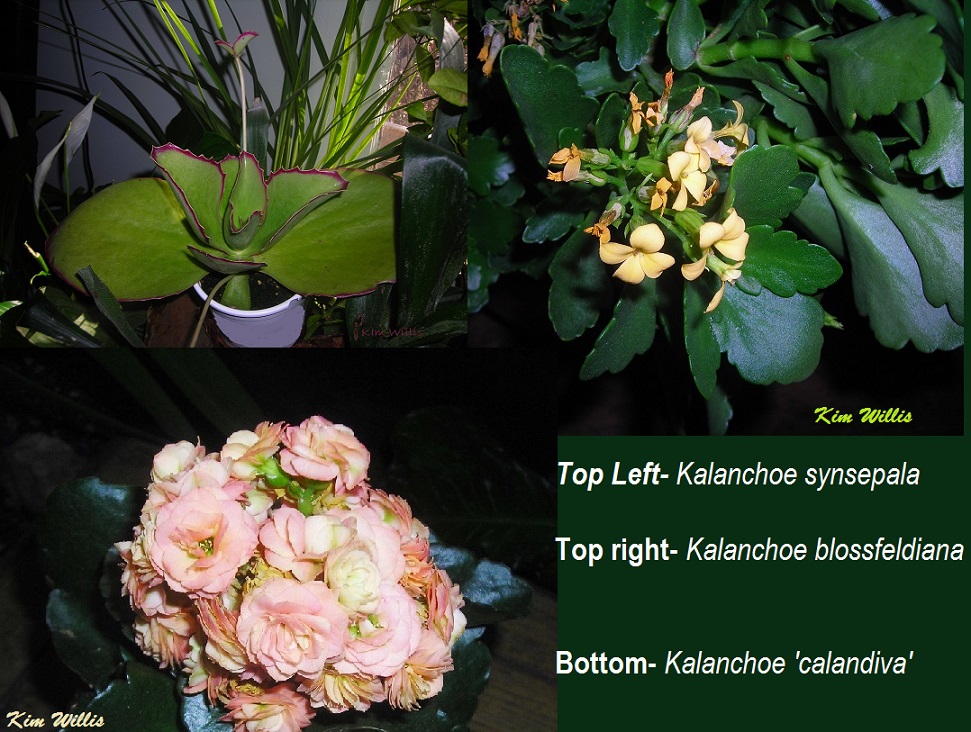
kalanchoes,

kangaroo paws,

lantana,

lemon grass,

lemon verbena,

lipstick plant,

livesaver plant (Huernia zebrina),

Setcreasea pallida
lofos

mandevilla

oxalis,

polka dot plants,

ornamental peppers,

rex begonias,

“spikes” (dracaenas),

sensitive plant,

Setcreasea pallida 'Purple Heart',

sweet bay,

sweet potato vines


Tender fruiting plants like the various citrus family members, papaya, pomegranate, and figs that aren’t hardy to your area can be wintered inside in warm conditions. Pomegranate and some figs may lose leaves and go semi-dormant in mid-winter.

Note: the category “succulents” covers many species of plants with many different needs. Some can be planted outside even in colder zones, some need winter dormancy and some do not.  Some will do nicely inside, others won’t. You need to find out the species of succulent you have to know what its winter requirements are.

Garden geraniums (pelargoniums) are a special case.  You can bring them into a warm bright room, and they will bloom all winter. Or you can let them go dormant in a cool place.

Instead of bringing whole plants inside you can sometimes take cuttings of plants and over winter small plants you start from them.  It is better to start these plants outside in late summer, and then bring in the small pots before frost. However, if frost threatens and it seems to be too much work to bring a large plant inside, take a few cuttings and try your luck.

This pretty ivy geranium can bloom inside all winter


Plants that need protected dormancy

There are other plants that you may want to overwinter inside in a cool spot. These will go dormant but will start growing again in spring when placed outside. These are plants that need some winter chill or resting period to grow well but can’t survive the cold of northern winters (zone 6 and below).

A cool spot is one above freezing, the low 40’s are ideal. The pots will need occasional watering but shouldn’t get too wet. Some plants will lose their leaves and that’s fine. Once the leaves have died on some of these, they won’t need much water at all. An unheated attached garage or unheated porch or basement may be a good place for these.  They should not be allowed to freeze.

Plants that need some dormancy or can tolerate it for winter storage include;

Argyranthemum,

I let brugmansia continue to bloom inside for a month
or so, then move them to cool, dormant  storage 
banana species,

brugmansia,

diascia,

Iochroma,

jasmine,

rosemary,

perennial reeds, sedges and grasses not hardy to your zone,

perennial salvias not hardy to your zone,

passionfruit vines.

Potted mums you used for fall decorations can be trimmed back to about 3 inches after blooming stops and overwintered in a cool place. In spring they will start growing again and can be planted in the ground outside. Many will survive the next winter in the ground.

Vegetable and herb plants

It’s true that tomatoes and peppers are perennial plants. But don’t try to overwinter the ones that grew in your garden, these will usually succumb to fungal diseases they picked up outside and are just too difficult to acclimate to indoor conditions.  Instead start new plants from seed in late summer – somewhere away from your garden plants or inside. You will need a grow light for success with these.

Don’t try bringing other vegetables inside. Under a grow light you can grow salad greens inside but start them from seed indoors. Chives can be potted and brought inside and will grow on a sunny windowsill or under grow lights, but most other herbs do not like indoor conditions. Sometimes basil can be grown from seed but often has disease problems inside. Some newly started thymes and mint may grow for a while under grow lights.

Lavender, sage, oregano, and rosemary do not like warm indoor conditions. They can overwinter in cool dormancy.

Tender bulbs and tubers

Bring these bulbs or tubers into a cool but not freezing area, with natural daylight, and leave the bulbs in pots to die back. After the foliage dies cease watering, keep above freezing, and then begin watering again in March, and place in full sun.

Caladiums,

calla lilies,

Colocasia- (elephant’s ears and taro),

Leave calla lilies in their pots to die back, then store.

Eucomis- (pineapple lilies)

peacock orchids,

rain lilies,

tuberous begonias

Other tender bulbs like cannas, glads, dahlias, crocosmia, etc. can be dug after a light frost kills the foliage and stored dry, with foliage cut off, in peat moss, sand, wood shavings or vermiculite.  They must be dug before a hard freeze.

What not to bring inside

Besides the true annuals and most vegetables listed at the beginning of the article don’t bring perennials that are hardy to colder zones (7 and below) inside for winter.  They need cold dormancy to survive. As mentioned above you can sometimes protect perennials that aren’t winter hardy to your zone but try to avoid purchasing plants that aren’t winter hardy where you live. These plants cannot be wintered in warm conditions. It can be tricky to give them enough cold but not too much cold.

Don’t bring in deciduous trees and shrubs, evergreen trees and shrubs, roses, fruit trees such as apples, pears, peaches and cherries, nut trees, raspberries, blackberries, blueberries, and grapes. Strawberries can be grown inside under grow lights but use newly started plants, don’t dig up garden plants. They won’t grow well on windowsills. Some mini roses are sold for inside growing, but don’t bring in garden roses. “Native” plants should not be brought inside for winter.

Most water plants don’t do well inside either. Like succulents each species has different requirements, and you need to know the conditions for winter these species prefer. If the water plant is hardy in your zone in a natural pond it probably won’t do well inside because it needs winter dormancy. Some tropical water plants may overwinter inside, but it’s hard to maintain the right conditions for them. I have tried to overwinter water hyacinths several times with no luck.

Preparation

If the plants you want to save are growing in the ground they should be dug up and carefully potted. If they are crammed into a container with other plants, it would be wise to separate the different plants and pot them separately.

Plants that are in containers that aren’t crowded can be brought inside in the pots they were growing in. Check the plants and the pots carefully so you don’t bring in small surprise guests like frogs and mice. Use a good, lightweight potting soil if you need to re-pot tender perennials you are bringing inside. 

Some insects can become a big problem indoors if they hitch a ride inside. It is a good idea to spray plants with an insecticide or use a systemic insecticide on them the day before you bring them inside.  If you do it outside you won’t pollute your indoor air and surfaces.  And the insecticides won’t impact pollinators inside your home. However, if you have pets that munch on leaves indoors you may want to skip the insecticide.

Don’t try to save too many tender perennials unless you have a big greenhouse. (Even I close my eyes and leave some behind.) Just save the most expensive, rarest or your personal favorites.  You can propagate cuttings from one or two plants for a new border of impatiens rather than trying to save the whole border. All plants need room and good light and the more you have, the more time you will spend caring for them. Trust me, I know.


Kim Willis

Copyright 2021 - This article is not to be reproduced without permission


Friday, September 10, 2021

September 10, 2021 Bees and Bulbs

The time is here for planting bulbs of those spring blooming plants that are so nice to see when the snow melts and soft breezes waft the aroma of sun percolated soil  to our noses. Our eyes crave flowers in spring. But there is another good reason to plant spring blooming bulbs.

Alliums of all types are bee favorites

Bees also crave flowers in the spring, in fact they are vital to bee survival.  As bees wake up and emerge from their winter homes, they go looking for flowers to feed on. There aren’t many things that bloom as early as spring blooming bulbs, and whether they are native species or not, bees will be very grateful to you for planting them.

Bees are attracted to blue, purple, white and yellow flowers in spring. Red, orange and pink flowers are not visited as much but some of the early spring flowers in those colors often have a yellow or white center that will attract bees. Luckily there are many spring blooming bulbs that will fulfill those bee desires.

Good spring flowering bulbs for bees are crocus, snowdrops, Anemone blanda (Windflowers), Corydalis solida, hyacinths, Muscari (grape hyacinths), Eranthus hyemalis (Winter Aconite), Ipheion, Chionodoxa, (Glory of the Snow), Pushkinia (Squill), Scilla, Ornithogalum (Star of Bethlehem), Erythronium, (Trout lilies, dogs tooth violets), Camassia, and alliums of all types.

Not all spring blooming bulbs are bee candy. Some common spring flowering bulbs don’t attract many bees, such as daffodils, narcissus,Fritillaria, Dutch iris and most tulips.  A few species tulips like T. bakeri and T. sylvestris are bee favorites as well as Fritillaria meleagris (Guinea Hen flower) in the Fritillaria family.

The bulbs of most bee friendly spring bloomers are small and should be planted in large drifts or groups. Most are inexpensive and buying 25-50 bulbs will cost you little. Plant them closely for the best show. Many of these beauties will multiply for you over the years into larger and more glorious shows.


Crocus

Some bulbs like crocus and snowdrops bloom very early, sometimes through the snow, and other bulbs like alliums bloom later in spring.  Planting a variety of these small bulbs helps the bees throughout spring. And it keeps the garden looking pretty too.

And the good news is that many of these early blooming bulbs are not deer favorites and will be left alone when they bloom. But the bulbs may be eaten by mice and squirrels shortly after you plant them.  And because they are planted shallowly, they are also subject to being heaved out of the ground during freezing and thawing.

To keep them from being eaten by mice and squirrels do not use bonemeal when planting. Bonemeal attracts these animals.  Also mulch bulbs lightly with chopped straw, leaves or chipped bark after planting to help disguise the disturbed soil. This also helps to prevent frost heaving.

If you plant the bulbs early you can often tuck them under perennial plants like hosta and daylilies and the pests will be less likely to find them. They will come up and bloom before your perennials get large.

Small spring blooming bulbs are excellent to plant under deciduous trees in woodland settings. They will complete their life cycles before the shade gets dense in most cases.  But they are also nice in the front of beds and close to the house so you can see them in early spring when you really need to see flowers. The bees will find them wherever you plant them.


Glory of the Snow

Most of the bulbs mentioned are hardy to zone 5 and many to zone 4 or even lower. Check the zone hardiness when purchasing. But if you live in warmer zones, zone 8 and higher, you will need to buy pre-chilled bulbs as they won’t get enough winter cold to bloom.

Now is the time (early fall) to purchase spring blooming bulbs and you can plant them until your ground freezes solid. Buying your bulbs from reputable mail order nurseries (most have websites too) usually gives you better results and better-quality bulbs than buying them in a big box store.

Some bulb companies I like are;

McClure and Zimmerman  https://www.mzbulb.com/

John Scheepers  https://www.johnscheepers.com/

Colorblends (for larger quantities), https://www.colorblends.com/


I know it can be tedious planting a 100 or so little bulbs but the more you plant, the better you’ll like the show.  (Some things like the larger alliums won’t need as large a display to make a statement.) You’ll quickly get a rhythm and method mastered as you plant your bulbs, and the job won’t seem as daunting. You’ll be surprised how many you can plant in a few hours. Many people plant bulbs as they do the fall garden clean up.

Add some more bulbs each year and try something different each year too. Bulbs are a quick and inexpensive way to brighten the garden in spring while you wait for the perennials and shrubs to begin blooming. And the bees will be happy you thought of them as well.


Winter aconite  top
Anemone Blanda -windflowers
Hyacinths - Bottom


Friday, September 3, 2021

September 3, 2021 Grading the garden

 Well, it’s September.  I dreaded it as a child because it meant summer vacation was over. I dread it as an adult because it means summer is over. Things haven’t changed much.

This month we see the autumn equinox on September 22, which is the calendar start of fall. But meteorologists use September 1, as the start of the fall season.  So get out that pumpkin spice stuff.

If you go out in the evening you know the daylight hours are becoming shorter much faster now, you can almost tell it from day to day. As the nights grow longer, they have more time to cool off so clear nights from now on are going to get chilly. I don’t mind that at all- until we get to the frost part.

Yep, that’s coming soon. Everyone in zones 6 and lower needs to keep an eye on the weather – looking ahead a few days to give yourself time to prepare.  While you can cover tomatoes and your blooming annuals a few times, your tropical plants need to be inside before even a light frost hits.  Covering them isn’t a good idea.

 I’m planning on cutting back a little on houseplants. Well, we’ll see anyway. My porch should be warmer this year and maybe more things can go out there. But I will still need to be moving some things around to accommodate the bigger sized plants that will be coming back inside.  And I have got to get lights and timers hooked up- September is always fun here.

This is the time when I evaluate my garden season and I give this one at best a C grade.  There were too many temperature extremes, too much variability and for us, not enough rain.  I know that may surprise some of you. Just a few miles south of here and to the west of us rain totals for the season pick up. And when you get to Detroit and some other southern areas they had an exceptionally wet season. Too bad we can’t spread it around.

Anyway, most gardens in the state of Michigan had problems one way or another. And we aren’t the only states.  I suppose somewhere people are having great garden years but many of us aren’t. We are going to transition into the La Nina weather pattern sometime some, so the experts say and that is going to alter the weather probably the opposite of what you had this year, so stay tuned.

In my garden the toad lilies and sweet autumn clematis are blooming and there isn’t much left that still has to bloom. The autumn sedums are starting to color up and the snakeroot is just starting to bloom.  I have one or two mums that are just starting to bloom.  Some of my mums have been blooming for a couple weeks now.  Soon it will all be over.  But right now, it’s still pretty colorful.

 I am still getting a few tomatoes and I see a melon or two.  But I will definitely give my food garden a C- this year. I don’t think it was the grow bags I used, although it didn’t help that it was so dry, and they dry out fast.  It was disease and other problems caused by the weather extremes.  Like everyone else is mentioning the tomatoes seem to be ripening very slowly and I fought all summer to keep the fungal problems controlled. Lettuce did well, but cukes did not.  Melons are producing but late and slow.

So, what will I do differently next year? I’m going to work on a water system for those grow bags and another way to keep weeds down between them. One thing I will say is that the one marihuana plant I have loves the grow bag and is the nicest plant in the garden.

 In the main flower bed, I have a spot that remained empty much of the year. I need to find something to plug in there.  It had a rose I hoped would mature and fill in, but the rose is not working there at all. It needs to have pink or purple flowers since there is so much gold and yellow in that area, or maybe a deep red.  I do have a red hardy hibiscus close to the area and maybe a deep pink one would work there.

Next year I probably will not plant petunias in the front bed since the perennials have matured and there just isn’t any “front edge” left for them by mid-summer, they are buried under larger plants. They do look nice early when the perennials aren’t at full expansion but later, they disappear.  And the clethra I have in that bed was buried this year by rudbeckia and sedums.  I’ll be moving it this fall.

 As the oak by the driveway has grown so has my shadier areas. The deck used to be full sun much of the day, but now it’s shaded about half the day.  The front border stays shady a bit longer in the morning as the tree is to the east of them. Already the lilies on the east end aren’t getting enough sun and will need to be moved. I’ll have to decide if I need to switch more plants from shade to sunnier areas too.

I’m going to expand the garden just a bit on the west side of the cedar trees. I’ll be clearing that area out this fall.  It’s not too large of a spot and it’s shady. I’ll probably stick with hosta, astilbe and maybe a few woodland natives.  I have hosta seedlings I can move.  On the east side of the house north of the deck I am going to try and rip out the common daylilies again. Some of the hopniss vine has to go too. I have done it 3 or 4 times in the past and they always come back. It’s a smaller area too, but I would like to have something there that’s prettier.

It’s time to order fall bulbs- well past time.  I have procrastinated this year. I love tulips but it’s always a gamble with the deer around.  Last spring, they didn’t bother much but you never know what they will do next spring.  I always pick one new species of bulb to try, and I am going through catalogs trying to decide which of the few I haven’t grown that I want to try.

What grade do you give your garden efforts this year?  What are your fall garden plans and what are you doing differently next year?  And most important- what new bulbs or plants are you going to try next year?


For it’s a long, long while from May to December. But the days grow short when you reach September. — Maxwell Anderson


Buy those bulbs so spring will be pretty

Kim Willis

Friday, August 27, 2021

August 27, 2021 - Fostering plants- You Got To Be Kidding

Crassula spp.

Succulents are a big fad in Japan as they are in many other countries right now, including the US.  Most people don’t realize that the term “succulent” applies to a whole range of plant species that have similar characteristics, but not necessarily similar care. I wish growers would stop labeling plants “succulents” and label them with their actual scientific names.

Plants classified as succulents have some beautiful and unusual members. But all succulents are not easy to grow, like dim light or can survive long periods without water. Each species has different needs, and some are quite difficult to grow in the home.

Many people now seem to be keeping plants simply as décor, and photographic subjects that can be posted on social media. In Japan it is extremely popular to post pictures of your succulents on Tic Toc and Facebook. The larger and more exotic your collection of succulents is the better.

But some of these social media personalities have found keeping a plant they spent a lot of money on so they could take pictures of it, is not as easy as they thought.  So, a new industry has blossomed in Japan, plant fostering.

That’s right, in Japan for a fee, greenhouses and experienced plant people will keep your prized succulents at their place, and send you pictures or let you come take pictures of the plants for your social media feed.  You get the recognition – but they get paid well for caring for your plant.

The top 10% have always had paid gardeners but take credit for their beautiful gardens. Martha Stewart is a prime example here, she’s shown working in her gardens, and no doubt she does do a little work. But the vast majority of the work on the gardens of Martha’s three homes is done by professionals. Most of the cooking and crafting is also done by others but that’s another story.

But rather ordinary people paying others to maintain houseplants for them so they can post pictures and talk about their collections is something new, and something I hope doesn’t spread to the US.  Houseplants are meant to be in YOUR house.  There’s no benefit to having houseplants if they are being kept somewhere else and being cared for by someone else.

This fostering of plants is also contributing to what has become a worldwide problem, the poaching of rare and endangered succulents from various countries. If an experienced grower is caring for a difficult succulent, it makes people more likely to spend big bucks on that rare succulent for their collection.  And if someone shows up at their door looking to arrest them for poaching, the plant isn’t there and they can say they the pictures they posted were faked.

I can see where unscrupulous plant fosters could make some big bucks off this insane trend also. Keep one of those big, rare succulents around and let people believe it’s theirs, while you sell it over and over again.

So far, I haven’t seen this fostering trend take hold in the US. It’s bad enough people are paying ridiculous prices for common plants because of a trend. But at least they seem to be trying to actually care for them at their home.  And that’s the way it should be.


If you are into collecting succulents because everyone else seems to be, at least make sure you get plants that have a scientific name attached, so you can find proper information on caring for them. All succulents do not like to grow in dim light and be watered by the teaspoon (or worse idea -ice cube.) They can’t be sat on a shelf and forgot about until you want a picture. And plants do not like to be shuffled into new pots and staged in new locations frequently for pictures either.

Houseplants will only benefit you if they are in your house and you are caring for them. Succulents are not the only plant type that are easy to grow, there are many types of easy to maintain houseplants. If you want houseplants, take the time to learn about them and assess your home so you can pick the right one for the spot and your capabilities.

Friday, August 20, 2021

August 20, 2021 'Blue my Mind'

 I decided on the spur of the moment this spring to make my containers on the porch have a red, white and blue theme. As some of you know, it’s hard to get true blue in flowers, red and white are easy. I put some of the bluer hued petunias in three planters, with red and white begonias and gerbera daisies but for a focal planter on the porch I wanted something different.  I put some blue salvia in the center, added red gerberas, and white alyssum, and then added this little blue charmer, an Evolvulus, cultivar named, ‘Blue my Mind’.

I tried growing Evolvulus years ago and wasn’t thrilled with it. But modern cultivars have made “dwarf morning glories” a much nicer plant. If you like pretty blue flowers, then this little charmer may be for you.  I am quite pleased with it as a container plant, where it’s hard to get true blue flowers.  It also makes a great ground cover in warmer areas.  I can see it mixed with red and white vinca or maybe pink wax begonias.

Evolvulus glomeratus is indeed related to the morning glories, but the leaves and flowers are not similar, except for one factor, the flowers do close up late in the day or if it’s raining, like morning glories. The true-blue flowers are about an inch across, have 5 petals and a white center. The plant does not vine but has a trailing habit.  The leaves are, slightly hairy, small and oval. In full sunshine the leaves have a silvery look, in less light the silver cast is lost.

Evolvulus is a tender perennial, it’s grown as an annual in northern states, but it might be a candidate for wintering indoors.  I intend to try it and see. Plants bloom from June all through summer. It prefers full sun but will still bloom in partial or light shade. It’s drought tolerant but too much dryness will make it stop blooming.

It’s easy to care for, mix in a little fertilizer at planting and give it a fertilizer boost in August. It doesn’t need deadheading but if it gets straggly in late summer it can be cut back and it will quickly regrow. No known insect pests but bees are quite fond of the flowers. It rarely has any disease problems.

Keep this little charmer in mind for your containers next year. It makes an excellent “spiller” or ‘filler” and that pretty blue brings something different to the show.

Tuesday, August 17, 2021

August 18, 2021 - Tomato hornworms are not hummingbird moths

Tomato hornworm
 OK- here's a rant. I am seeing this on various social media sites constantly and it's making me frustrated. It seems people are now into "rescuing" tomato hornworms because they are under the mistaken assumption that they turn into "hummingbird moths". This FALSE information is everywhere and people keep blindly sharing it.

Tomato and tobacco hornworms are closely related and both eat tomato plants. They are those big fat green worms with a "horn" on the butt. Their scientific names are Manduca sexta ( tobacco, most common) and Manduca quinquemaculata ( tomato). When they finish devouring your tomatoes they drop to the ground and make a chrysalis in the soil. They mature into a big gray moth called a hawkmoth, NOT A HUMMINGBIRD MOTH.
There are several species of hummingbird moths, those little day flying moths that can hover and look somewhat like a hummingbird. The most common one is the White Lined Sphinx moth -Hyles lineata. Their caterpillars do not eat tomato plants, but feed on a variety of plants like apples, grapes, peonies and four o clocks. Some species have a little horn but the caterpillars are smaller and do not look like hornworms. They are what turns into the moth that looks like a hummingbird and is often called the hummingbird moth.
Let me repeat this - TOMATO HORNWORMS DO NOT TURN INTO HUMMINGBIRD MOTHS!
So do not rescue tomato/tobacco hornworms. Squish them. Each one of them will make a whole lot more hornworms. They are not what we consider a beneficial insect.
This is what the tomato hornworm turns into. This is a Manducta or hornworm adult moth.

Photo credit Mark Dreiling Bugwood.org


Tuesday, August 10, 2021

August 10, 2021 Jewels of Summer


I’ve been hearing the shrieking of a baby bald eagle outside for some days now.  They are very loud, noisy babies. I haven’t seen it, but I recognize the sound from other years when I have seen them. If you want to know what they sound like go to this site  https://www.birdnote.org/listen/shows/baby-bald-eagles   While it’s nice knowing a new eagle is joining the population his shriek does get annoying after a while.

I have seen no signs of diseased birds yet. But I have noted that the orioles seem to have vanished already. There are hummers around, but fewer than last year. Lots of chickadees and Carolina wrens this year at my house.

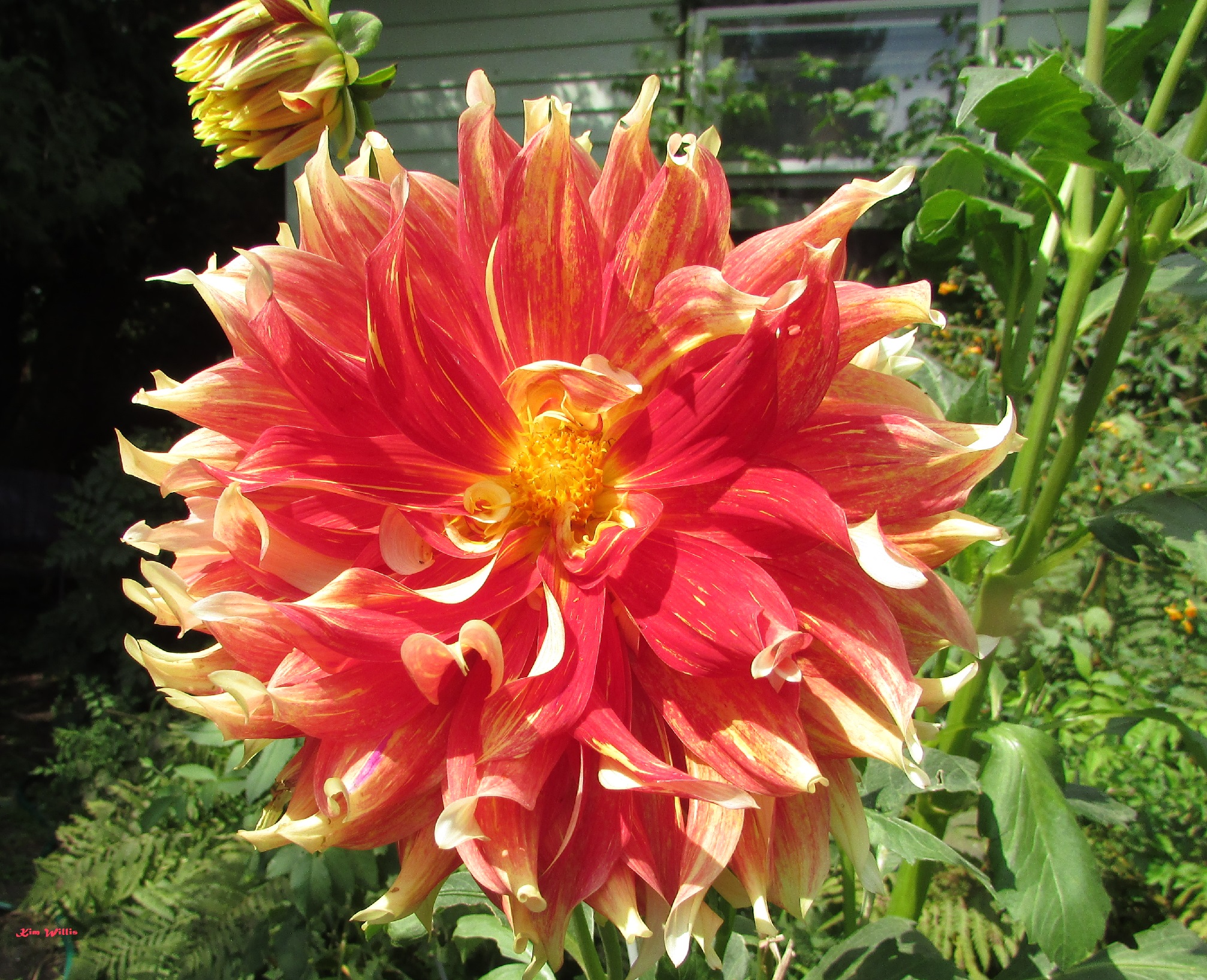
We had rain early this morning, but the sun is out now, and the humidity is awful. The heat and humidity make any gardening chores difficult now, but some plants are happy in it. The taro and umbrella palm I have are going nuts. My dahlias are now huge and flowering well. The garden phlox have huge heads of flowers this year.

There are lots of things blooming right now in my garden. The lilies are just about gone and only a few daylilies are still in bloom.  But rudbeckia, shasta daisies, echinacea, lavender, buddleia, rose of Sharon, coreopsis, some early mums and lots of annuals are blooming. My hardy hibiscus and the ligularia will bloom soon.  

I like hosta flowers and I have varieties that bloom from June to September.  The hosta Aphrodite is starting to bloom now, it has huge white trumpet flowers that smell wonderful. And there’s an old fashioned, narrow leaved hosta that was here when we bought the place that’s coming in bloom. It has tiny purple flowers on long stalks. 

When you let hosta bloom and make seeds instead of deadheading the flower scapes you’ll get baby hostas coming up in many places and some of them are delightful looking crosses of your adult hosta. I find little plants and transplant them around the place every year. So much easier and nicer to the big plants than dividing them so you have more plants.  And who knows that wild pairing may produce the next star of the hosta world.

Food gardeners- time to think about next year

It seems like it’s been a pretty bad year for food gardening in many places.  If your garden wasn’t flooded, it’s consumed by fungal diseases. Tomatoes aren’t ripening for some folk and cucumbers are small and bitter. I think the type of weather we are having, too hot, erratic temperature shifts, too wet, violent storms, is only going to intensify over the next few years.

Gardeners shouldn’t give up. Evaluate what you could do different next year. Maybe you could buy disease resistant varieties next year instead of heirlooms. Maybe you need raised beds for drainage. Or a drip irrigation system because your area is getting drier. Or maybe you should move, and I’m not saying that lightly.

Some of you may need to reevaluate your desire to grow without pesticides against your desire to produce food. With the stresses plants now have from erratic weather organic growing can leave you without much of a crop.  Pesticides can be used safely without harming the environment. You just have to use them wisely.

 A Gem of a Weed- Jewelweed

If you are looking for something a bit unusual for the garden that attracts hummingbirds and bees, you may want to try jewelweed. It’s blooming now in my garden and the plants are filled with buzzing bees. Hummingbirds go from each tiny flower to the next collecting nectar. And jewelweed is a native plant that will grow in a wide range of conditions. It may spread aggressively in some conditions so do consider that.

Jewelweed flower, seedpods below it

Jewelweed, (Impatiens capensis), is a native wildflower of Eastern North America.  Another common name for the plant is Touch- Me- Not, which comes from the seed pods which explode when touched. Jewelweed also has uses in herbal medicine and could be a candidate for the medicinal garden. 

Jewelweed is a tall, rangy plant so it looks best in the back of gardens and in informal settings.  It’s a good plant to use in rain gardens, native wildflower gardens and partially shaded areas.  It will grow in full sun if the soil is kept moist such as near ponds or in wet areas. It will also grow in deeper shade, but it will flower less.  It prefers rich, water retentive soil and doesn’t do well in sandy soil.

What Jewelweed looks like 

As a member of the impatiens family the jewelweed leaf is very similar to the leaf of the impatiens we plant in our yards. They are large, broadly oval, thin, and have toothed edges.  Jewelweed grows much taller than garden impatiens, with stems up to 6 feet in height if conditions are good.  The stems are very succulent, can become as large as your finger, and have prominent swollen joints.

The flowers of Jewelweed begin as small clusters of whitish buds coming from a stem and leaf junction.  They are on top of the leaves as they begin but by the time the buds open the leaves will have grown and the pretty yellow and orange flowers will dangle beneath them on slender stalks.   It begins blooming in mid-summer and will continue until frost.

Jewelweed flowers are yellow and funnel shaped ending in a narrow, curled tube called a spur. There is a flare of petals at the lower side of the opening that are usually orange.  The yellow throat of the flower is speckled with orange and brown. The flowers vary from 1/2 inch to an inch long.  There is another species of jewelweed that has flowers that are entirely pale yellow. 

While they are tiny, jewelweed flowers are incredibly attractive to bees and hummingbirds.  Hummingbirds will often spend many minutes in a patch of jewelweed hovering over each tiny flower for a sip.  In mid-day a clump of jewelweed will often be buzzing with clouds of bees.

The flowers turn into long, slender seed pods that explode at the slightest touch throwing the tiny, hard, dark seeds far from the plant. The plant is an annual, which readily, some say too readily, reseeds in the garden each year.

Getting started with jewelweed

It can be hard to find seeds or plants to get jewelweed established in your landscape. Some wildflower catalogs may carry the seeds. You can look for ripe seedpods in the fall on wild stands of the plant, and then immediately scatter the tiny seeds in the area you want them to grow.  Don’t worry about covering the seed.  Rain and snow should wash the seeds into the top of the soil. The plants should begin to grow in late spring as the soil begins to warm up.  You could start the seeds inside in pots in early spring, but the seed will need to be stored in a cool place such as a refrigerator for several months before it will germinate.  Plant seedlings outside after the danger of frost has passed.

If you know someone who has jewelweed growing on their property you may be able to get permission to dig up small plants in early summer. The plants are annual, they won’t return the next year. But if you get plants established in early summer, they should shed lots of seeds in early fall and come back in multiples the next year. Remember, however, that jewelweed is considered a native wildflower and you can’t dig it up on public lands. Keep the plants well-watered after transplanting.

The weed part of jewelweed’s name is apt. Once established in a good spot the plant will spread rapidly and may become invasive.  You will never have to worry about finding seeds again if jewelweed likes the home you provided. The plants are easy to pull so thinning the stand to a reasonable number isn’t hard.  Jewelweed doesn’t spread by suckering or the root system, just by seed.

Jewelweed doesn’t seem to suffer from the diseases garden impatiens have, such as downy mildew.  It doesn’t need fertilizer.  It will need to be watered if conditions get dry or the plants look like they are wilting.

Herbal uses

The leaves and stems of jewelweed contain an astringent and a fungicide.  The plant juice was used by Native Americans to heal poison ivy rash and calm the sting of insect bites and stinging nettles. Jewelweed often grows close to poison ivy or nettles.

For a rash or bite, the stems are crushed, and the pulpy liquid is smeared on the rash or bite. However, double blind scientific studies have found jewelweed has no effect on poison ivy rash after it appears. It may be that using it as soon as you contact the plant will wash off or absorb some of the oils before it can cause a rash.

In herbal medicine the juice of crushed plants is boiled with soft fat or lard and is used to cure athlete’s foot and applied to hemorrhoids. The plant, however, should not be eaten or made into tea as it is mildly toxic.

This pretty plant is truly a “jewel” and belongs in the landscape solely for its attraction to bees and hummingbirds if nothing else.  Find a place to tuck some jewelweed into on your property and enjoy the show.


Leave the monarchs alone!

I saw a post on social media where a woman was driving somewhere, saw some milkweed, pulled over and looked for monarch eggs on it.  She found a bunch of eggs and removed them all and took them home. People were congratulating her on her “find”.  And this makes me really angry.

A neighbor asked me why some people might be in her field pulling up milkweed.  She didn’t mind the milkweed being taken because milkweed is toxic to livestock, but she didn’t like strangers trespassing on her property. I explained to her the fanatic desire of some people to “rescue” monarch eggs and she laughed. I laughed too, but it’s not funny.

If we thought robins were becoming endangered, do you think we would support people raiding robin’s nests and bringing the eggs home to hatch and raise?  No reputable nature group or government agency would allow that, and you would probably be arrested for doing so. So why aren’t we arresting people who steal monarch eggs?


This raising of monarch caterpillars by everyone needs to stop. People should not be out collecting eggs from wild milkweed and bringing them home to raise in a jar. If you want to plant some milkweed in your yard for monarchs, fine.  But if they lay eggs there, leave them alone, just like most of you would leave a robin’s nest alone that you found in your yard.

People cannot do a better job of raising monarchs than nature does. No matter how hard you try and how well you think you do raising them, you don’t even come close to providing what living in their natural environment does. We don’t need “farmed” monarchs.

It would be interesting to know how many of those snatched eggs sat in the car until they died, got forgotten on a shelf, hatched but the captors were too busy to go out and find milkweed for them to eat, hatched but their kids squished them playing with them and so on.  I bet we would find the death rate staggering. Monarchs are not supposed to be pets or livestock. Caterpillars and butterflies should not be handled.

Yes, the caterpillars die in the wild too. But that is natural and normal.  Nature weeds out the unfit and allows the gene pool of the species to be improved by selection. Researchers have said that captive raised monarchs are often weak and may not know how to migrate. Some have deformed wings and other problems that nature would have eliminated. But being raised in a protective environment allows them to survive and possibly pass on traits that are not helpful to the species.  And lord help us if someone was told to kill a defective caterpillar/butterfly they were raising.

Monarch eggs and caterpillars belong outside on the milkweed, not in a cage in your house. I wish the DNR or some other government agency would state that and start punishing people for collecting eggs and caterpillars. If you want to see one hatch, turn into a chrysalis and then a butterfly, maybe take one or two eggs, not whole plants full of them.  Do not collect from parks, private property and natural areas.

It is not your job to raise monarchs to preserve the species. In fact, if you want to preserve the species it’s your job to leave them alone.  Protect some milkweed if you want to help.  There’s not even a consensus on whether monarchs are endangered, but if they are, it’s extremely important that you LEAVE THEM ALONE!

There’s a whole business now around raising caterpillars of various types. There are cages, equipment, books and sales of eggs going on everywhere. If a species is truly endangered, it should not be raised for sale. If people are out collecting eggs from nature to sell, as some surely are, this is much, much worse. Stop supporting this nonsense.

You are not helping to save the monarchs if you are out stealing eggs laid in the natural environment. You are destroying the species. If they lay eggs in your yard, on milkweed you planted, they still aren’t yours. They are wildlife and wildlife belongs to the state, even if it’s on your property. Leave them alone.

Let’s stop this fable that people are helping save the monarchs by taking them out of nature and rearing them in captivity. You aren’t. If anything, you are destroying the species. Just leave the poor monarchs alone.


"...August still stretched before us - long and golden and reassuring, like an endless period of delicious sleep."

- Lauren Oliver.


Kim Willis

All parts of this blog are copyrighted and may not be used without permission.


And So On….


Find Michigan garden events/classes here:

https://www.facebook.com/groups/118847598146598/

(This is the Lapeer County Gardeners facebook page)


Newsletter/blog information


If you have a comment or opinion you’d like to share, send it to me or you can comment directly on the blog. Please state that you want to have the item published in my weekly blog if you email me. You must give your full name and what you say must be polite and not attack any individual. I am very open to ideas and opinions that don’t match mine, but I do reserve the right to publish what I want. Contact me at KimWillis151@gmail.com