Tuesday, November 17, 2020

November 17, 2020 How do feel about your plants?

 Hi gardeners


It’s the kind of day where I just want to curl up and go back to bed. The wind is howling, it’s 32 degrees and gray outside. There’s a light coating of snow on the grass.

I’m sitting in my home office and the bird feeders outside the window are empty.  Birds keep landing and going away disappointed. I should go out there and fill those feeders. Maybe when it gets to 34 degrees.

Sunday we kept having small power outages- a minute or two- and power surges because of the high winds. I spent yesterday trying to get my plant light timers working right and I had to replace two bulbs that were ruined by the alternating power.

I think I have said this before but I can’t remember thirty years ago or so, having this many wind storms with 50-60 mile an hour gusts that go on for hours and hours. We had heavy rain for a while with it Sunday, so I guess we now know what being in a hurricane or tropical storm is like. It must be climate warming.

When I do take a walk outside, I notice that the petunias are still green. They aren’t blooming but they aren’t dead. Some lamium and the yucca are still green. There’s even a mum in a protected place blooming. I could harvest sage if I wanted, it’s still green. Even some of the roses still have green leaves.

I found a handful of bulbs I forgot to plant. I’ll be planting them tomorrow. There is still time to plant bulbs if the ground isn’t frozen. It’s better to plant them then to try and save the bulbs for next year. That just doesn’t work well. If you have bulbs left and the ground is frozen put them in the refrigerator for 6 weeks, then take them out and pot them in containers.

It’s a good time to prune oak trees if they need it as the insects that carry oak wilt are gone and the sap isn’t flowing in the trees. It’s also a good time to gather any seeds you might want to save- providing they are still on the plants.

Inside my house plants have fewer blooms now. I still have streptocarpus, fuchsia, hibiscus, geraniums, diascia and Thanksgiving cactus blooming. I am already ready for spring. A new year, a new start. I am beginning to plant shop for spring.

 Sowing flower seeds in the fall

You may think the planting season is over but there are some common garden flowers that drop their seeds in the fall. Those seeds need a period of cold to germinate and may need the freezing and thawing cycle to crack a hard seed coat and allow moisture in for germination. You may have some of the garden plants that require these conditions in your garden and they will self- seed for you if left alone. If you don’t have the plants and want them in your garden now may be the time, before the ground freezes solid, to sow some of those seeds.

Seeds that can be sown in the fall include: Bachelor's Button, Coreopsis, Cosmos, Echinacea, Flax, Larkspur, Moss Rose, Marigolds, Morning glory, Nasturtium, Pansy, Poppy, Strawflower, Sweet pea, Verbena and Zinnia.  Buy the seeds or collect dry seeds from friend’s plants. Some of these may also be planted in early spring.  Some wildflower and grass seed may also be suggested for fall planting. Check the label, plant description or a reference.  Chances are if nature drops the seed in late fall it likes fall planting.

Clear a spot in the garden of vegetation and loosen the soil. Sprinkle the seeds over the area. You may want to sprinkle them thickly as some will not germinate. You can thin in the spring. Very small seeds like poppy seed should not be covered but press them against the soil. Larger seeds like morning glory seed should have a loose layer of soil about a half inch thick placed over them. Don’t water the seeds. Nature should take care of that for you. 

You can apply a very thin layer of mulch such as pine needles or chopped straw but don’t use leaves or anything that mats over the seeds and don’t make the mulch deeper than a half inch. Make sure to mark the spots where you sow the seeds. Some may wait until warmer weather to emerge so don’t be in a big hurry in the spring to plant over them, thinking they didn’t sprout. If you have trouble with birds pecking at your seeds cover the area with netting.

It’s not too late to plant the seeds until the ground freezes solid.  After all nature will still be dropping them, even after the snow falls in some cases. 


Plant facts and trivia

Amaryllis- did you know that amaryllis bulbs need to be planted with one third of the bulb above ground? It takes 6-8 weeks for the bulb to produce a bloom stalk.

Bulbs for spring blooming flowers can be planted until the ground freezes. They do not store well until next year so get them planted.

Calendula flowers were once used to make butter a deeper yellow and they are fed to chickens to make their egg yolks a deeper yellow.

Daffodils are not eaten by deer. You can have flowers in early spring if you plant daffodils and narcissus.

Eggplants come in a number of colors besides purple including white, yellow, orange and pink. They all taste the same.

Flame violets are Episcia cupreata, a houseplant that is similar to an African violet with pretty leaves that have silvery veins. They have small tubular flame red flowers over a long period in the winter.

Gerbera daisies will bloom on and off all winter inside and make good houseplants. They do need a southern window or grow light.

Herbaceous plants are any plants that do not have a woody stem. If plants die back to the ground in winter, they are herbaceous.

Ice cubes should not be used to water orchids. Instead water them with about 2 tablespoons of warm water every few days.

Heel is the term for a bit of the main stem of a woody plant that is removed with a side shoot. Many woody plant cuttings start better if they have a heel attached.

Iresine are sometimes called Chicken Gizzards and are another plant with colorful foliage that you can grow inside. They come in various shades of red, purple and lime green with contrasting veins and are not hard to grow.

Jacobs Ladder or Polemonium caeruleum, are excellent perennial plants for the shady garden. There are now varieties with variegated foliage for color after the flowers fade. Flowers are generally shades of blue or white.

Kalanchoe is a family of plants with many interesting species, most of which are succulents. Some are hardy garden plants, but most are kept as houseplants in colder climates, where their shape and growing habits vary widely. Many of the species contain a cardiac poison, bufadienolide, so they should be kept where children and pets won’t eat them.

Kalanchoe 'Snowbunny"

Kalanchoe calandiva


Kalanchoe blossfeldiana

Lettuce comes in various leaf forms, romaine, head, bibb, tongue and loose leaf. Loose leaf and romaine lettuce can be grown indoors under a grow light in a box or large bowl for winter salads.

Mint can be grown in the garden without it aggressively taking over by planting it in containers that either sit above ground or that are buried in the ground, leaving a 3-inch collar above ground.

Nodes are the areas along a plant stem where new growth can occur. They can look like swollen areas or joints. Leaves, stems, or roots can grow from a node. It’s necessary for most cuttings to have 2 nodes for propagation, one to form roots and the other shoots.

Osmanthus or false holly has leaves that look just like the holly you see at Christmas, but it’s grown as a houseplant in colder areas. There’s a variety with white variegated leaves and one with almost black ones.

Pepper plants do not produce male or female pepper fruits and the lobes on a bell pepper do not signify it’s a male or female or its sweetness level. Pepper flowers have both male and female parts. Fruits do not have sexes; they are simply protecting seeds. The number of lobes has to do with growing conditions and the variety of pepper.

Queen’s Tears is a species of Billbergia, a bromeliad that is easy to grow indoors. It has straplike leaves and drooping clusters of red and purple flowers. It is hardy outside to 35 degrees F.


Queens Tears - Billbergia nutans

Radishes can be sliced thinly and fried like potatoes for an interesting side dish. They do not have many carbs or calories. Frying them with some bacon is particularly yummy.

Tendrils can be either modified leaves or stems. Their purpose is to curl around something and help a plant grow upward toward the light.

Umbrella plants or Schefflera arboricola are popular tree sized houseplants. The leaves consist of 5 leaflets joined together near the base (shaped like fingers and a palm). They are said to be poisonous to cats and dogs.

Violas have flowers that look like small pansies. There are hundreds of species of violas in the violet family, some are native plants. Many are hardy in the garden and reseed freely as well as living for many years.  Johnny Jump Up is a common name for a purple and yellow flowered viola. Violas are edible, add some flowers to a salad.

Winter Aconite or Eranthus hyemalis is another early spring blooming flower that deer won’t eat. It has bright yellow flowers.

Xylem is the tissue in plants that is part of a plant vein and it is the tissue that transports water through the plant.

Yucca plants are either hated by people or loved. There are outdoor species and species that can be grown indoors in colder climates. Most yucca have tough fibrous leaves that are sword shaped, and many can cut you like a sword if handled incorrectly. Some yuccas have beautiful spikes of flowers.

Zebra plants are a common houseplant, but they can be tricky to grow. They have green leaves with silver veins and if you are lucky, yellow spikes of flowers. Zebra plants need consistent soil moisture without being too wet and good humidity. They should be fertilized regularly. They like a warm, brightly lit room.


So how do you feel about your plants?

I love plants. I like growing a variety of plants just to see how they grow. I have favorite plants, plants that have sentimental value and I am slow to toss a plant if I think it could be saved. But I would like to think that I also treat my plants in a practical manner and don’t anthropomorphize them. Anthropomorphism means giving something inanimate or a plant or animal human traits or feelings/thoughts.

It worries me somewhat that many people now seem to be treating their plants as if they were pets or the equivalent of a family member. If a plant gets a spot on it’s leaves or worse a leaf turns yellow and falls off, they are nearly overcome with anxiety. They worry obsessively about whether their plant is growing correctly, posting pictures online to get people’s opinions on the growth habits of their plant.

When a garden store dumps dying plants in a dumpster you would think they just dumped some kittens in there from some of the comments online. People obsess about rescuing them and angrily berate the stores employees for their heartlessness. They risk arrest to climb into dumpsters to rescue sickly petunias and nearly dead philodendron plants.

People now name their plants, particularly houseplants. They refer to them as she or he. They talk about their plants “feelings” as in “my Shelly feels so sad because I had to move her from the window she likes the best.”

Now I have joked that vegans better watch out because that carrot they are munching feels pain and is alive and silently screaming. But even though we know that wounding a plant releases chemicals that warn other plants nearby that a predator is near, plants do not feel pain in the way an animal might. (But they are still alive when you eat them unless you cook them first.)

It always makes me chuckle when people talk about “abusing” plants or causing plants pain and then they turn around and tell someone to “divide” a plant by cutting it apart or cutting off pieces to propagate. You can save that poor plant, they state, if you cut it in pieces and drop the pieces in water. Maybe they think plants rationalize the “pain” like a human thinks about the pain of childbirth-it’s a necessary part of reproduction.

When I say, “if a plant is happy where it is it will bloom”, it’s a figure of speech, happy meaning that the plants needs are being met.  I don’t actually mean the plant feels happy. Without a brain plants cannot be happy or sad or have any emotions or feelings.

Plants can’t like or love you either. No plant is happy to see you come home from work. And plants do not grow because you talk sweetly to them, despite the myth that they do. Science has tested this and found it false in a controlled setting. What happens when a person talks to their plant is that they pay more attention to it and tend to care for it better. And speech causes vibrations in the air, which do seem to help plants. It’s not your words though that have the effect. Try cussing out one plant and sweet talking another, it won’t make a difference.

What about plants responding to music? Once again, it’s vibrations in the air that have effects on plant growth. In nature insects landing on a leaf or vibrating their wings near a flower, the wind blowing and animals passing by all produce vibrations in the air and these vibrations are somehow sensed by the plant. Different plants have different responses to those vibrations. The response is usually chemical- the plant produces chemicals triggered by the vibration.

We “hear” because the vibrations affect the eardrum in our ears and the brain transforms the vibrations into a “sound”. Plants do not have ear drums or brains. Certain types of music produce different vibrations, and therefore have different effects on plants. This explains why some music types seem to make plants grow better.  Science is still learning how we could manipulate plants with sound waves to produce certain growth characteristics we desire.

When I walk in my garden or the woods, I don’t worry that plants are gossiping about me or yelling at me to leave. Plants do have some ways to communicate, but it’s on a chemical level and only involves their own protection and needs.

Now I recognize plants are living things. In fact, they are the most important living thing on the planet, without them animals can’t exist. I try to avoid harming plants.  I nurture and protect many of them. I give them space in my home and pay for the water and electricity (lights) that helps them grow. (Yes, this is for my benefit. I’m the one that wants them to grow in the house.)

I may absent mindedly talk to my plants-but I don’t expect them to understand - or answer back. I may set some straggly plants in a “hospital space” before I decide to toss them, or I may just toss them.

But I wouldn’t risk climbing in a dumpster to rescue a bunch of straggly tomatoes. I wouldn’t run into a burning house to rescue a plant, even one that belonged to my grandmother. I would always choose a pet over a plant. There is some hesitation about whether I would choose having plants in my house or a husband- but luckily, I don’t have to choose.

None of my plants have names, other than scientific ones or common names for the whole species. I have a Christmas cactus, not Miss Suzy. When plants look really bad or I just don’t want them growing where they are, I may rip them out and toss them on the compost pile. I don’t try to find edible or medicinal uses for every plant in the landscape to justify keeping them. (Dear plant, I am going to let you stay there because someday I may want to eat you.) It’s simple, if I don’t want the plant there, it’s gone. I don’t care if you can choke it down and not get sick.

If I spent a lot of money on a plant, it may get more scrutiny if it has a yellow leaf or spots on a leaf. If it’s a crop plant I want to get a good crop from I may watch it carefully for disease and insect problems. Otherwise I am pretty blasé about leaf spots and yellow leaves. People get pimples and lose their hair, but they are still healthy.

Now I have more experience than many people about what is normal and what is not when it comes to plants. So, if you are a new plant owner and do have a plant that seems sickly it is ok to ask for an opinion and help. But don’t freak out over a yellow leaf tip or a falling leaf. (If it’s a potted plant, check your watering habits, that’s what causes at least 75% of plant problems.)

Your plant will be all right- or it will die. Plants do die- sometimes without us knowing why. They sometimes die because their life span is over. They sometimes die because you did something wrong. Throw it in the compost pile. Don’t feel sad or mad because you failed. Learn from the experience. And for goodness sake don’t worry about whether a plant is sad or unhappy, just worry about fulfilling its needs.

Taking the contrarian view point you could say that how society treats other living things evolves over time. 100 years ago, having a dog tied up outside to a doghouse was considered perfectly normal. Now it can get you in a lot of trouble in some places and it is considered by most of society to be inhumane.

Maybe in another 100 years we will have learned many more things about plants and society will condemn you for cutting flowers for a vase. I just don’t know what we will eat….


Quick and easy cream biscuits

On a cold fall day nothing tastes better for breakfast than biscuits and gravy.  I found this cream biscuit recipe and I love it.  It’s a small batch recipe and makes 6-9 biscuits depending on how you cut them.  This recipe has only 3 ingredients, although you can embellish it. 

The recipe uses self-rising flour, not all purpose flour.  You can find self-rising flour next to regular flour in the store.  You could also sub a baking mix like Bisquick but the taste is slightly different.  Use whipping cream, not milk, the fat content is important to the biscuits texture.

You’ll need

2 cups self-rising flour

1-1/3 cup heavy whipping cream (not milk)

1-3 teaspoons of sugar depending on your taste

Mix together the flour and sugar and then add the cream a little at a time mixing well until you have a stiff dough.

Pat the dough evenly into a greased 6x6 inch pan.

Bake at 450 degrees for about 12 minutes or until lightly browned.


Variations: brush the tops with melted butter and sprinkle on finely chopped rosemary or add 1 cup of finely shredded cheddar cheese and about a ½ teaspoon garlic powder (or to taste) to dough. Or make the biscuits sweet ones by brushing on melted butter then sprinkling them with cinnamon sugar or adding orange zest and a teaspoon of orange juice to the dough, then brushing the tops with orange marmalade


But there is always a November space after the leaves have fallen when she felt it was almost indecent to intrude on the woods…for their glory terrestrial had departed and their glory celestial of spirit and purity and whiteness had not yet come upon them.”

-L.M. Montgomery


Kim Willis

All parts of this blog are copyrighted and may not be used without permission.


Find Michigan garden events/classes here:

https://www.facebook.com/groups/118847598146598/

(This is the Lapeer County Gardeners facebook page)


Newsletter/blog information


If you have a comment or opinion you’d like to share, send it to me or you can comment directly on the blog. Please state that you want to have the item published in my weekly blog if you email me. You must give your full name and what you say must be polite and not attack any individual. I am very open to ideas and opinions that don’t match mine, but I do reserve the right to publish what I want.

If you are on my mailing list and at any time you don’t wish to receive these emails just let me know. If you know anyone who would like to receive a notification by email when a new blog is published have them send their email address to me.  Contact me at KimWillis151@gmail.com


Tuesday, November 10, 2020

November 10, 2020 succulents and pines

Hi gardeners

It may be abnormal, but I’ll take it. This beautiful warm sunny November weather that most of the country is experiencing is one of the few upsides to climate warming.

Don’t worry about your plants, they’ll be fine. I have a clematis blooming by my barn even though the leaves are rumpled and brown. Other people have told me about witch hazel and a few other shrubs blooming. Bulbs are coming up. But everything will compensate. Had this warmth happened in February we might be in trouble, but things still have time to enter normal dormancy.

The weather is expected to swing back to just slightly above normal November temperatures this week. But the weather service is projecting a warmer than normal winter through February. Don’t get too happy, because that could mean more ice storms instead of snow, or even more snow than normal, since warmer air holds more moisture.

Still I love checking off each day when we don’t get wintery weather.  It’s one day less of it. I love having the doors and windows open in November and sitting outside in the sun in shirtsleeves. It’s getting dark earlier and earlier, faster and faster, but that just means we’ll hit winter solstice soon and we’ll be back on the upward track.

All around me people are burning leaves. Don’t do that! It’s such a waste of nutrients. If you can’t stand the look of leaves on the lawn and in flower beds and have the ambition to rake them up, at least compost them. And the leaf blower has got to be the biggest environmental mistake any gardener could make. Using all that energy and polluting the air to blow leaves around is just stupid.

The inside plants are thriving. I had to water a little more this week because it’s warm. I never did get rid of my Hawaiian hibiscus and it has some huge white blooms this week. I have a Thanksgiving cactus in bloom this week too. All the regulars, the other hibiscus, fuchsia, streptocarpus, wax begonias, lemon, geraniums and the diascia I brought in are blooming too.

Tomorrow is Veterans Day. My husband and brother are Viet Nam vets, as are many of my friends. I’d like to wish them and all vets a good day tomorrow and thank them for keeping our country free.

Of succulents and pine trees

One of the things that annoys me is when people talk about “pine” trees when they actually mean some other species of conifer plants. Pine tree is not the name for any tree with needles. Pines are one species of evergreen, cone bearing trees. But there are many other species, spruce and firs for example, and those species all have different needs, diseases and pests.

If you think calling all conifers pines annoys me, try talking to me about the Christmas trees in your yard. It’s not a Christmas tree unless you have lights and decorations on it. And the “Christmas” trees you buy for the holiday come from a variety of evergreen species.

If you have evergreens or conifer plants in your landscape at least know what plant family they belong to. I am putting an article under this one that will help you identify the evergreen trees in your yard. When you want to know something about a needled evergreen in your yard please use the correct name for it.

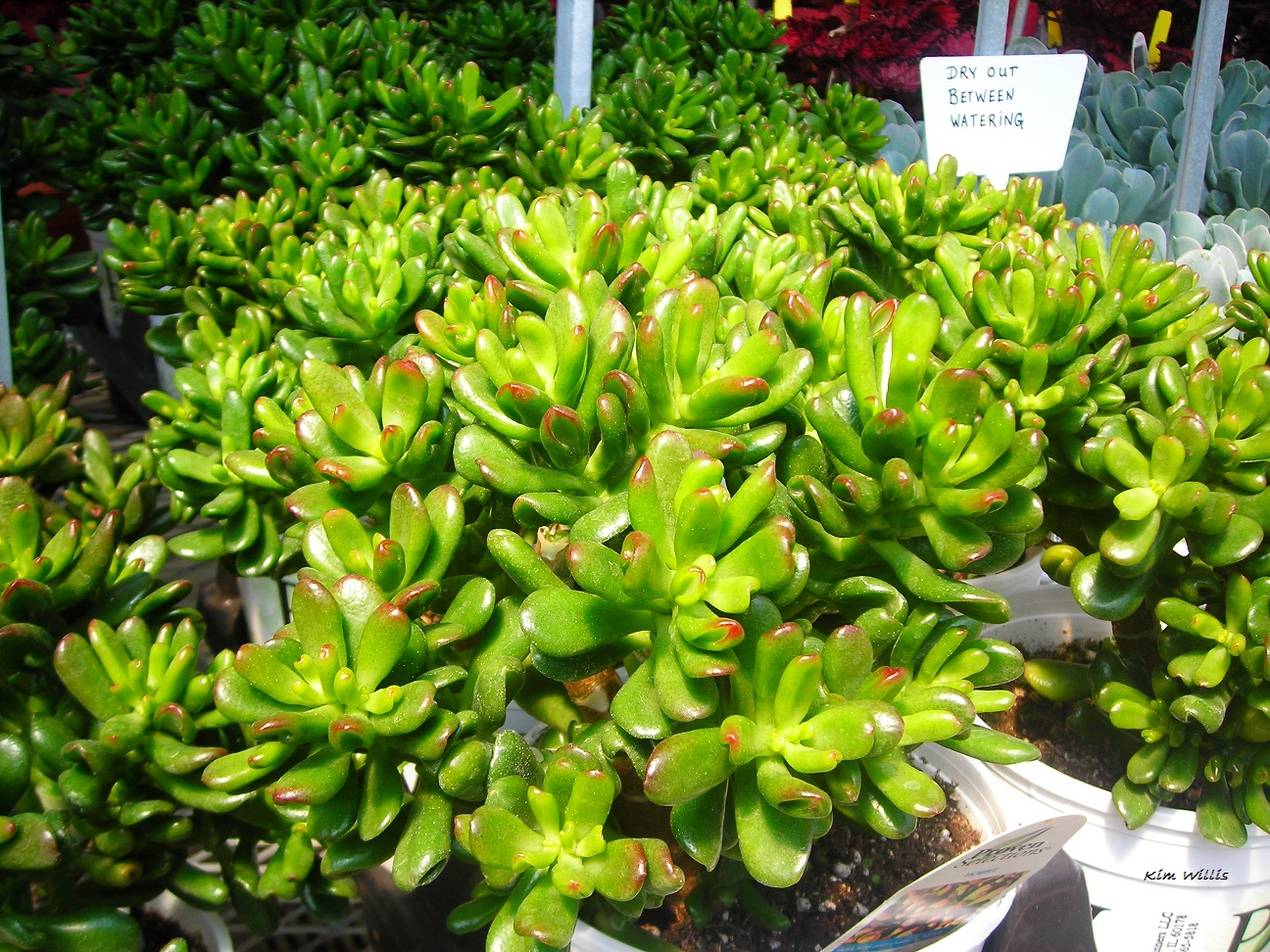
The newest plant fad is succulents. But what people don’t realize is that succulents is a name for a group of plant families/species that share similar characteristics, fleshy stems and leaves that store water. Many of those plant species do live in arid environments but some succulents actually live in rain forests.

Succulents is not a scientific name classification and there is some disagreement as to what plant species are succulents. Cacti are succulents but not all succulents are cacti. Sedums are succulents. Christmas and Thanksgiving cacti are succulents, but their native homes are in rain forests/jungles. Then there is the term semi-succulent, which can refer to plants such as African violets.


Aeonium family

Here’s a list of plant families that can be considered succulents or that have some succulent species; Aeonium, Agave, Aloe, Bryophyllum, Ceropegia, Crassula, Cotyledons, Euphorbia, Echeveria, Faucaria, Gasteria, Haworthia, Hoya, Kalanchoe, Graptopetalum, Kleinia, Orostachys, Pachyphytum, Pedilanthus, Peperomia, Sansevieria, Sedum, Sempervivum, Senico. There are other families.  I am not including cacti and forest cacti here.

When most people buy a succulent plant, it is labeled just that- succulent. So that is how they speak of it- as a succulent. It’s unfortunate that nurseries don’t properly label plants but when you buy a plant labeled succulent do the homework and find out just what species of plant you have.

When your “succulent” isn’t looking good and you want to ask for advice or you want to know how to propagate the plant, knowing what actual species you have is very helpful. Even knowing a common name is better than just calling it a succulent. The Jade plant is Crassula argentea or sometimes Crassula arborescens, for example.

Crassula family

While succulents do come from arid regions for the most part, there are still differences in what the many species need in regard to light, temperatures and other things. Some are cold hardy, some are not.  Some are prone to certain diseases, some are not.  So no, all succulents cannot be treated the same way.

I wish I could give you a condensed guide to identifying succulents as I did with the evergreens below. But there are so many families and so many species in those families that it would probably take a book. There are a lot of new succulents of various species coming on the market for houseplants and even I have trouble keeping up with identifying new species.

Here’s some sites that can help you ID what succulents you have.

https://plantsam.com/cacti-succulents/

https://thesucculenteclectic.com/identifying-types-of-succulents-pictures/

https://www.succulentguide.com/


Kalanchoe 'SnowBunny'

Identifying evergreens in the landscape

In this article we’ll skip plants that are evergreen but have broad leaves, such as holly and euonymus and concentrate on the needle leaved, woody evergreens.  And we will also leave out the few species of trees with needle like leaves that lose those leaves in the winter, such as bald cypress. 

First some terminology, without being too technical. “Evergreens” is a broad term for many species of needle leaved woody plants.  Most of these are also conifers-that is they reproduce using a cone. Yews and junipers are both woody evergreens with needle like leaves, but they produce fleshy berry-like cones with seeds inside. (It's a cone but it looks like a berry.) These evergreens should not be called Christmas trees unless they are actually being used for that purpose.

Here are some general identifying characteristics of different woody evergreen plants.  The main plant families are pine (Pinus), spruce (Picea), firs (Abies), Yew (Taxus), Juniper (Juniperus), and cedars (Thuja).

It is easy to identify some species within a plant family but in other cases even experts have a hard time identifying individual species, especially if they are not common ones. And in addition some common names suggest a family that the tree doesn’t really belong in.  So, don’t worry too much if you can’t identify what species of fir you have, just whether you have a pine or a fir.

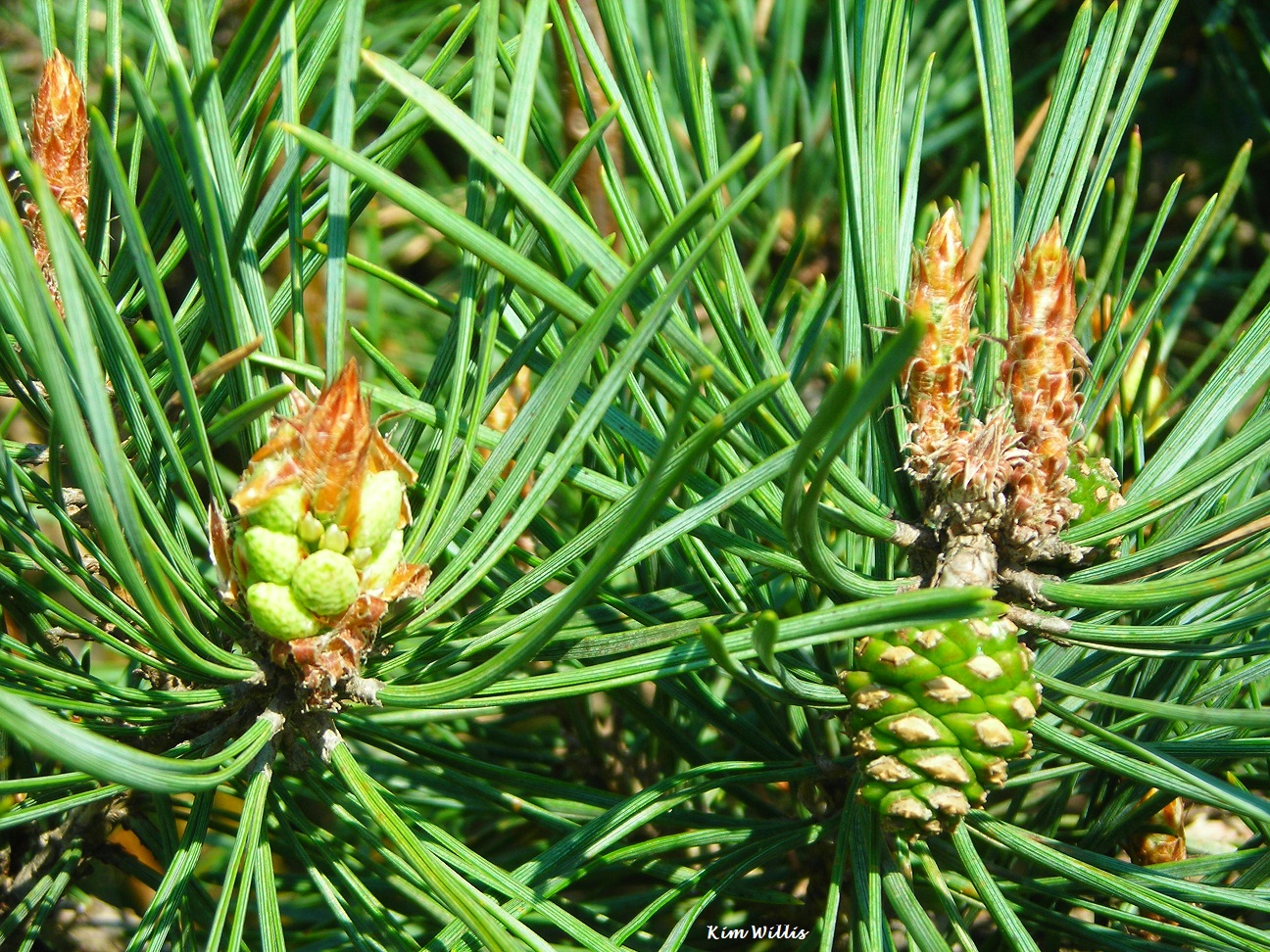
Pines are some of the most common evergreen woodies. Pines always have needles in bundles.  A little papery sheath binds together anywhere from 2 to 5 needles. Pines have cones of various shapes; the shape as well as the number and length of the needles can help identify the species. Many cones of pines have a prickly point on the end of each scale on the cone. 

The Eastern White pine has long, soft blue green needles in clusters of 5.  The cones are also long and narrow, with a slight curve and are often covered in resin.

The red pine has 4-6-inch needles in bundles of 2 and the cones are stubby and often connected in pairs opposite each other on the stem. The bark of a young red pine trunk has a reddish color. 

Scotch or Scots pines have needles in bundles of 2, they are 2-3 inches long, slightly twisted, blue green in summer fading to dull green or yellow green in winter. The cones are short and point back toward the trunk. 

Scotch pine- notice the sheath bundling needles together

Austrian pines are an imported species that are sometimes hard to distinguish from red pines. They have needles in clusters of 2, slightly shorter than red pine needles and a duller green. The cones are about 3 inches long. The trees are a bit fuller and more shapely than red pine which is why they are often used in landscapes. 

The jack pine also has needles in bundles of 2 that are relatively short, less than 2 inches, and spread in a V. The cones are small and generally have a distinct curve and point toward the tip of the branch. These are the cones that need the heat of a fire to open them.  Jack pines often have odd growth habits such as leaning or distorted branches.  There are many other species of pines.

Spruces have short needles attached singly to the branch with a little stub that remains after the needle falls off.  That makes the branch feel quite rough with its numerous protrusions. Spruce needles are generally 4 sided with a blunt tip, surround the entire branch and are square looking when crosscut.  When crushed spruce needles have a pungent odor that can remind you of cat pee.

The Black spruce has short needles to 3/8-inch-long and small cones with a purplish tint. The White Spruce has slightly longer, blue-green needles with a waxy sheen, the cones are longer and light brown.

Blue Spruce or Colorado Blue spruce are some of the most frequently planted ornamental evergreens. Some have a very silver blue tint, especially when young, but the color can vary widely. The needles are long and sharp, somewhat longer than White Spruce and the smell especially sharp also.  Cones are also long.

The Norway spruce is a widely planted non-native ornamental with dark green slightly flattened, 1 ½ inch needles and long narrow cones.  A mature tree has a graceful weeping form. There are many other spruces, native and non-native, planted in landscapes.

Firs have single needles attached to the branch with little suction cup like bases.  When they fall off, they leave a slight pit on the branch, but the branch will feel smooth.  Fir needles often have one or two white lines on the back of the flattened needle.  Fir cones stand upright on the top of a branch; the cone scales fall away and leave a “core” protruding from the branch for a while.

Firs are the trees with the delightful smell associated with Christmas and are often sold for Christmas trees.  They are less frequent in the landscape than pines or spruces. 

The Balsam fir is probably the most common fir.  It has small purplish cones.  Also grown are White, Concolor, Grand, and Frasier firs.

The Douglas fir is not a true fir but is in a species of its own (Psuedotsuga menziesii).  It has flat, soft, single needles attached to the branch.  The needles narrow at the base and when they fall off they leave raised scar, but are not as prominent as the bumps on a spruce.  Douglas fir cones hang downward on the underside of branches and are unique because 3-pointed seed bracts protrude from each scale on the cone.  Douglas firs grow to be the second largest of our trees, second only to Sequoias.

The tree family Thuja is also called Cedar or Arborvitae and they are common landscape plants.  Northern White Cedar is our most common species.  However, what is confusing is that there is a southern tree family called White Cedar (Chamaecyparis) which looks very similar to  Thuja species.  Occasionally some species and cultivars of this family are sold as ornamentals although they aren’t very hardy in the north.

Northern White Cedar has flattened overlapping scale-like leaves.  On the underside of the leaves you can find tiny, raised spots called resin glands.  The trees have tiny cones in clusters near the branch tips.  Arborvitae comes in a variety of shapes, from the natural tree like form to upright dense windbreak forms and rounded globes that stay small.  It has a pleasant smell, reddish bark and wood that is hard and dense.

Arborvitae- Northern white cedar

Junipers are known for their prickliness.  Adding to the name confusion one species of Juniper has the common name of Eastern Redcedar.  It forms a tree shape and has overlapping rows of flattened scale like needles when mature but when the plant is young the needles are spiky and sharp.

Common juniper forms a more shrub-like sprawling form and the needles, arranged in whorls of 3, stay sharp and prickly.  The common identifying characteristic of Junipers besides their prickly needles is their blue, berry–like cones. These are used to flavor gin.

Yews have soft flat, dark green needles which are paler yellowish green on the bottom. Their identifying characteristic is that they have red berry-like cones. They are seldom found in the wild, but are common ornamentals here.  They tolerate shade and trimming.  However, yews are extremely poisonous to livestock and pets eating foliage or bark and children consuming the berries. Use care planting them in the landscape.

There you have it, a guide to the common landscape evergreens so you can identify what you have and have a better way to describe them to your gardening friends or look up their care and diagnose problems.

 Water gardens inside

If you are an enthusiastic pond gardener, you are probably sad when winter comes, and your water garden has to be shut down. But with a little imagination and work you can have a water feature indoors and continue to grow the water plants you love.

Wouldn’t you love to see tropical water lilies, calla lilies, water hyacinths, rushes and reeds, and numerous other water plants indoors all winter, maybe accompanied by the tinkle of a fountain? Most water plants you use outside in summer could be brought inside. You can over winter goldfish and koi inside too.

You can put the water feature in among other houseplants to make it look more natural. Many houseplants will be quite happy near a source of humidity like the water feature. Drift wood, or art objects might be used to disguise container edges and make it look more natural.

Size and location

You’ll want to make this inside water garden small, of course, since water is heavy and also very destructive if something like a leak should occur. Find a location to place your water feature where it won’t cause massive damage if it leaks. Even small amounts of water being splashed or dribbled constantly can ruin hardwood or carpeted floors. A place with a tile or cement floor would be ideal.

A 3 feet square water feature is on the large side for indoor water features. A small container or fountain 18 inches in diameter can be soothing and can support several small plants and even a few fish. Something that can sit on a sturdy table may be easier to care for than a floor-based water feature. If you are going for a larger surface area, consider making it a shallow water feature, to keep the weight and amount of water needed down.

You’ll need to fill the water garden and lugging buckets upstairs to fill it will probably call for a small container. Locating your water feature close to a water source is the easiest option. Also think about how you are going to drain this water feature should you need to. You may want a small pump that could pump water into a bucket or drain.

Also be sure your indoor water feature is safe from children and pets. They will be attracted to it. Dogs will drink from a water feature and may try to get into it. Cats will be attracted if fish are in the feature. Children could fall in and drown if the water feature is large enough, and children have drowned in 5-gallon mop buckets. This happens when they tip upside down into the bucket and can’t right themselves.

Younger children will want to play in the water feature, which could harm plants and things like fish if you include them. And if they tip it over or cause a leak a lot of damage to your home could occur. You may want to wait to have indoor water features until children are older.

Other things you may need

Almost all water features inside with plants will need to have grow lights suspended over them. Water plants usually need strong light to do well. You must do this very carefully as water and electricity do not mix. Cords should not touch water; water should not get in outlets. Lights should be suspended so that there is no way they can fall into the water. If you ever see a cord or bulb in the water DO NOT REACH INTO THE WATER to remove it, you could be electrocuted. Turn off the power first.

Water splashing on a hot bulb can cause it to explode. There are bulbs with “shields” if you think this may be a problem. Or just position bulbs so a splash is unlikely.

Indoor water gardens can raise the humidity in the home, which can be a good thing, since most homes are too dry in winter. But occasionally an indoor water feature can make an area too humid, causing mold to form and dank smells. Make sure to have a humidity meter near. Experts say a humidity level over 50% may cause mold to form. Using fans to disperse humidity over a larger area or a dehumidifier can correct this.

What kinds of containers can you use for inside water features?

You could use one of those preformed plastic ponds. But there are many things you could improvise with, including large pots (without drainage holes of course), small stock tanks and muck buckets, (check a farm store) and various heavy-duty plastic storage containers. Containers must have sturdy sides, or they will bow out when filled with water.

You could build a frame and use a pond liner. This is probably best done on a sturdy waterproof floor such as a cement basement floor. I once built a frame using bundles of newspaper in my basement. I covered it with a pond liner and used it to overwinter goldfish quite successfully. You could use an existing frame, such as a raised planting box, if you covered it with a liner.

If a frame has rough spots or gaps you are covering with a liner, make sure you add some cushioning between the frame and liner, like a foam pad or even layers of cardboard. This keeps the liner from being torn or worn away.

There are many clever things you can do with objects in your home to make them into water features. They could become funny conversation pieces or beautiful, inspiring décor. Use your imagination.


This water feature was made from a wringer washer 
for a display on recycling by Master Gardeners.

Putting fish in your water feature

Both koi and goldfish can be overwintered in your indoor water feature but make sure they have enough space for their size. Keeping fish inside will require an aerator and a filter. You won’t need heated water for koi or goldfish. If you decide to add a few tropical fish the water will need a heater.

It will require a lot more work to keep the water clean and smells down if you add fish to your water feature. You’ll have to feed very carefully and change the filter frequently. You may even have to change the water from time to time. But if you have fish in an outside pond already and are worried they might not make it through winter, bringing them inside could be the solution.

In short you can have a water garden inside during the winter, with a little imagination and care. Why not try something different this winter?

 Posting your land from hunting

If you live in the country or in a rural subdivision this is the time of year to consider posting your land against hunting. You may be fine with hunting but from a legal standpoint, it makes sense to post your land. If someone is hurt on your property- or hurts someone else or damages property- your legal rights are better protected if the land is posted against hunting and trespassing. If you want to hunt or give someone permission to hunt on your property you can still do so.

I’m not a lawyer and I’m not giving legal advice here. I’m most familiar with Michigan law but most states have similar laws on posting land and hunting regulations. While farmland and woods connected to farmland are automatically protected by law from trespassing, many hunters don’t know this. It’s best to post all property, even fenced property and crop land.

Legal no trespassing signs must be at least 50 square inches and have letters at least 1 inch high. The wording can vary from simply no trespassing to no hunting or trespassing. Be aware that is much harder to enforce and prosecute hunting violators if the sign doesn’t say no trespassing. There is no required color for the signs.

Your signs must be posted so that a person can see at least one sign as he or she approaches any point of entry into the property. That means that they will probably need to be every 15-20 feet apart on property boundaries. If access points have gates place no trespassing signs on the gates.  If you notice blinds, camps or other indications that people have been on your property post signs near that location too.

Signs should show above any tall weeds or crops, but not be above an average person’s standing eyesight. Be aware that nailing signs to trees can damage the trees, posts are better for holding signs.

It is illegal to post signs on other people’s property without their permission, no matter how tempted you are to add additional space to your buffer zone.  It is also illegal to remove posted signs unless they were wrongly posted on your land. You can legally remove blinds and camps from your property if you did not give permission for them to be there.


 I cannot endure to waste anything so precious as autumnal sunshine by staying in the house."

-Nathaniel Hawthorne


Kim Willis

All parts of this blog are copyrighted and may not be used without permission.


Find Michigan garden events/classes here:

https://www.facebook.com/groups/118847598146598/

(This is the Lapeer County Gardeners facebook page)


Newsletter/blog information


If you have a comment or opinion you’d like to share, send it to me or you can comment directly on the blog. Please state that you want to have the item published in my weekly blog if you email me. You must give your full name and what you say must be polite and not attack any individual. I am very open to ideas and opinions that don’t match mine, but I do reserve the right to publish what I want.

If you are on my mailing list and at any time you don’t wish to receive these emails just let me know. If you know anyone who would like to receive a notification by email when a new blog is published have them send their email address to me.  Contact me at KimWillis151@gmail.com


Tuesday, November 3, 2020

November 3, 2020- oh what a day

 Hi Gardeners

So, I normally avoid political topics here in my blog, but I must say this is an anxious day for me, and probably thousands of other Americans.  I am writing and you can be reading- about gardening to pass the time. It’s nice that across much of the country it’s a beautiful fall day. It’s sunny and almost 60 degrees here, a big change from the snow and winds we had over the weekend.

I saw a monarch outside today. It must be migrating through but where did it come from in the north where the cold wasn’t as bad as here? We’ve had several nights in the 20’s.  And I had a yellow jacket buzzing around me too.  I was hoping those buggers had all died.

My dahlias are now dug, and I don’t think there is anything else I could bring inside. I did bring a diascia inside, as I mentioned in the last blog. Outside a mum by the barn has managed to keep blooming, but most other things are now gone.  The trees around here are mostly bare, the wind we had really stripped them fast.

Inside I have lots in bloom. The hibiscus are really doing well this fall, with 3 of my 4 plants in bloom. Fuchsia, streptocarpus, the peace lily, geraniums, gerbera daisies, begonias, bouvardia, pomegranate and my lemon tree are all in bloom.

I keep having to mess with my plant light timers because we have had several power outages lately. But having those brightly lit windows full of blooming and green plants when fall days are dreary is so nice. And with my canary singing and parakeets chattering it is very soothing. I have been wanting to make an indoor fountain, but my husband might not be happy with that and trying to find some space may be a problem. How about a fountain instead of a Christmas tree?

November Almanac

This month’s full moon, November 30th, is called the full beaver or full frost moon. In earlier times beaver traps were set about this time and of course a large part of the country has now received killing frosts. Moon apogee is November 26th and moon perigee is November 14th.

In England November 5th is known as Guy Fawkes Day, or Bonfire night.  It originally celebrated to commemorate what was known as the gunpowder revolution but has become known as a day to burn effigies or pictures of hated people and things. If you have an anger issue after the election that night may be your chance to burn some anger. 

Both topaz and citrine are considered to be birthstones for November. November's birth flower is the chrysanthemum. It’s National Adoption month, Native American Heritage Month, Peanut Butter Lovers month, American Diabetes Month, National Alzheimer's Disease Awareness Month, and Lung Cancer Awareness Month.

November 11th is Veterans Day, the 13th is Sadie Hawkins Day, World Diabetes Day is November 14th, World Toilet Day, whatever that means, is November 19th, November 26th is Thanksgiving. Black Friday, which is an actual holiday in some states, is the 27th.  The 28th is also Abe Lincoln’s birthday and American Indian Heritage Day.


Watch for Evening Grosbeaks

Bird watchers across Michigan and other Midwestern states are reporting an increase in sighting Evening Grosbeaks at feeders. In recent years the birds have not been coming very far south and sightings have been rare at US feeders. Speculation by birders is that winter in the north is going to be hard and birds are moving south for the winter. The birds usually move in flocks and far northern US and Canadian forests are their prime habitat.

Evening Grosbeaks may remind people of big chubby goldfinches. They are about the size of a robin. Males are yellow and black, with a white patch on the wings. Females are gray, with black and white wings and a bit of yellow around the neck. Evening Grosbeaks have large, thick conical bills that are light colored. One of their favorite seeds is that of the Box Elder tree, but they are quite happy with sunflower seed at the feeders too.

Burlap shields and rose cones

Should you put burlap shields around evergreens to prevent winter leaf burn?  This depends on how hardy the plants are for your zone and where they are planted. Plants at the limits of their growing zone or where you are trying to “zone cheat” might survive better with a shield. And plants in areas subjected to strong winter winds may need a shield. Broad leaf evergreens are more susceptible to winter damage than needle type evergreens and benefit more from shields.

Leave some space between the shield and the plants and don’t put the shields up too early. Never use plastic for shields – you want the air to flow through and keep plants from becoming too wet.  Plastic also causes plants to warm too much on sunny winter days.

Rose cones are used by some people to protect hybrid tea type roses. Cut the roses back only enough to fit under the cones. Wait to put up the cones until the ground is frozen and cold weather is predicted to remain.  Another way to protect roses is to insert a sturdy tomato cage over the rose while the ground is unfrozen, and then fill it with leaves or straw after the ground freezes. You may need to wrap the cage with burlap or netting to keep the mulch in place.

New soil additive pulls water from the air

The University of Texas, Austin has announced they have produced a new hydrogel product that can actually pull moisture out of the air to keep plants hydrated. The hydrogel is mixed with soil as many hydrogel products already are mixed. It pulls water from the air, mostly at night, and plant roots can access it.

The new hydrogel could be used on farmland where climate change has been producing droughts and allow crops to be grown there. (No information on how expensive that would be.) Researchers are also speculating that it could be used to provide drinking water for humans in dry areas.

More reading

www.sciencedaily.com/releases/2020/11/201102162653.htm

 Houseplants dropping leaves

About this time of year many people begin panicking about their inside plants dropping leaves. Plants do drop leaves for all kinds of normal reasons, so don’t panic if you notice a few- or even a lot of leaves on the floor.

If you just brought your house plants inside and they are rapidly dropping leaves don’t worry. If you didn’t let them get frosted or frozen, they are probably just going through a wardrobe change. Plants develop leaves with cells adjusted to the type of light they are receiving. When plants are brought inside to lower light levels, they get rid of some or all of their leaves to make room for new leaves better adjusted to low light levels.

Not all plants lose a noticeable amount of leaves; some species are more likely to do so. Weeping Figs, brugmansia, and hibiscus, are some species that are more likely to drop most of their leaves when moved inside. But many other species may lose some of their leaves also.

In this case just leave the plant alone. You should notice leaf buds along the stems in about 2 weeks and new leaves soon after. You may need to adjust your watering schedule as plants without leaves or with fewer leaves don’t use as much water. But don’t let the pots dry out.

If you forgot about your plants and they did get too cold before you brought them inside, you may still get them to recover. Expect them to drop most of their leaves or for leaves to blacken or turn mushy. Remove any blackened or mushy leaves and stems. Leave the plants alone in a warm bright location and reduce watering until new leaves appear.

If you left a plant outside until late fall you may have triggered a dormancy period in some plants. It may take a bit before they resume new growth.  The branches should still feel springy and not brittle in woody plants. These plants can be left where it’s warm to see if they recover quickly or moved to a cool frost-free place for a rest.

Other reasons for plants dropping leaves may be improper watering and or temperature. Fall and spring can be tricky times for watering. A spell of warm sunny weather may dry out pots faster if they are in a sunny window.  A period of wet cold weather may leave them soggy. Both plants that are too wet and plants that are too dry will lose leaves. Feel each pot and check the saucer for standing water before you water a plant. 

If you catch overwatering early, simply allowing the soil to dry out a bit will probably let the plant recover. It should put out some new leaves when conditions are better. If a plant has been soggy wet for too long the roots may have rotted. You may need to start cuttings from it. Sometimes repotting the plant in a well-draining medium can help.

Curing underwatering is easy - water the plant. Even if the plant has lost a lot of leaves it may recover quickly. If it is so dry it’s brittle and pieces snap off, it still may return from the roots, depending on the species and how long it’s been dry. Soak the pot in warm water. Let it drain. Be very careful watering from then on. Plants without leaves require less water. Check more frequently to see if it needs water.

Cold drafts from being near doors or warm drafts from furnace vents may also cause leaf drop.  You may need to move the plant to a better location. 

No leaf lives forever. At some point every leaf drops off a plant, or at least it withers and dies.  So, when you find leaves on the floor from time to time, don’t worry too much. Check your cultural practices and think of why the plant may be stressed and letting go of a few leaves. Then relax.

 Where did our domestic apples come from?

The apples we eat today are classified by science as Malus domestica. They are a very ancient combination of two apple species, European crabapple (M. sylvestris) and the central Asian wild apple (M. sieversii). Modern apples descend from this interspecies cross and careful selection of varieties by humans. But how did this interspecies cross first get established?

Researchers tell us it happened along the Silk Road. This was a trade route that connected Asia and Europe. People starting from either end brought apples with them for snacks/food and then tossed the cores with their seeds out along the road. Apple trees sprang up along the route and pollinators facilitated the meeting in the middle.

Researchers have mapped the genomes of the two apple ancestors and of a modern Gala apple and are beginning to understand where traits of our modern apples like sweetness, size, crispness and so on originated. This may allow precise genetic engineering for better apples in the future.

The species M. sylvestris and M. sieversii only account for 90% of the modern apple’s genes, so researchers are also trying to find the other wild species of Malus that went into modern apples. There are between 30-55 species of Malus. There are actually 4 native species of apple in North America. These produce apples similar to what we call crabapples. But most of the apples you see growing wild are from “escaped” domestic apples.

Malus angustifolia, or southern crabapple is native to the southeast and produces tiny, acidic, pear shaped fruits. Malus coronaria, also known by the name sweet crabapple is native to the Great lakes and Ohio Valley area. It’s a shrub like tree, with deep rose flowers that turn into tiny, fragrant green-yellow fruits that stay on the tree well into winter.

Malus ioensis, or the prairie crabapple is native to the Mississippi Valley prairie areas and a small part of Texas. It has very small, hard green fruits. Malus brevipes, with the common name shrub apple or “Wedding Bouget” is native to North America, but its original range is unknown. The species is used as a native ornamental crabapple and crossed with other crabapples for ornamental varieties. It has white flowers and pretty, small red fruits.

The legend of Johnny Appleseed, a man who went around the country sowing seeds of apples does have some basis in truth. But most apples were probably brought in by early settlers since apples were important to European cultures. Those European apples probably crossed with our native species and may account for some of the other 10% of genes in modern apples. However, there are some other wild species of Malus in Europe and Asia and Japan that may have contributed also.

About 2,550 varieties of modern apples are grown in North America, and its estimated there are more than 7,550 varieties grown worldwide. The Lady apple is probably the oldest domestic variety of apple known. The Newton Pippin apple is probably the first apple variety that originated in the US.


Drying apples

Apples are abundant this time of year and you may want to preserve some for eating or dry some for crafts. The drying method is the same but there are some differences in preparing the apples. For eating, select apples that have firm flesh and that don’t have soft spots or worms.  Wash, peel and core these apples.

For craft apples insects and damaged areas are less important. However heavily bruised or rotting apples will not dry well. Most people leave the skin on and cores intact for crafts.  

Slice your apples into 1/4-inch slices as evenly as you can. Immediately dip them in a solution of 1/2 cup lemon juice to a quart of water. Leave them in the solution for a few minutes. This prevents browning of the slices. 

The slices can be spread in a single layer and dried in a food dehydrator- follow your dehydrator directions, or place slices on cookie sheets and put in the oven at 135-140 degrees. It will take 6-8 hours to dry them in the oven.  Slices can also be dried in an air fryer. Arrange them in a single layer and set on the lowest heat setting. Check frequently as drying times vary.

Apple slices can also be dried in a single layer in the sun for 3-4 days.  This requires warm, sunny weather for those days. They must be covered with screen or cheese cloth to protect them from insects and placed where they are safe from larger animal pests. Bring them inside overnight to avoid dew wetting them.

Properly dried apple slices will be dry in the center, but still pliable.  Store them in tightly covered containers with a spoonful of powdered milk twisted in a paper towel to absorb moisture. If mold develops on apples for eating, they should be discarded.


Some of the days in November carry the whole memory of summer as a fire opal carries the color of moon rise.”

-      Gladys Taber


Kim Willis

All parts of this blog are copyrighted and may not be used without permission.


Find Michigan garden events/classes here:

https://www.facebook.com/groups/118847598146598/

(This is the Lapeer County Gardeners facebook page)


Newsletter/blog information


If you have a comment or opinion you’d like to share, send it to me or you can comment directly on the blog. Please state that you want to have the item published in my weekly blog if you email me. You must give your full name and what you say must be polite and not attack any individual. I am very open to ideas and opinions that don’t match mine, but I do reserve the right to publish what I want.

If you are on my mailing list and at any time you don’t wish to receive these emails just let me know. If you know anyone who would like to receive a notification by email when a new blog is published have them send their email address to me.  Contact me at KimWillis151@gmail.com