Tuesday, December 13, 2016

December 13, 2016, Kim’s Weekly Garden Newsletter

 © Kim Willis - no parts of this newsletter may be used without permission.


Hi Gardeners
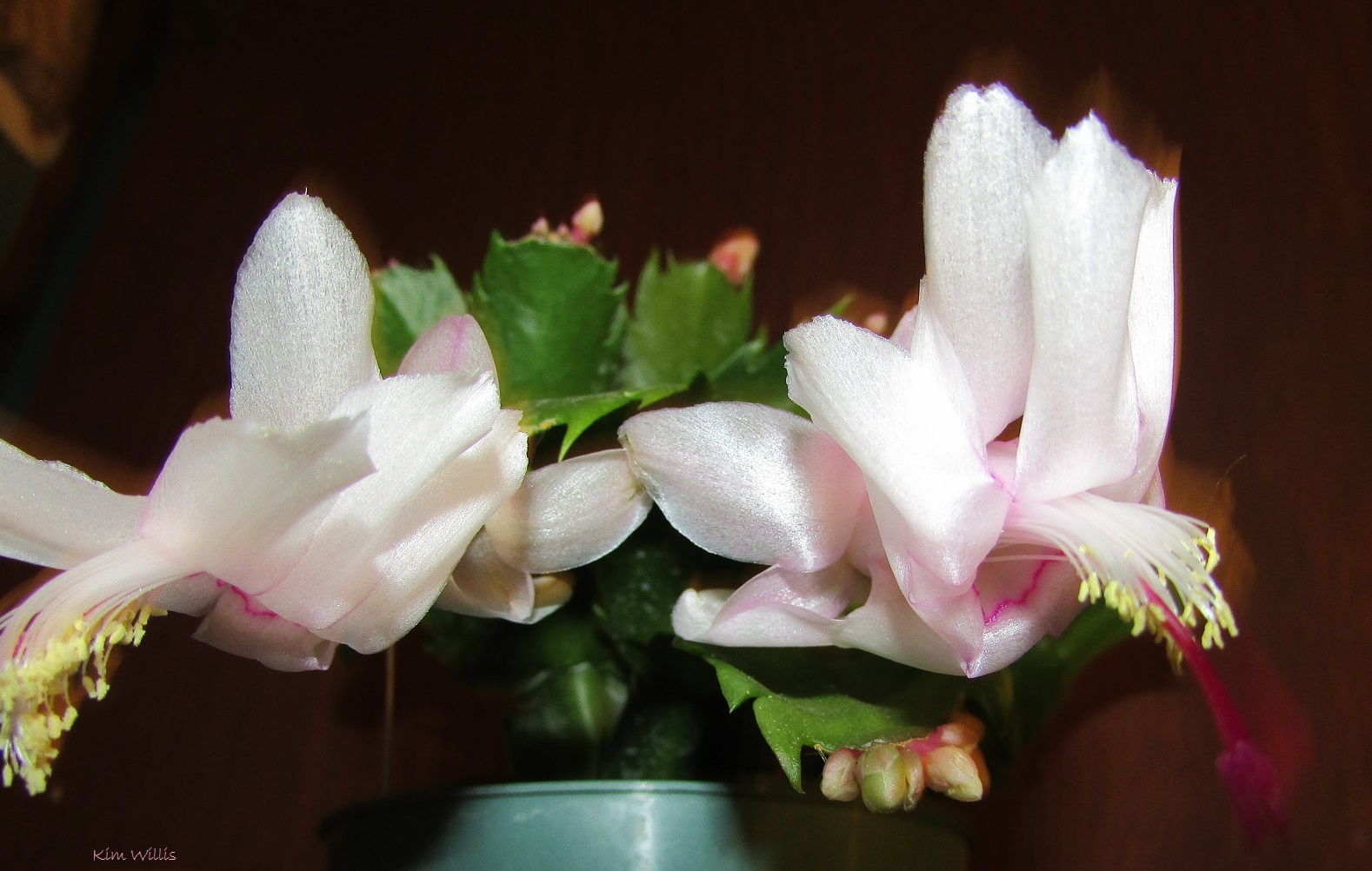
White Christmas cactus
I don’t like winter.  There I’ve said it.  Yes there’s a certain kind of beauty in a snow covered landscape, especially when it’s new and clean.  But I still don’t like winter.  Everything is harder, except curling up somewhere warm and sleeping. But nature knew what she was doing when she sent snow here to cover up the plants, right before the arctic vortex blows down on us.  Snow is a great insulator.  It also reflects more light back into my windows for the houseplants so I guess it has its usefulness.

We got about 8 inches of snow here over the last couple days.  That’s not a huge amount but enough to make it messy and cold.  And I had to get out and shovel. Bah humbug. Last year we had 8 inches of snow November 22, but it soon melted and much of December was mild.  In fact right before Christmas last year there was a tornado – in Canton, Mi. I believe.  On December 14, 2015 it was 60 degrees here. 

I’m hoping this bitter cold spell that’s coming will be short and we’ll get back to that mild winter the Old Farmer’s Almanac promised us.  At least inside I have bird song, green plants, and even some flowers.  I have a fuchsia blooming, hibiscus, Christmas cactus, and bouvardia.  It’s a slow season for blooms even inside as the days are short and nights cold.

The wild birds are emptying the feeders almost as fast as I fill them.  I have two seed feeders, a tray feeder and a suet feeder outside my little home office window.  My parakeets can watch and talk to the birds outside as they jostle and fight over the sunflower seeds. 

My chickens are all locked inside now.  I am giving them pumpkins to peck at to keep busy.  Egg count has dropped, but that’s normal.  By the way, since I get this question all the time, chickens do not need heat in their coop.  If they have a dry, draft proof place they will do just fine in cold weather.  They will need warm water at least twice a day or a heated water bowl so they can get enough to drink.  And there still has to be adequate air circulation so moisture and ammonia fumes don’t build up in the coop.

If you have a live Christmas tree make sure you keep it watered. If you are putting up a live tree that’s been sitting around for a while make a fresh cut at least an inch thick on the trunk before placing it in water.  If the tree has been cut for a while and not been kept in water the tree will have plugged the cut xylem tubes with sap and the tree won’t be able to take in water very well.  You don’t need to put anything in the water, nothing will make the tree take up water better or last longer.  It doesn’t need food, like sugar.

It won’t hurt if your pets drink from the tree water, as long as you haven’t added things to the water.  I would keep the kids from drinking the water though because there could be bacterial contamination and that does bad things to the digestive system. (Don’t underestimate what a kid might do; I had a sister who lapped water out of the tree stand because the dog did it.)


When quitting makes sense

At the end of the year, in the dregs of feeble light left us before the turning of the sun it’s time to examine our gardening habits. What gardening habits, ideas, and plans do we need to leave behind in the old year?  What plants should we pull the plug on?
  
Most of us have been taught that quitting is weakness.  Never give up is the motto we are drilled into believing.  Only quitters lose we are told.  But the wise person and the wise gardener needs to learn that quitting isn’t always bad and is sometimes the wisest decision you can make.  Quitting can often bring you happiness and better things.

Now I would never urge you to quit gardening all together - unless you search your heart and find you really hate gardening. And who reading this feels that way?  But I am going to urge you to think a little bit about how, why, and what you garden and see whether it’s time to quit doing some things.

Pull the plug on those plants

Do you have a plant that you have spent years nursing and babying along only to find it barely alive every time you look at it?  It may be time to pull the plug.  For some of us it’s very hard to “quit” on a plant.  It may be our pride, our sense of failure as a “green thumb” and for some of us it’s a sentimental thing; we actually care about the plant.  But there are so many reasons a plant may not thrive in our care.  It may not be the right plant for the conditions.  It may be a naturally weak specimen or infected with an incurable disease.  And it may be that we don’t know how to care for it or that we don’t have the time and desire to care for it.

Is that straggling half dead ivy in your office how you want to represent your gardening skills?  Can it be saved if you give it to someone who can give it what it needs?  Or should you take a deep breath and toss it in the trash?  Maybe you’ll replace it with a new plant (hopefully), or maybe your office just isn’t the right place for plants.

Long ago I had a weeping fig in another home that became a huge and beautiful plant.  Despite the logistics of moving a 6 feet tall, 4 feet wide, heavy plant to a new house many miles away I had no hesitation.  I moved it but it was never the same. For years I put up with a half dead plant that constantly dropped leaves, needed dead branches pruned out and shrank to half its original size.  I tried everything but the plant sat there taking up large amounts of window space with its struggling nearly bare branches.  Its 20 years old I reasoned, I can’t give up on a plant that old. 

Finally reason prevailed. I decided despite the huge effort to move it I would put it outside for the summer in a nice sheltered spot.  If it improved over the summer I would move it back inside.  If it didn’t – well – that was it.   I would like to say it grew beautiful and full, but it didn’t.  When frost was near in the fall I almost relented and moved it back inside.  But I thought of the new tub plants I had bought that summer and how that large window the fig formerly occupied would be so good for them and I left the fig outside and said farewell.

Look over your plants, inside and outside.  Are there some that just don’t thrive despite all your efforts?  How many people do you know that have a half dead plant somewhere in their home or yard that’s been there for ages?  So many of us can’t give up on a plant, even when it’s the best thing we could do.  Quit spending time and resources on them.  Say good bye.  The good news is that now you have room for new plants and a reason to buy them.

Do you replant the same species over and over because you really want that species in your garden, even when you know it might not be right for the conditions?  For me it is the acid loving plants, holly, rhododendrons, and blueberries.  My soil is alkaline.  I faithfully add acidic soil amendments and fertilizers but still they struggle.  I know sometimes plants actually adjust the soil conditions around them, but mine just can’t seem to make it long enough to do so.  So next year I quit.  No more replacing dead holly and other acidic loving plants.  I’ll continue to care for those that made it through winter, slipping them their pH lowering potions but if they die – that’s it.

Time to pull the plug on this holly.

Examine your landscape plants and see if there are areas and plants where quitting is the most reasonable solution.  Are you still trying to grow grass under mature trees?  Quit.  Are you still trying to grow plants that love sun in a shady spot?  Quit.  Does your water garden turn into a scummy mess by midsummer every year because you don’t have time to care for it?  Quit.

When things don’t work well after several attempts it’s time to quit and to put your time and energy into something different.  Put mulch under the trees, or grow moss.  Find plants that love shade for the shady spot.  Empty the water garden and do something low care there.

Do you need to take out overgrown foundation plantings that take excessive pruning time and never look good anymore?  Pull the plug on them.  How about that tree that’s lurking menacingly over the roof, can it be pruned or does it need to go?  How about that wisteria that’s pulling down its arbor and that you neglected to prune so long it’s a tangled disaster?  Is it time to cut it off at the base and let it start over?

Quit bad gardening habits

Sometimes we also need to “quit” gardening that has become a habit but that is no longer useful or needed.  Do you still plant a huge vegetable garden every year even though the kids are long gone to their own homes and you struggle with a bad back and knees?  Quit.  Cut down the garden size to what you can manage easily.  Maybe you just need a few tomatoes and a row of beans.  Let the rest go back to lawn or plant some perennial flowers there.  You can spend more time on other parts of the landscape or just enjoy the summer.

Do you mow acres of lawn every week in growing season, spending hours doing so? Maybe it’s time you quit.  Mow what you need around the house to keep insects down and provide a fire break.  Let the rest revert to meadow.  Or use the space you mow to plant trees or perennials.

Do you plant 6 colors of petunias, 3 colors of begonias and 9 red geraniums every year in the same location?  Maybe it’s time to quit. Anytime we get into a gardening rut, when we garden by rote instead of exploring new ideas and plants we should examine our gardening practices and see if we need to change them.

Do you water/irrigate large areas every year?  Watering when an unusual dry spell hits is one thing but if the only way you can grow certain types of gardens is to intensively water all the time, maybe it’s time to quit.  Water is a precious resource and watering is time intensive.  Maybe it’s time to grow xeric plants, (drought tolerant) or grow fewer plants. This is a quitting decision many of us will be facing in the years to come.

Other things we may need to consider quitting is our use of pesticides. How bad will your apples get if you go to a low pesticide or no pesticide care practices? Are you spraying your home with pesticides even when you see no pests- just in case? Quit doing that.

Maybe you need to quit doing useless garden rituals.  Just because grandpa planted his peas on Valentine’s Day each year doesn’t mean you have to.  If it works for you fine, but maybe grandpa gardened in a different zone, he surely gardened in a different time.  If you always planted geraniums on Mother’s Day but you have moved to Florida you may want to quit planting them, at least on that day. Don’t be afraid to quit old garden practices if they don’t have value for you. 

Are you using silly homemade remedies that really don’t work and deep down inside you know it? Quit it. You’ve read all the rebuttals by experts, studied the research, even tried the remedies and know they don’t work. The Epsom salt and diatomaceous earth and dawn dish detergent remedies with their folksy, “natural” appeal keep luring you down what you know is a false path.  You once, before you were educated, thought they worked and it’s hard to admit you were fooled by cheerful disinformation and the placebo effect.   But you definitely want to quit using those remedies.

All those grand plans- should you quit them?

We sometimes need to quit on our plans too.  Are you in the midst of developing 5 acres into formal gardens?  And last year, with less than half that in gardens you went to bed tired and sore every night trying to keep everything weeded, pruned and watered.  And instead of feeling proud of your accomplishments do you worry constantly about having the money and time to finish your grand plan? Maybe it’s time to quit and enjoy what you have.

Did you get started on a wonderful rose garden on your property line last summer only to find that the neighbor kids were constantly knocking their basketball into the bed and trampling in it to retrieve it?  Maybe it’s time to drop that plan, at least for a while. Did your significant other or a child develop a nasty allergic reaction to bee stings last year?  Maybe that plan to replace the evergreens by the door with flowering plants should have the plug pulled on it.

Whenever you find a plan just isn’t working don’t be afraid to “quit.”  Don’t keep spending time and money on something that just isn’t working.  The time and money you have invested already shouldn’t be your reason to keep going with something that is obviously wrong.  Those spent resources paid for experience, a lesson learned, and tuition can be expensive.

Inexperienced gardeners often learn how to be great gardeners when plans fail. You learn by doing and you learn when you are able to accept a failed plan. Your new plan may be able to recover some of those spent resources, such as transplanting plants to a new and better location.  Smart people develop new and better plans and aren’t afraid to give up on unrealistic ones.

For most gardeners we are entering the time of the year when garden tasks get fewer and we have time to reflect on our past gardening efforts and what we want to do in the future.  The gardeners I know are always planning something new.  In order to have time and resources to do those new things, to move forward and explore new options, we need to quit doing other things.  Sometimes our health and personal needs also direct us to quit taking the same old path and try a new one.

Don’t be afraid to quit. Smart people know when to quit.  Quitting is sometimes in the gardener’s best interest and will allow you to have more and happier gardening experiences in the future.

Examining white

I don’t know where you are but the world has turned white around here.  It’s the time of year when white dominates the landscape. This week’s newsletter discusses the term white as it’s found in Latin or scientific plant names. In previous newsletters I listed various other color terms as they appear in Latin.  These color names are often used in plant names and it can be helpful when you are interested in a description of a plant to know what various words mean.  Remember the descriptive part of the name is usually the second word in a scientific or Latin name.

We’ve all probably learned that white is not a color but an absence of color.  But anyone who has gone to pick white paint for the living room knows there are many shades and tints of white.  Since horticultural Latin is always trying to accurately describe things it stands to reason that there will be many Latin terms for white.  The most common Latin word used to describe white is albus or alba.  Lychnis alba is White Campion, Melilotus alba is white clover.  But there are many shades and tints of albus as listed below.

Albidus is any form of white that is dirty or muddled
Albescens is a term for something turning white from another color
Niveus, nivalis, is snow white or the purest form of white. Galanthus nivalis is the Snowdrop.

Candidus, canadidum, candidissimus, is a slightly less pure form of white, “shining” white,  example  Cypripedium canididum  or White Lady’s Slipper.

Note: The word Canadensis in a plant name generally refers to it being from Canada or the north, rather than to it being white flowered, although some plants with this name do have white flowers.  The word Canada actually comes from an Iroquois word for village.

Eburneus, eborinus refers to cream white or ivory, white with a slight yellow tinge
Cremeus, cremicolor refer to a more yellow type of white
Papyraceus refers to paper white, a rather ambiguous term
Lacteus, lacticolor,  galacto, galacticolor, galactites, galachrous is the color of milk, white with a blue tinge
Cretaceus, calcareus, cerussatus, gypseus all refer to chalk white, white with a hint of gray.
Argenteus is silvery white, white with blue-gray hints and a metallic sheen
Dealbatus describes something with a white cast over a different color
Albastrinus is white streaked with another color.

Holly for Happy Holidays and beyond

One of the plants long associated with winter holidays is holly, said to bring good luck to a home. You may picture holly as having thick, dark green, glossy leaves that remain green all winter.  Others of you may know hollies that you call winterberry or possumhaw, which lose their leaves in the winter to display branches lined with beautiful berries.

There are over 600 species of holly, from many parts of the world. Hollies may be widely divided into groups, English hollies, Ilex aquifolium, American hollies, Ilex opaca, Blue holly, Ilex meservae, Chinese holly, Ilex cornuta, Japanese holly, Ilex crenata, possumhaw, Ilex decidua and winterberry holly, Ilex verticillata. There are other species grown for ornamental use and each of the above species has numerous named varieties.  Hollies species are also crossed to provide some ornamental hybrids.

American and English hollies make excellent landscape trees.  Blue hollies and others are used as landscape shrubs and specimen plants.  English hollies are often trimmed into hedges.  The deciduous hollies are excellent as shrubs for winter color and for naturalizing.  Winterberries will grow in wetter areas such as rain gardens and pond side plantings. Hollies are deer resistant.

Most evergreen holly leaves are thick and glossy green.  Many evergreen species have toothed leaves, with a spine at the end of each tooth.  Some however, have smooth, nearly oval leaves.  There are some variegated varieties.  Hollies that drop their leaves in winter generally have long, oval leaves with smooth margins.

All hollies have one interesting feature.  Male and female flowers are born on separate plants.  To get those beautiful berries you will need at least one male plant for every 10 or so females.  Only female plants have berries.   The holly flowers are small and whitish.  They have a sweet scent that attracts bees and other insects to do the pollinating.  You can tell male flowers if you look inside the flower and see yellow pollen.  Female flowers already have a round, green swelling at the base of the pistil that becomes the berry.


Holly plants may not flower for several years after planting so it’s important to label the males so you will know if a male dies and you need to replace it. Pay attention to catalog descriptions or label information, which tells you what type of male plant you need for each female you buy.  Blue hollies are needed to pollinate blue hollies and possumhaws are needed to pollinate possumhaws and so on.  Even within a group some plants will be better mates for each other.

Most holly berries will be red or black, but there are orange, yellow, coral, pink, blue and white berried varieties on the market.  Some people are not interested in the berries, only the evergreen foliage and for them there is no need to worry about male and female plants.  There are a few varieties of hollies that will produce berries without a male.

Birds like holly berries later in the winter, after they have been frozen several times.  This allows you to get a good winter show and still feed the birds.  Birds also like to shelter in evergreen hollies during the winter.

Holly culture

Both deciduous and evergreen hollies prefer slightly acidic soil but can be grown in more alkaline soils with the right fertilizers.  They like rich, well-drained soil in full sun.  The winterberry group will tolerate damp areas, although it will also do well in average garden conditions.  Evergreen hollies like some protection from winter winds, at least while they are young.

The evergreen hollies are slow growing, the deciduous much faster. In the spring both benefit from some acidic fertilizer.  You can use a slow release acidic fertilizer that is formulated for holly, rhododendrons and so on that is commonly found in garden stores.  Cottonseed meal, pine needles and other acidic organic mulches are good. Keep holly watered during dry spells.

Hollies vary as to hardiness; the winterberries and American holly are probably the cold hardiest.  Check the zone hardiness of any variety that you buy.  Some forms of holly are considered to be invasive, spreading by the berries.  All parts of the holly plant are poisonous so keep that in mind when you select a planting location.

Holly is not just for winter decorations, it’s an excellent landscape plant for all seasons.

Salvia divinorum, Diviners sage, Sally D

Those of you interested in exotic herbs may find this one interesting. It’s sometimes used in solstice celebrations. This unusual member of the Salvia family is native to a small area of the northeast corner of Oaxaca, Mexico.  Mazatec Indian healers have used the plant for centuries. They chew a wad of leaves or make a drink from crushed fresh leaves to induce a trance-like state and “visions.” The visions were used to find out what was wrong with a patient or to try and find lost objects or settle disputes.  The plant was never used as a recreational drug.

Plant explorers in this century re-discovered the plant and did several studies on it to find out if it had medicinal qualities. Medical uses are still being explored for the active chemicals in the plant.  The plant caused a sensation in the recreational drug world because it was still a legal hallucinogen.  It’s still grown and used for that purpose but because some of its effects are not pleasant it’s not widely used now as a recreational drug, but rather in shamanistic or religious ways.
Diviners sage, credit zh.wikipedia

Some states and countries have banned the sale and possession of the plants so before you seek this out, check your local laws. Delaware, Florida, Illinois, Kansas, Louisiana, Mississippi, Missouri, Nebraska, North Dakota, Ohio, Oklahoma, South Dakota, Tennessee, and Virginia have regulations on the plant.

Because it doesn’t reproduce successfully from seed, and exists only where it is protected and cultivated, botanists believe Diviners sage is a hybrid of two unknown Salvia species or an odd mutation.  Diviners sage is a semi-tropical perennial plant and is not cold hardy. 

The stems are sturdy, square and hollow.  Leaves are large, up to 9 inches long, oval in shape with lightly serrated edges.  They are dark green and covered with fine hairs that give them a satiny appearance.  Outside, in natural light, the plant will often flower.  The flowers are typical of the salvia family, with a light purple calyxes, and white petals.  The plant has a light minty odor.

Growing Diviners Sage

Salvia divinorum is easy to grow outside in the summer or as a house plant.  If you want to try it start with a cutting or rooted plant. It is almost impossible to grow from seed, although a few people have gotten seeds to form with hand pollination.  Those people found that the seeds germinated poorly and produced weak plants.  Many seeds sold as Diviners sage aren’t from Salvia divinorum but other species of salvia.

Diviners sage is very easy to start from cuttings, however.  Cuttings will root readily in soil or water.  The plant prefers a light, humus rich soil, like a good potting soil.  It needs to be kept moist at all times, but never water logged.  Inside the plant needs to be in a sunny window.  Outside it prefers semi-shade.  It grows quickly, up to six feet or more in height.  To keep it healthy the plant needs to be fertilized with a balanced, slow release fertilizer several times a year. Plants are for sale in herb catalogs and on the internet.  Here are a few places you can try.


Uses of Salvia divinorum

The active ingredient in Salvia divinorum is called Salvinorium A.  It is similar in composition to opiate drugs, but it does not contain nitrogen.  It acts on different opiate receptors in the brain than other drugs.  Medical research has proven Salvinorium A does not cause addiction and is toxic only in very high doses. 

Salvia divinorum flower.  en.wikipedia
What Salvia divinorum does do is produce hallucinations, or altered consciousness.  When consumed in the traditional way, by chewing leaves, or consuming tea, the herb produces mild but vivid experiences that are relatively short in duration- 20 minutes or so.  The flavor is very bitter and unpleasant and leaves should be held in the mouth for a long time to achieve the best effect.

Most users report it gives them a deep, retrospective and calming experience, although some report frightening hallucinations.  It does, however, alter your mental and physical control over your body, slow reaction time and otherwise impair your ability to drive and perform other tasks.  Do not drive after using the plant.  As of yet there are no cases in medical literature of overdoses or lingering side effects, such as flashbacks. 

Modern drug users tried drying and smoking the herb, which produces only very mild, fleeting effects.  Then they began to extract the active chemical and concentrate it.  These extracts are then added to the dried herb to be smoked or used in other ways.  This increases the intensity and length of the “experience.”   Most herbal product that is being sold are enhanced with  salvinorium A extract.  The herb is still legal in most states and is sold in  “head”shops, herbal stores and through the internet.

After using it however, many people fail to keep using it, proof it’s not addictive.  It’s not really a party drug.  It doesn’t make you feel happy and giggly.  Those who seek to use the drug should also be aware that little is known about how the drug reacts with other medications, or if the drug has long term effects on the body, especially with concentrated potency and frequent use. 

You may be interested in the plant because it is an odd horticultural specimen or you think it may be valuable in your own religious or spiritual beliefs but please grow the plant responsibly, making sure that it doesn’t fall into the hands of someone who could be hurt by it.

Festive, Fool proof Fudge

This fudge recipe is easy, quick and almost foolproof.  The best thing about it, however, is how good it tastes.  You’ll get a product that’s great for gift giving but you’ll want to keep some for yourself too.  Most people remark that this fudge is not as sweet as some fudge and many people who don’t like regular fudge will be won over by this recipe.

This fudge can be made in dozens of flavors.  Some recipe variations will be given and you can experiment with varieties of your own.  Just keep the same proportions of baking chips to the other ingredients and become the fudge expert.

This fudge is made using a microwave.  You could also make it in a double boiler, constantly stirring until the baking chips are melted.  Make sure your bowl and utensils are completely dry and the microwave is wiped dry inside before beginning.  Any trace of water in the bowl or microwave may make the fudge set too soon (called “seizing” ) or it will be grainy.  Don’t overcook the fudge.  Microwaves vary in how fast they work.  Stop cooking as soon as the ingredients can be blended together without lumps.  An electric mixer on low speed can be used for blending.

Chocolate fudge
Makes about 2 pounds of fudge


3 cups of semi-sweet chocolate baking chips, use milk chocolate chips if you like less intense chocolate flavor.  (This is about 1 and a half, 12 oz. packages of baking chips.)

1 can (14 oz.)  sweetened condensed milk- (not evaporated milk)

2 tablespoons butter, cut into small pieces

1 teaspoon vanilla extract

Place all of the ingredients in a microwave safe bowl.

Heat on high for 3 minutes.

Remove and try to stir fudge, if the chips lose their shape and the chocolate appears smooth and creamy you are finished.  If not put the bowl back in the microwave and microwave on high for another minute. 

Stir the fudge until it’s well blended and creamy. 

Pour into an 8x8 or 9 x9 inch round or square pan lined with parchment paper or sprayed with cooking spray while the fudge is hot.

Let the fudge cool completely before cutting.   Wrap tightly with plastic wrap.  Stores best in the refrigerator.

Fudge variations

Add chopped nuts or dried fruit (about 1 cup) after the fudge is removed from the microwave.

For peanut butter fudge use Reese’s peanut butter flavored chips and omit the butter.  After removing the fudge from the microwave stir in 2 tablespoons of peanut butter.  Add chopped peanuts if you like.

Use vanilla chips and chopped dried cherries for great cherry fudge.  Note: vanilla chips can take longer than other chips to melt.  Blend in 1 teaspoon of vanilla (or cherry flavor) extract after you take the fudge out of the microwave.

Butterscotch chips make great butterscotch fudge.  Also try cinnamon flavored chips with chopped toasted pecans for a great flavor.

You can make a mint flavored fudge with mint flavored chocolate chips or add a cup of crushed peppermint candy to a vanilla fudge base after removing it from the microwave.

A pretty plate of various fudges will be a welcome gift.  You may want to wrap flavors separately though to avoid the flavors mixing.

Give me the will to change things I cannot accept.

Kim Willis
 “He who has a garden and a library wants for nothing” ― Cicero

And So On….
Do you have plants or seeds you would like to swap or share?  Post them here by emailing me. You can also ask me to post garden related events. Kimwillis151@gmail.com

Find Michigan garden events/classes here:

An interesting Plant Id page you can join on Facebook

Here’s a seed/plant sharing group you can join on Facebook

Newsletter/blog information

If you would like to pass along a notice about an educational event or a volunteer opportunity please send me an email before Tuesday of each week and I will print it. Also if you have a comment or opinion you’d like to share, send it to me or you can comment directly on the blog. Please state that you want to have the item published in my weekly note if you email me. You must give your full name and what you say must be polite and not attack any individual. I am very open to ideas and opinions that don’t match mine but I do reserve the right to publish what I want.

I write this because I love to share with other gardeners some of the things I come across in my research each week. It keeps me engaged with people and horticulture. It’s a hobby, basically. I hope you enjoy it. If you are on my mailing list and at any time you don’t wish to receive these emails just let me know. If you know anyone who would like to receive a notification by email when a new blog is published have them send their email address to me.  KimWillis151@gmail.com


Tuesday, December 6, 2016

December 6, 2016, Kim’s Weekly Garden Newsletter

 © Kim Willis - no parts of this newsletter may be used without permission.


Hi Gardeners

Winter is making itself known this week.  We woke up to about 2 inches of snow Monday morning although it melted by midday in the nice sun we had.  After today however, we probably won’t get above freezing here for at least a week as a cold front settles in.  It’s time to hibernate.

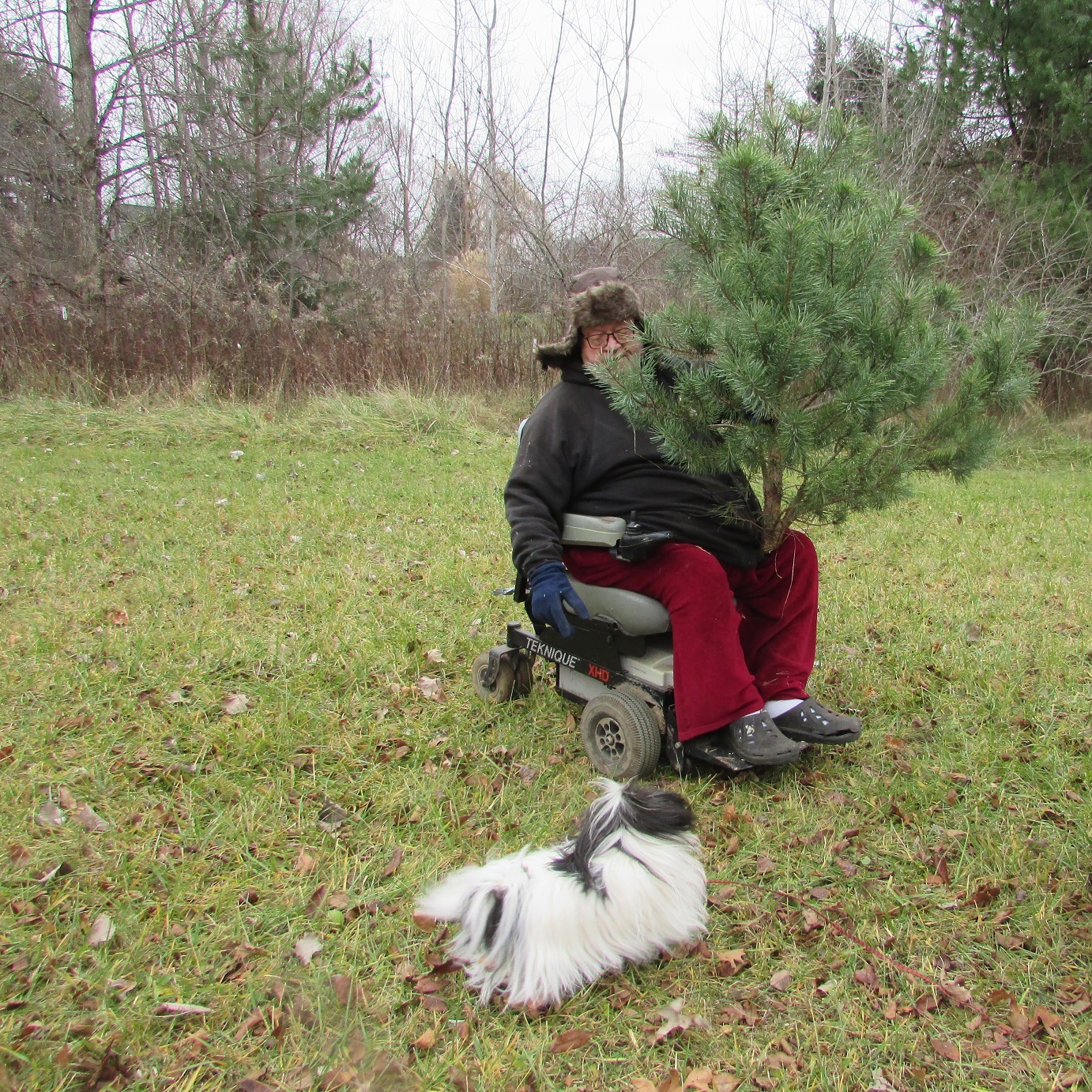
Sunday Steve and I went out to the back of the pasture and cut a scotch pine down.  It’s the first time we cut a tree off our own land.  We certainly have planted a lot of trees here over the years, including the parents of these trees but this tree and its relatives along with some white pines came up on their own.  The trees are various sizes and some are getting too crowded.  I chose one between two other trees, got down on my belly and used my pruning saw to cut it down.

I actually feel a little sad about cutting it.  Reading about the way plants communicate through their roots I imagined it calling help to the pines on either side of it.  But maybe they were happy to see him go, since it gave them more space.  Mr. Scotch pine isn’t the prettiest tree; he’s very wide at the bottom and has a bare spot where he was against another tree.  But Steve is all excited about having a real tree again, after using an artificial one for years.  We have so any coming up in the old pasture that we may be able to cut them for Christmas trees for several years. 

Gizzy and Steve with the Christmas tree

When we moved here some 22 years ago the west fence line was clear except for a walnut tree at one end and a small oak at the other.  There was a bit of swampy woods at the back of the property.  There were some mature walnuts and catalpa on the front property line, some cedars on the west side of the house and a mature scotch pine, red pine and white pine in a triangle in the back of the house. One young sugar maple stood in the center of the west pasture.  A huge bur oak stood by the driveway. There were three mature Scotch pines in a circle in the center of the east side of the property, as well as a slender young silver maple. A huge, gorgeous blue spruce was at the east corner of the barn, a huge scotch pine on the west.  A tiny blue spruce stood on the southeast property corner. 

That seems like a lot of trees, but in actuality the property wasn’t very tree covered.  The area around our pond was absolutely bare, grass barely grew there. Large expanses of the property were mowed/grazed pasture.  An early aerial photo shows quite a difference in how the property looked then and how it looks now on a satellite view.  We planted a lot of trees, fruit trees, paw paw, maples, chestnut, sycamore, redbud, various types of spruce, fir, cedar, juniper and more pines.  And other trees sprung up on their own: willows, poplars, cottonwood, dogwood, birch, more walnuts, and catalpas. The various pines seemed particularly prolific, sowing seedlings near and far.

Trees have been cut down since then too.  The beautiful blue spruce by the barn was cut down 4 years ago after it succumbed to rhizosphaera.  A couple of the pines died and were removed also.  We cut the silver maple down because it was on top of the septic field, whoever planted it made a mistake there. Landscapes rarely remain the same year after year.  Time marches on and so does how we feel about the landscape.  I’ll try to stop thinking about cutting a tree down for Christmas and begin planning what new species of tree I should plant next spring to replace it.  Maybe sassafras.

Garden gifts for kids

One of the things we gardeners need to be doing is instilling a love of gardening and nature in the next generation.  Some kids seem to love gardening naturally; others need to be tickled, tempted and cajoled into a love of growing things.  Christmas is an excellent time to nurture that gardening bud into bloom.

At one time in my life I was running afterschool programs for troubled kids.  I had a group of grade school girls for whom I had acquired a community garden spot to garden in over the summer.  I bought cheap hand trowels at the dollar store and we painted and decorated the handles so each girl knew which was hers.  Then the next day we went to the garden to plant.  A couple of the girls had to be persuaded to actually use the tools in the ground; they didn’t want to get them dirty!  At the end of each planting session they would carefully clean their tools.  These girls didn’t have much that was their own and having something that seemed valuable and useful to them meant a lot. 

But giving kids garden tools that fit their hands and that are appropriate for their size makes them want to use them in most cases.  A gift of garden tools like hand trowels, rakes and shovels can make them eager to get out in the garden and try them.  (Of course you may have to prevent them from using them on their little brother while waiting for spring.)  Add some paint, stencils or stickers and let them have a winter project personalizing the tools.  Giving them “ownership” of the tools makes kids even more eager to use them.

For a slightly older child who already has an interest in gardening you may want to give him or her tools like pruning shears or a folding pruning saw, tools they associate with experienced gardeners and which make them feel included in that group.  (You have to know your child for these gifts. If you have a suspicion they may saw the legs off the coffee table better think twice.) Gardening gloves are a great gift for kids of all ages.

A gift certificate to a garden catalog can give a child hours of fun looking through the catalog and picking out seeds and plants they’d like to grow.  (This was a favored activity of my afterschool groups. They were given a budget and told to agree on and pick out things to buy within their budget. I used it to teach math, planning and cooperating skills as well as inspiring an interest in gardening.)  Make sure you have a catalog to present with the gift certificate so they can get started quickly.  Encourage them to read the catalog, not just look at pictures, and explain to them about things like zone hardiness and light requirements but let them order what they want.  Sometimes experience is the best teacher.

How about giving your kid the gift of a living plant?  I have found even rambunctious boys like plants such as Venus Fly Traps that require the feeding of dead flies.  When I wanted to get boys interested in houseplants I gave them “spider” and “snake” plants, plants with tough sounding names.  Some kids are fascinated with cacti.  “Stone” plants, resurrection plants, sensitive plants and air plants (Tillandsia) also fascinate kids. Tillandsia can even be worn on a special hat.  Girls may like frilly blooming African Violets.  Older kids may like the challenge of a bonsai plant or an orchid.  Make sure to give the child a care sheet for the plant.

Kids like starting seeds but giving them seeds at Christmas time does have challenges.  Seeds started inside too early may die before they can be planted outside. Some kids can wait to plant seeds until closer to spring, others will lose interest.  Carefully chosen seeds however, things that come up relatively quickly but that can grow well inside may work.  Bulbs like amaryllis or spring bulbs that have been pre-chilled could be planted.
Get kids gardening early

Many children who had no interest in plants will gain one when they are allowed to put together a terrarium or themed dish garden, like a fairy garden.  Give them a nice container for a terrarium or dish garden, some good potting mix and a selection of small plants and then a gift certificate or allowance for adding figurines or other touches.  (Once again you have to know your child and decide if you can be cool if that allowance is spent on a live lizard for the terrarium.) Encourage the child to source some natural materials, moss, pieces of natural wood, rocks, shells and so on.  That gets them outside as well as involved with plants.

While not technically garden supplies, bird house and bird feeder kits that a child that likes to work with his or her hands can put together and decorate make a good gift.  Bat houses and various bee houses are also good gifts.  An older child who has expressed an interest in bees may like a beginning beekeeper set. 

Some children will appreciate books on identifying wildflowers, insects, birds, and other things.  Garden books that feature theme gardens like sunflower “huts”, pizza gardens and “3 sisters” gardens are often a hit.

Give your child a gift that grows this Christmas and grow a gardener.

December almanac

This month’s full moon is called the Full Cold or Long Nights moon and occurs on December 13th.  This is the final supermoon of the year.  There are two meteor displays that may be visible in December.  On the 13th and 14th there is the peak of the best regular meteor event, the Geminids meteor shower. Some meteors may be visible from the 4th through the 17th.  But on the peak days around 120 meteors or shooting stars may be seen per hour.  The best viewing is after midnight.  On December 21st – 23rd will be the peak of a lesser meteor shower, the Ursids meteor shower, which typically produces about 10 meteors per hour at its peak. 

Wednesday, December 21, 2016 at 5:45 am (EST Flint MI.) is the winter solstice. It marks the longest night of the year and the beginning of winter.  At this time the sun is at its farthest point in the southern sky and lowest point on the horizon.  (For an interesting site that will show you where the sun and moon are in the sky at the exact time you access the site go to this site and choose your closest city) http://www.timeanddate.com/astronomy/usa/

You’ll notice that the earliest sunset and the shortest day are not the same.  The earliest sunset occurs December 5th (yesterday) when the sun sets at 5 pm in the Flint MI. area.  And the sun will set at that time until December 14th – when it gains a minute. It’s the day break time that makes the difference in day length.  On the solstice the sun rises at 8:03 am and sets at 5:03pm in the Flint area.

Many people including myself consider the Winter Solstice to be the end of the old year. The sun turns or changes direction.  Now the days will be getting longer, if only by seconds at first. Re-birth, renewal, the conquering of death, the return of the sun are symbolized in the solstice. It’s a time for celebration as it was for our early ancestors.  Christmas is celebrated near the solstice because people already celebrated re-birth and promise at this time and early Christians frequently borrowed old rituals.  Burn some oak wood at midnight and make a wish for what you desire as you look into the fire.  Take some time to reflect on what you could have done better last year and decide your path for the new year.

December’s birthstone is turquoise. The December birth flower is oddly enough the narcissus.  This may be because it was associated with death, (its poisonous) by the ancient Romans and Greeks but now it is often used as a symbol of hope.  We are entering the time of the death of the old year but still, it seems odd.  In flower “language” narcissus is said to mean “you are the only one” or alternatively faithfulness, respect and modesty.

Recently holly has been favored to replace narcissus as the December birth flower and to me seems more appropriate.  Holly is a symbol of domestic happiness in flower language. Orchids are also listed as the December flower in some places.
 
Holly

Things to celebrate in December besides the solstice and Christmas include National Mutt day the 2nd ,  Pearl Harbor Day- the 7th  and Poinsettia day on the 12th, also on the 12th its Gingerbread house day and National cocoa day, National Bake Cookies day, the 18th , Look for Evergreens day the 19th   Besides being Christmas Eve the 24th is National Chocolate day and National Egg Nog day. December 31st is World Peace Meditation Day as well as New Years eve.

December is National Bingo month, National AIDS awareness month, National Buckwheat month and Universal Human Rights month.

House plants for holiday decorating

If you want to know about caring for typical holiday plants amaryllis, Christmas cacti, and poinsettias see the articles to the right of this main blog.

Combine your love of gardening with holiday decorating by using live potted plants as part of the decorations.  Forget the difficult to save poinsettias and use plants meant to survive in the house for holiday decorating.  You’ll love the results. You can use nice potted plants that you have around the house or use holiday decorating as an excuse to buy more exotic house plants.   Potted plants also make great Christmas office decorations and gifts. 

Common houseplants like Boston Ivy, palms, ribbon plant, ferns, philodendron, spider plants, Norfolk Island Pine and Jade plants make excellent decorations in pretty pots with ribbons.  Pots of the herb rosemary make excellent holiday plants, fragrant when brushed.  Sometimes you can find them sheared into a Christmas tree shape. 

Frosty Fern
A less common plant called Frosty Fern is available only near the holidays.  This lovely plant looks like the tips of its fronds are frosted white.  Frosty Fern, Selaginiela krausianna variegatus is actually a club moss, a fern relative.  It tolerates the low light decorative plants are often subjected to and looks lovely in a red pot.  Rabbits Foot fern is also a good decorating choice.

Other great choices for exotic potted plant decorations include blooming orchids, gardenias, tropical hibiscus, and potted citrus or pomegranate trees.  Miniature roses can often be found in stores.  These tiny roses can bloom all winter in a sunny window. 

Almost any green plant can be made festive by adding a brightly colored pot, a bow or even tiny decorations.  Wrap pots in colored foil and tie with a bow.  Or use gift bags with the plant peeking out the top.  Plants will need to be watered so if the item you wrap the plant in could be damaged by water, put the pot in a plastic bag or waterproof container first.

You could add artificial birds, or put tiny elves in the pot. Spray a few twisted branches with fake snow and insert in the pot. (Don’t spray fake snow on live plants!) Try setting the potted plant in a bowl that’s larger than the pot and filling the bowl with glass Christmas ornaments. 

You can insert a smaller pot into a clear glass vase or jar and totally surround the pot with tiny glass ornaments or even beads in your color scheme.  Plastic confetti, tinsel, or plastic ribbon shreds could also fill the clear container.  There is glittery plastic snow that you scatter on Christmas displays that could fill a container or even dust the top of a pot.

A clever party favor would be to glue a small wood square on the bottom of large glass Christmas balls to make them sit upright. Then remove the top of the ball which is usually a piece of metal held in place with tiny spring wires.  Fill the ball with water and insert starter plants such as a small spider plant, which will grow in water for a while.

Don’t us lights or heavy ornaments on green plants.   Keep them away from candles, heaters and fireplaces or anything that gives off excessive heat.   Don’t use spray on flocking or “snow” on live plants, it will discolor the leaves and may kill the plant.

Take good care of your green decoration and it will survive the holiday.  Try to place the decoration in good light or keep it only a few days in poor light situations.  Water the pots when they are dry.  Keep them out of cold drafts.  Keep brown leaves pulled off and browned tips of leaves trimmed off. When the holidays are over remove fancy coverings and place the plant where it gets the proper lighting for its species.

Norfolk Island Pines

Around the holidays stores often feature Norfolk Island Pines for sale as they look like miniature Christmas trees.  The Norfolk Island pine, (Araucaria heterophylla) however, is a houseplant, despite its name for most of us. It can be grown outside in zone 8 and above. This beautiful tree will continue to grow well indoors long after the holidays if it’s given the correct care. 

Norfolk Island pines have soft, dark green needles and a pyramidal shape of drooping, whorled branches. They are best used as specimen plants with space around them to show off their beauty.  There is no pine scent.  Norfolk Island Pines are hard to propagate from seeds or cuttings and you will want to start with a growing plant.  Look for one with dark green needles and branches that go well down the main stem.

In a frost free climate the Norfolk pine can grow outdoors quite well - and up to 100 feet tall. In the home it grows more slowly and its size is limited by the container it is grown in. Most Norway pines in the house get to 5’ to 6’ if well grown. The stately pine shape is a nice contrast to other houseplants. 

Norfolk Island pine care

While they are often included in dish gardens for texture and height, the Norfolk Island Pine does best when placed in its own pot.  Use a good houseplant potting medium, not garden soil in the container.  Make sure that the container drains well.  You can repot the pine each spring if you want it to grow larger.  Use a pot just 2 inches wider and deeper for best results.  Once the Norfolk Island pine is about the height you want it to remain stop repotting and let it get root bound to help restrict growth.


Keeping your Norfolk Island pine in bright light will keep it dark green and full and keep the bottom branches from dying and falling off.  Keep your Norfolk Island pine in an east, west or north windowsill any time of the year. Keep the Norfolk Island pine in a south window during the winter months or 12” away from a south window in late spring and summer. You could also use a grow light “spot light” over the Norfolk Island pine.

Norfolk Island pines enjoy a summer outside but should be put in light or partial shade when outside.  Put them outside after the danger of frost has passed and bring them back inside before it frosts in the fall.

Crowding the Norfolk Island pine will make it lose its bottom limbs and it doesn’t show the plant to full advantage.  Make sure you leave enough space around the pot for the limbs to expand and droop gracefully. To keep growth natural looking and symmetrical don’t crowd the plant with other plants or by placing it too close to the window. Turn the pot from time to time so the tree doesn’t lean to the light.

Norfolk Island pines need to be kept moist but not soggy wet most of the year.  In the dead of winter in areas where it is gloomy and cold let the pot dry slightly before watering. Use room temperature distilled or rain water if possible. Water until water drains from the bottom and empty drained water from trays promptly.

Fertilize Norfolk Island pine once a month in the spring with houseplant fertilizer mixed according to label directions if you want growth. If you like the plant the size it is, don’t fertilize it.

Keep plants between 40º and 85ºF. Norfolk Island pines prefer cooler temperatures and do well when night temperature in the home is lower than the day temperature.  Drafts of cold air or warm air blowing from a furnace vent may cause needle drop.  When humidity is low in the home needle drop can occur. Occasional misting in dry conditions will help.

Prune off any dead branches with pruning snips. Once branches drop or are pruned off they do not grow back.  Do not prune the top of Norfolk Island pine to limit its size.  This makes the tree look unnatural and it will continue to get taller anyway.

Norfolk Island Pines rarely have insect or disease problems.  If you get one with Christmas decorations on it remove them as soon as possible.  Don’t use heavy Christmas decorations on your Norfolk Island pine as this may damage the shape of the plant or cause loss of limbs.   If your plant comes with a fancy foil pot cover make sure you punch a drainage hole in the bottom or remove the foil. 

With good care your Norfolk Island pine will live for 20-30 years or longer.  Each year it will become more beautiful.  For bringing the feel of nature indoors you can’t beat a beautiful Norfolk Island pine.


Poisonous Holiday plants

This article is a repeat from last year but the information could be helpful as a reminder or to new readers.

Plants have been brought into the home to decorate it around the winter solstice for hundreds of years.  They have become part of the tradition and lore of the holidays and the practice persists even today.  But not all holiday plants are safe for children and pets and knowing which ones are poisonous is important for a happy holiday.

The poinsettia has long been listed as a poisonous plant but as toxic plants go, it’s probably not that harmful.  Yes if someone ate a lot of poinsettia there could be serious consequences but that scenario is unlikely.  The sticky white sap of the poinsettia is unpleasant tasting enough that even the naughtiest dog probably wouldn’t eat enough to get more than a stomach ache.  It would take eating several large plants to be lethal to a pet or child, if that.

Mistletoe on the other hand is extremely poisonous and just a few of the berries dropped on the floor and eaten by a pet or child could cause death. All parts of the plant are toxic, dried or fresh. Mistletoe is a plant that does not belong in homes where children and pets are present.

Holly is often used in decorating for the holidays but all parts of the plant are poisonous.  The leathery leaves would be unlikely to be eaten but the bright red berries that some holly has would be attractive to children and pets. 

Another very poisonous plant that is sold around the holidays as a potted plant is the Jerusalem Cherry.    The plant is a compact bush-like house plant with glossy green leaves and bright orange-red berries.  All parts of this plant are poisonous.

In fact around the holidays many plants with red or orange berries are sold.  Some of these are new to the trade and little is known about their toxicity - whether they are poisonous or harmless.  It’s a good idea to place any of these attractive plants out of the reach of children and pets.  Always keep a plant label with a plant so if any part is ingested you can tell poison control what it is.

Amaryllis bulbs are often sold around the holidays either in bloom or as kits that you add water to and watch it grow. They are often sold as a bulb in fancy pots.  They have long strap-like leaves which appear after the bloom stalk.  The amaryllis bloom is trumpet shaped; there may be one or several blooms on each tall stalk.  It comes in red, white, pink and other pastel shades.  All parts of the plant are poisonous.

Another bulb often given as a gift kit is the narcissus or daffodil bulb.    The common one sold is called paper white narcissus.  They are often set in gravel and water to grow roots and bloom.  They have flat, grass like leaves, and the typical daffodil flower of a “cup” surrounded by a ring of petals.  They are white or yellow and have a strong fragrance.  All parts of the plant are quite poisonous as is the water surrounding the bulb and if the blooms are cut and put in a vase of water, that water is also toxic.  Narcissus and daffodils should never be put where children or pets might taste them or drink the water they are in.

Yews are not used as often as some evergreens for holiday decorating but they are sometimes used in floral arrangements and unsuspecting homeowners may bring branches inside for decorating.  They have soft, flat dark green needles and are often sheared into hedges around a home. The yew is an extremely toxic plant with only a bite of the plant causing death to a pet.  It sometimes has fleshy red berries with a hard seed inside that attract children and pets.  The soft part of the berry is harmless but a few swallowed seeds can be deadly.  A mouthful of the plant can kill a grown cow.  It is not a plant that should be brought into the home.

Sweet Annie or other kinds of wormwood (artemisia) are often used in wreaths and other dried arrangements.  While unlikely to be eaten in quantity, these plants are also poisonous and munching should be discouraged. Since wreaths, dried arrangements and fresh floral arrangements can have all sorts of exotic plants tucked in them and might be sprayed with chemicals, it’s a good idea to keep them out of the reach of children and pets.

Preventing Evergreen theft

Every year around Christmas time some rural property owners find that evergreens on their property have been damaged or even stolen by people illegally harvesting Christmas greens or getting a free Christmas tree. And it’s not just country people who have problems, every year law enforcement offices get calls from suburban and city property owners who have had landscape trees damaged or stolen. What can you do to stop inconsiderate people from stealing their Christmas greens from your property?

You might feel like a grinch but people who steal greenery often make a mess of trees they cut from.  Most thieves don’t know much about tree growth and care. Evergreens may never look good again or even die after improper cutting.  People sometimes cut the top of a tree off to make a reasonable sized Christmas tree thinking the tree will re-grow and be fine but evergreens don’t recover well from losing their tops like this. 

A tree takes many years to grow and removing good sized trees from a location sets a reforestation project back years.  And replacing larger trees in a landscape planting is quite expensive. Yes trees need to be thinned, trimmed and otherwise managed but that work should be left to the owner of the property.

If your property has nice looking evergreens that can be seen from a public road make sure that you post no trespassing signs and check early in December to make sure that the signs are still up and visible.  It’s illegal to harvest greens or trees from any property that you don’t own or have written permission from the owner to harvest.  Public property and road rights of way are included in the ban.   Marking your property reminds people that someone owns the trees.

Talk to your neighbors and ask them to call you if they see any suspicious activity around your trees.  If you are going to allow someone to harvest trees or greens make sure you let the neighbors know that too.  This reminds the neighbors that you don’t want just anyone cutting trees or greens if they need a reminder.  If you feel the neighbors may have been the ones harvesting greenery in the past enlisting their help watching the trees makes it less likely they’ll do so this year.

Make sure gates to access roads are closed and locked.  Block trails with brush or piles of soil. Most people don’t want to carry harvested greenery too far.  Electric fencing is relatively cheap and if the charger is just turned on in December it won’t cost much to run.  If you have very nice trees in a location easily seen from a road you may want to light the area at night if possible, at least through the month of December.

If you have had problems with people harvesting greenery from your property in the past and/or your property has places where trespassers are not likely to be seen you may want to take tree protection a bit further.  Products are sold that when applied to trees give them a very unpleasant smell, (but the smell wears off by spring).  You can buy these from nursery supply catalogs.  

Sprays that hunters use like fox urine can be bought in sporting goods stores and the smelliest ones applied to trees. Some people mix their own smelly mixtures with manure or rotten eggs.   Make sure anything you mix up is harmless to the trees.  Even if the thief goes ahead and cuts the tree and brings it home, he or she will surely regret moving it into the house where warmer air gets the scent wafting through the house.  Maybe they won’t be back next year.

Tags which have the danger symbol and the words- hazardous chemicals applied - can be attached to each tree, even if not sprayed with anything but this takes a bit of work.  Some people use a very bright temporary paint to spray on trees.  If it lasts a month it will probably work. You just need to mark a big x on one or two sides.  A piece of yellow caution ribbon like police use could be wrapped around choice trees to give thieves a second thought.

One property owner who wants his evergreens for wildlife habitat just cuts a limb out of the tree here and there so that the tree isn’t a good Christmas tree candidate but still works fine for wildlife.  This isn’t the best tactic for trees you want to look nice in the landscape though.

If you do catch people on your property stealing trees or greenery try to get photos and a car license plate number before confronting them. Call your local law enforcement agency and get them on the way.  If the trespassers give you any resistance, leave enforcement to the professionals.  Don’t threaten people with weapons, which may get you in more trouble than they are in.

Not only can people be fined for illegally cutting trees or greenery they can be charged with larceny which can be a misdemeanor or felony depending on the value of the trees they damaged or stole.

If you do sustain landscape damage from thieves you may want to check with your home insurance company to see if the damage is covered.  You’ll need to make a police report and document the damage. 

Just recognizing that your trees may appeal to greenery thieves and a little extra vigilance may keep your landscape intact this holiday season and let you enjoy your trees for years to come.

Get a fresh cut Christmas tree from a National Forest

You can have a great family outing and get a low cost, beautiful fresh cut Christmas tree if you are willing to do a little work for it.  Most people don’t realize that many National Forests can be the source for Christmas trees.   You’ll need to cut your own tree and transport it back to the car.  Each National Forest will also have a fee for a “tree tag” which you’ll need to purchase before going out to hunt for the perfect tree.  These tags usually cost $5-$10.00.  (In Michigan tags cost $5).   Some National Forests also require that you have a permit to enter the park.  You can usually buy a day permit.

Here’s what you need to do if you’d like to take the family into a National Forest to cut a fresh Christmas tree.  First locate a National Forest near you.  Most maps show where National Forest lands are.  Then you’ll need to find out whether they issue permits for Christmas tree cutting and where you go to purchase the permit.  If time allows permits can be purchased on line.   Often permits will be purchased through your states Department of Natural Resources offices.  You can often buy more than one tree tag.

USFS picture

In Michigan we have one National Forest in the Lower Peninsula, the Huron –Manistee National Forest.  It extends east from Hartwick Pines State Park to the Lake Huron shoreline.  There is also the Hiawatha National Forest in the UP.  For people in other states you can link to many National Forests at the bottom of this Huron National Forest site.

If you are not familiar with your National Forest lands when you get your tree tag get a map that will show you where you can and can’t cut Christmas trees, where park boundaries are and where access roads are located.  These maps are usually available where you purchase your tree permits. 

When you get your tree tag you’ll probably be given a set of regulations on Christmas tree cutting.  Read them before you hop in the car to search for a tree.  There are generally hours when tree cutting is permitted.  These are generally set to make sure people are out of the forest before dark.  In some states you won’t be able to use a chain saw for tree cutting.  Some National Forests may restrict the size of tree you can cut.   And most National Forests don’t allow “topping” or cutting just the top of a tree off.  Pets may also be restricted if you are thinking about including them in the outing. 

Things you’ll need

With tree tags in hand and maps and rules read, it’s time to do a little more preparation.  A hand saw is the preferred cutting tool for a tree.  It should be sharp.  Since blades can break a back-up blade or saw is a good idea.   Axes are hard to use when a tree has branches close to the ground and more dangerous than a saw.  Chain saws, if they are permitted, are heavy things to carry when trekking through the woods, and even heavier on the way back when you are carrying a tree.  They are also dangerous tools to use when medical help can be a long hike back to a car and miles to emergency treatment.

You’ll want a tarp and ropes to tie the tree on the car or at least to wrap it for the back of a truck or van.  A sled or wagon can be handy for transporting a large tree back to the car.  And you may want a measuring tape to check to see if the tree will fit your car and home before you cut it.  Trees look smaller out in a forest than they do in the living room.

Depending on the weather you may need a four wheel drive vehicle to get down access roads.  Most National Forest roads are not plowed or sanded in winter.  Everyone in your tree cutting party should be dressed appropriately for a day in winter weather. Even if you are in a warm weather area you’ll want heavy gloves for handling the tree.  Your car should have blankets, food and water and other emergency supplies should something happen.  Take your cell phone, but realize you may be out of a signal range.    It’s a good idea to bring a compass or a GPS device.  Carry something to start a fire should an emergency situation occur. Make sure to tell someone where you are going- at least the general area and when you expect to be back. 

Be practical and careful in hunting for a tree.  Don’t go so far into the forest that after cutting a tree and heading back it will be dark.  Keep track of where you are going so you don’t get lost.  Respect your exercise and strength abilities and those of the weakest member of your party.   Stop before everyone is overly tired as this is when accidents happen.  A tree can be very heavy even if you are dragging it. Don’t cross ice covered water unless the ice is 2 inches thick and even then use extreme caution and cross one person at a time. 

Tree Tips

Look for a full symmetrical tree but realize that National Forest trees are not pruned into shape the way trees on commercial Christmas tree farms are pruned.  Look at the tree trunk to make sure it’s straight and not oddly shaped.  A tree may appear to be straight but the trunk may have an odd angle that will make inserting it in a stand and keeping it upright hard.   Leave a long “stem” on the tree because you need to do a second cut across the stump before you put it in the stand.  This makes sure the tree can take up water.  And make your cut as straight across the trunk as possible.

After the tree is cut give it a few quick bounces on the ground to dislodge loose needles.  Make sure to attach your tree tag to the tree before you begin to transport it to the car.  The easiest way to carry the tree back to the car is to wrap it in a tarp. It protects the tree and makes it easier to handle.  If the tree is to ride home on top of the car it should be wrapped in a tarp or blanket and the top of the tree should point to the front of the car.  Secure it tightly with ropes or bungee cords.

If there is a National Forest near you your family can have a fresh Christmas tree and a family outing to make memories for less than $20.00 (not counting gas and supplies).  Why not check it out?

Cookies and cocoa sound good tonight, how about it?

Kim Willis
 “He who has a garden and a library wants for nothing” ― Cicero

And So On….

Do you have plants or seeds you would like to swap or share?  Post them here by emailing me. You can also ask me to post garden related events. Kimwillis151@gmail.com

Find Michigan garden events/classes here:

An interesting Plant Id page you can join on Facebook

Here’s a seed/plant sharing group you can join on Facebook

Newsletter/blog information

If you would like to pass along a notice about an educational event or a volunteer opportunity please send me an email before Tuesday of each week and I will print it. Also if you have a comment or opinion you’d like to share, send it to me or you can comment directly on the blog. Please state that you want to have the item published in my weekly note if you email me. You must give your full name and what you say must be polite and not attack any individual. I am very open to ideas and opinions that don’t match mine but I do reserve the right to publish what I want.

I write this because I love to share with other gardeners some of the things I come across in my research each week. It keeps me engaged with people and horticulture. It’s a hobby, basically. I hope you enjoy it. If you are on my mailing list and at any time you don’t wish to receive these emails just let me know. If you know anyone who would like to receive a notification by email when a new blog is published have them send their email address to me.  KimWillis151@gmail.com